AI Sees Race in X-Rays
ResNet

AI Sees Race in X-Rays

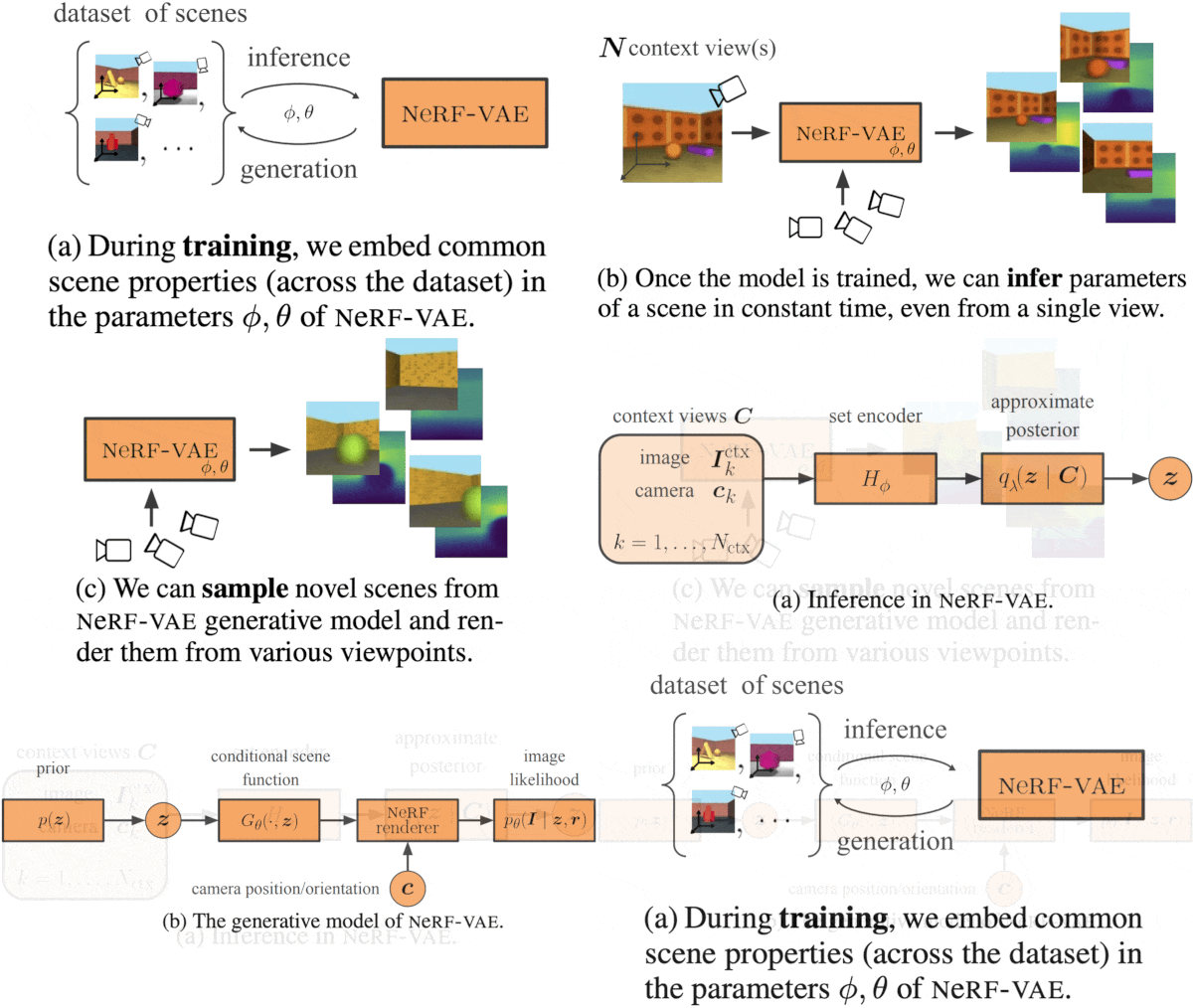
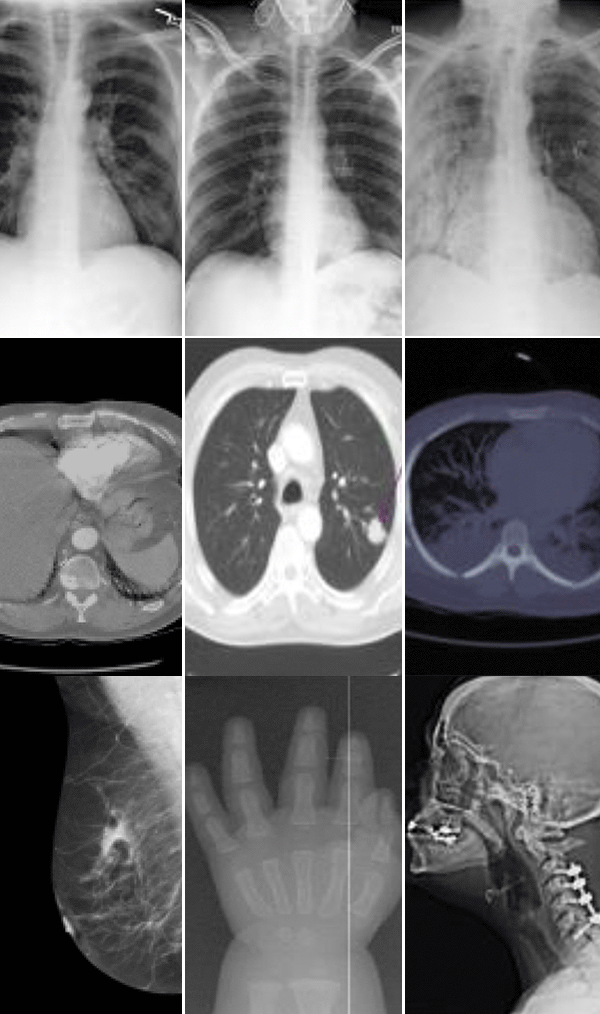
Researchers from Emory University, MIT, Purdue University, and other institutions found that deep learning systems trained to interpret x-rays and CT scans also were able to identify their subjects as Asian, Black, or White.

August 11, 20212 min read
AI Sees Race in X-Rays
ResNet

AI Sees Race in X-Rays

Researchers from Emory University, MIT, Purdue University, and other institutions found that deep learning systems trained to interpret x-rays and CT scans also were able to identify their subjects as Asian, Black, or White.

August 11, 20212 min read
Smaller Models, Bigger Biases: Compressed face recognition models have stronger bias.
ResNet

Smaller Models, Bigger Biases: Compressed face recognition models have stronger bias.

Compression methods like parameter pruning and quantization can shrink neural networks for use in devices like smartphones with little impact on accuracy — but they also exacerbate a network’s bias.

August 7, 20212 min read
Smaller Models, Bigger Biases: Compressed face recognition models have stronger bias.
ResNet

Smaller Models, Bigger Biases: Compressed face recognition models have stronger bias.

Compression methods like parameter pruning and quantization can shrink neural networks for use in devices like smartphones with little impact on accuracy — but they also exacerbate a network’s bias.

August 7, 20212 min read
One Network, Many Scenes: Combining NeRF with VAE to generate 3D scenes
ResNet

One Network, Many Scenes: Combining NeRF with VAE to generate 3D scenes

To reconstruct the 3D world behind a set of 2D images, machine learning systems usually require a dedicated neural network for each scene. New research enables a single trained network to generate 3D reconstructions of multiple scenes.

July 21, 20212 min read
One Network, Many Scenes: Combining NeRF with VAE to generate 3D scenes
ResNet

One Network, Many Scenes: Combining NeRF with VAE to generate 3D scenes

To reconstruct the 3D world behind a set of 2D images, machine learning systems usually require a dedicated neural network for each scene. New research enables a single trained network to generate 3D reconstructions of multiple scenes.

July 21, 20212 min read
Pattern for Efficient Learning: A training method for few-shot learning in computer vision.
ResNet

Pattern for Efficient Learning: A training method for few-shot learning in computer vision.

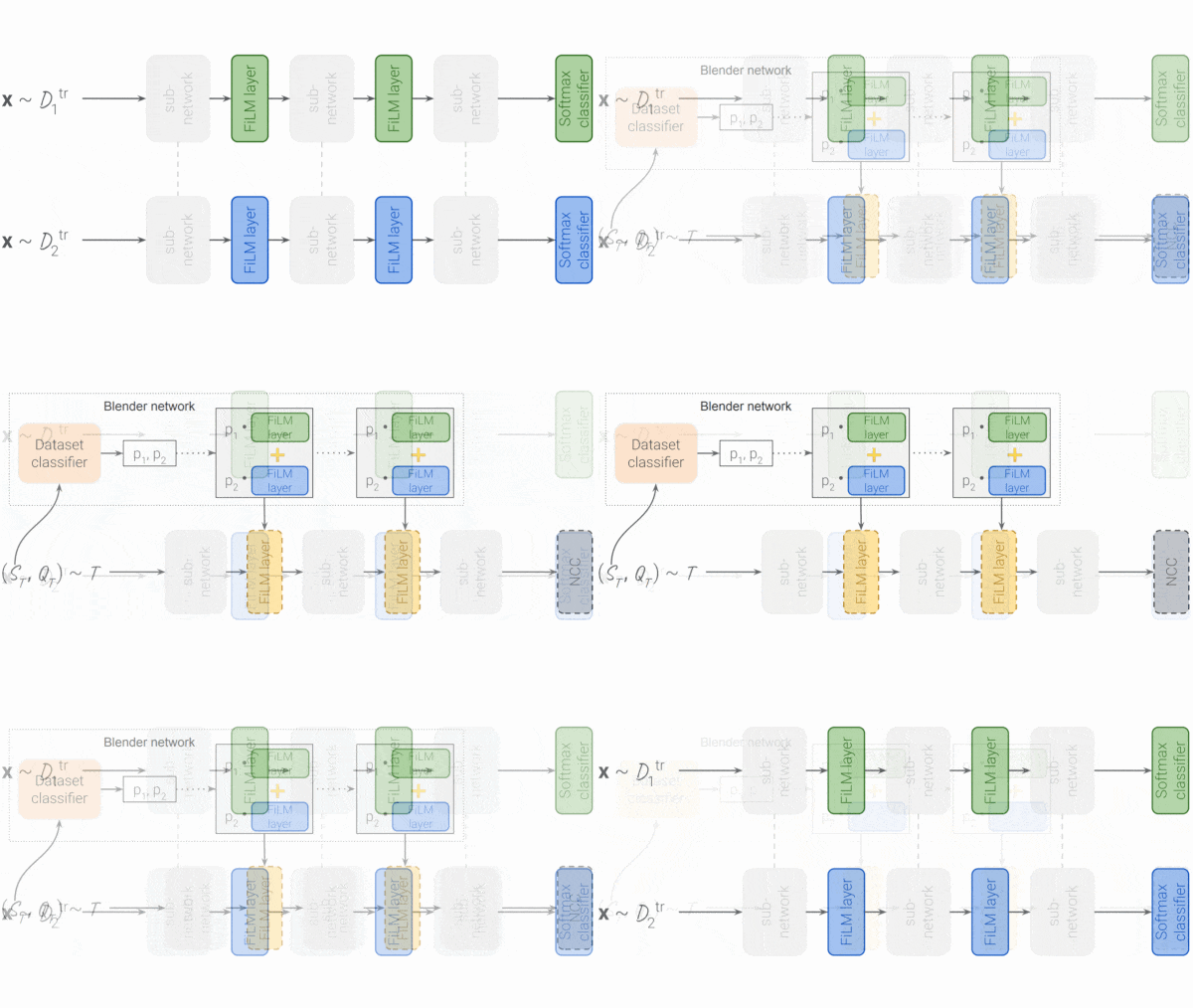
Getting high accuracy out of a classifier trained on a small number of examples is tricky. You might train the model on several large-scale datasets prior to few-shot training, but what if the few-shot dataset includes novel classes? A new method performs well even in that case.

June 30, 20212 min read
Pattern for Efficient Learning: A training method for few-shot learning in computer vision.
ResNet

Pattern for Efficient Learning: A training method for few-shot learning in computer vision.

Getting high accuracy out of a classifier trained on a small number of examples is tricky. You might train the model on several large-scale datasets prior to few-shot training, but what if the few-shot dataset includes novel classes? A new method performs well even in that case.

June 30, 20212 min read
Sorting Shattered Traditions: Archaeologists use machine learning to classify pottery.
ResNet

Sorting Shattered Traditions: Archaeologists use machine learning to classify pottery.

Computer vision is probing the history of ancient pottery | What’s new: Researchers at Northern Arizona University developed a machine learning model that identifies different styles of Native American painting on ceramic fragments and sorts the shards by historical period.

June 23, 20211 min read
Sorting Shattered Traditions: Archaeologists use machine learning to classify pottery.
ResNet

Sorting Shattered Traditions: Archaeologists use machine learning to classify pottery.

Computer vision is probing the history of ancient pottery | What’s new: Researchers at Northern Arizona University developed a machine learning model that identifies different styles of Native American painting on ceramic fragments and sorts the shards by historical period.

June 23, 20211 min read
The Writing, Not the Doodles: A handwriting detection AI model for messy paper.
ResNet

The Writing, Not the Doodles: A handwriting detection AI model for messy paper.

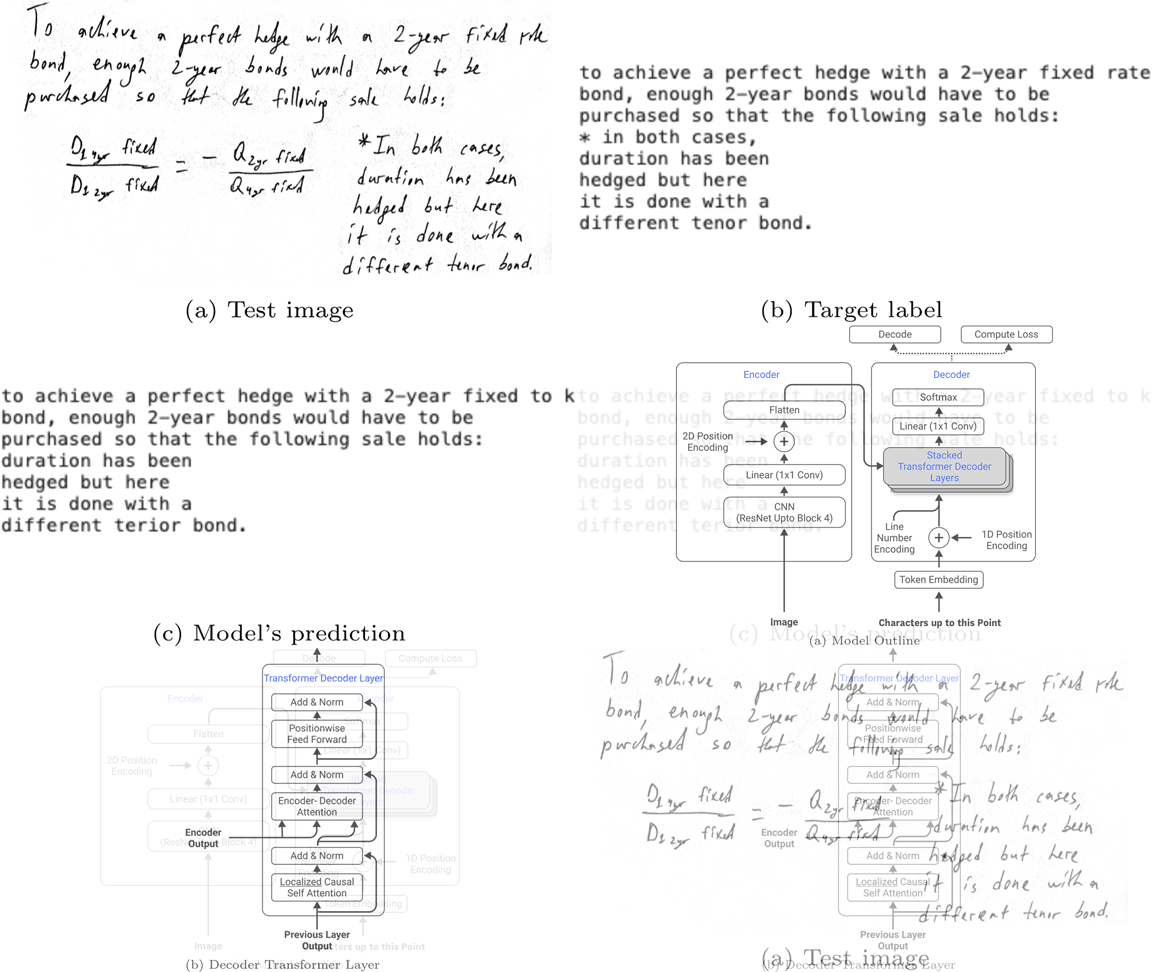
Systems designed to turn handwriting into text typically work best on pages with a consistent layout, such as a single column unbroken by drawings, diagrams, or extraneous symbols. A new system removes that requirement.

June 16, 20212 min read
The Writing, Not the Doodles: A handwriting detection AI model for messy paper.
ResNet

The Writing, Not the Doodles: A handwriting detection AI model for messy paper.

Systems designed to turn handwriting into text typically work best on pages with a consistent layout, such as a single column unbroken by drawings, diagrams, or extraneous symbols. A new system removes that requirement.

June 16, 20212 min read
One Model for Vision-Language: A general purpose AI for vision and language tasks.
ResNet

One Model for Vision-Language: A general purpose AI for vision and language tasks.

Researchers have proposed task-agnostic architectures for image classification tasks and language tasks. New work proposes a single architecture for vision-language tasks.

June 2, 20212 min read
One Model for Vision-Language: A general purpose AI for vision and language tasks.
ResNet

One Model for Vision-Language: A general purpose AI for vision and language tasks.

Researchers have proposed task-agnostic architectures for image classification tasks and language tasks. New work proposes a single architecture for vision-language tasks.

June 2, 20212 min read
Labeling Errors Everywhere: Many deep learning datasets contain mislabeled data.
ResNet

Labeling Errors Everywhere: Many deep learning datasets contain mislabeled data.

Key machine learning datasets are riddled with mistakes. Several benchmark datasets are shot through with incorrect labels. On average, 3.4 percent of examples in 10 commonly used datasets are mislabeled and the detrimental impact of such errors rises with model size.

April 14, 20212 min read

Subscribe to The Batch

Stay updated with weekly AI News and Insights delivered to your inbox