Labeling Errors Everywhere: Many deep learning datasets contain mislabeled data.
ResNet

Labeling Errors Everywhere: Many deep learning datasets contain mislabeled data.

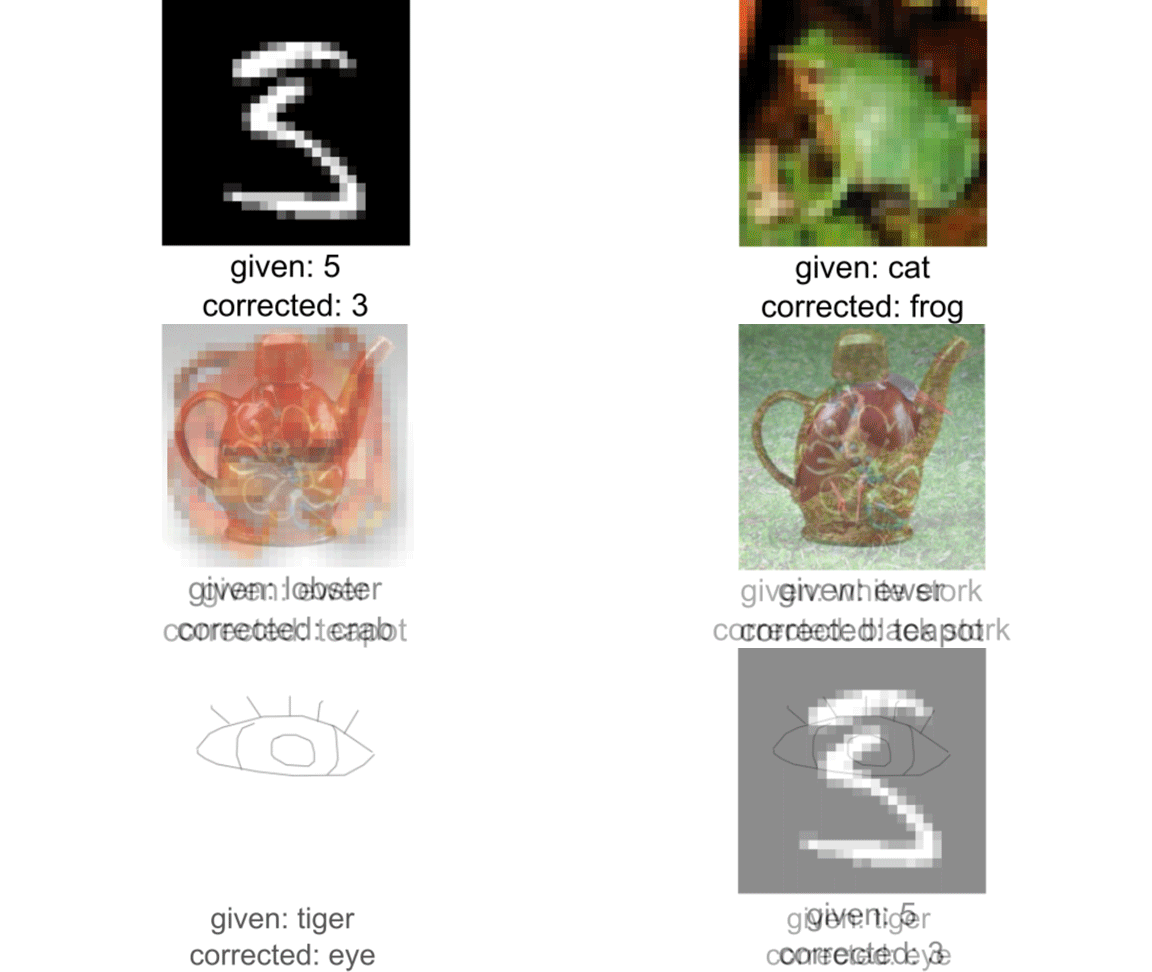
Key machine learning datasets are riddled with mistakes. Several benchmark datasets are shot through with incorrect labels. On average, 3.4 percent of examples in 10 commonly used datasets are mislabeled and the detrimental impact of such errors rises with model size.

April 14, 20212 min read
Pretraining on Uncurated Data: How unlabeled data improved computer vision accuracy.
ResNet

Pretraining on Uncurated Data: How unlabeled data improved computer vision accuracy.

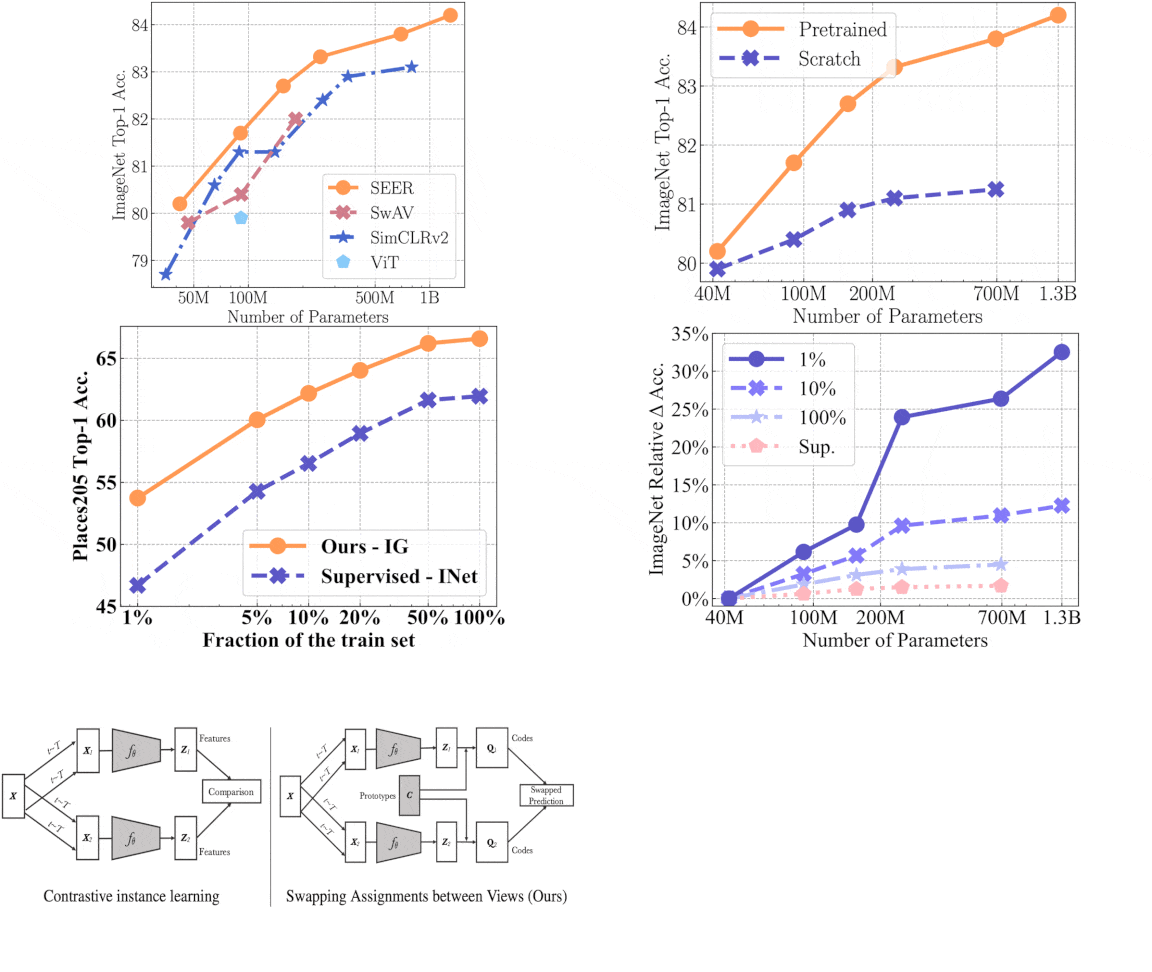
It’s well established that pretraining a model on a large dataset improves performance on fine-tuned tasks. In sufficient quantity and paired with a big model, even data scraped from the internet at random can contribute to the performance boost.

April 7, 20212 min read
Pretraining on Uncurated Data: How unlabeled data improved computer vision accuracy.
ResNet

Pretraining on Uncurated Data: How unlabeled data improved computer vision accuracy.

It’s well established that pretraining a model on a large dataset improves performance on fine-tuned tasks. In sufficient quantity and paired with a big model, even data scraped from the internet at random can contribute to the performance boost.

April 7, 20212 min read
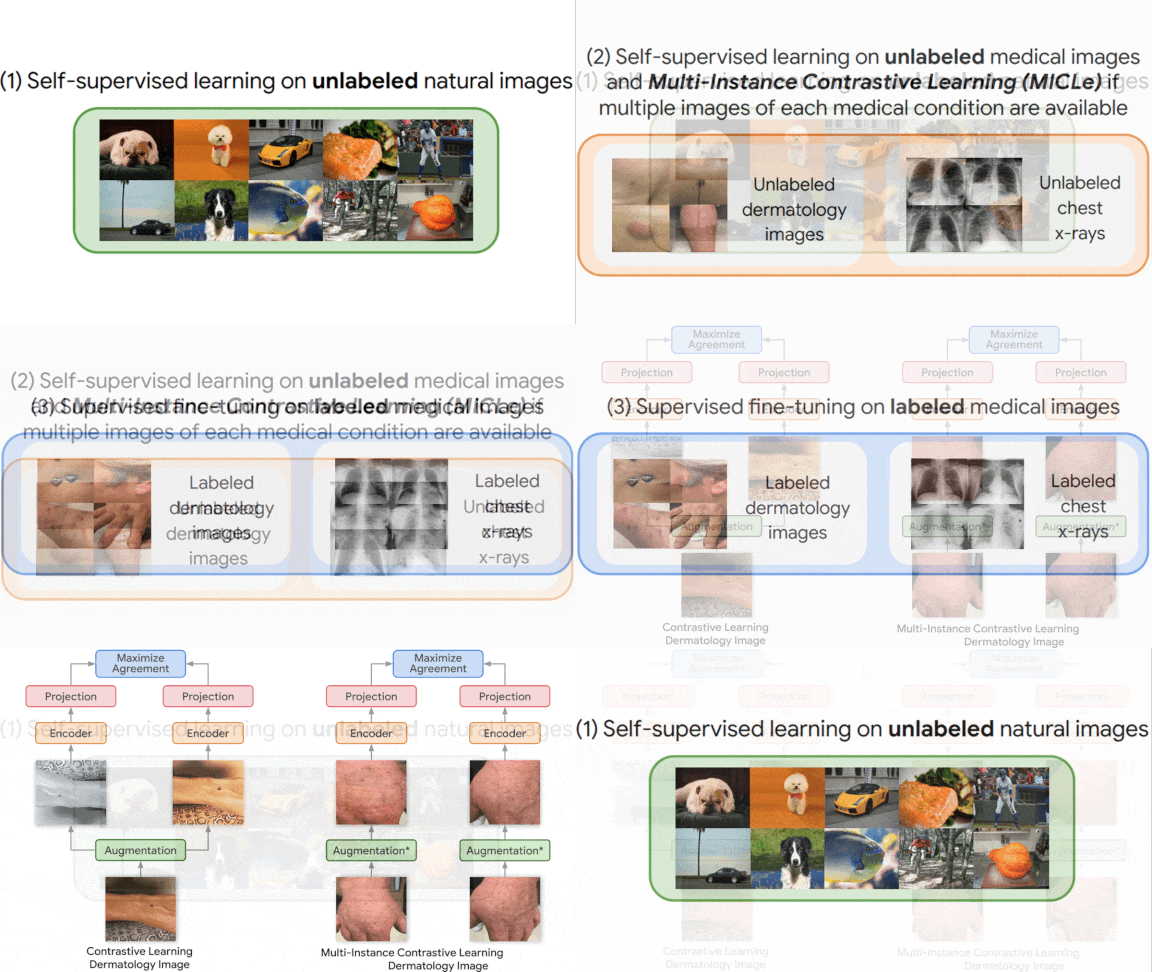
Same Patient, Different Views: Contrastive pretraining improves medical imaging AI.
ResNet

Same Patient, Different Views: Contrastive pretraining improves medical imaging AI.

When you lack labeled training data, pretraining a model on unlabeled data can compensate. New research pretrained a model three times to boost performance on a medical imaging task.

March 31, 20212 min read
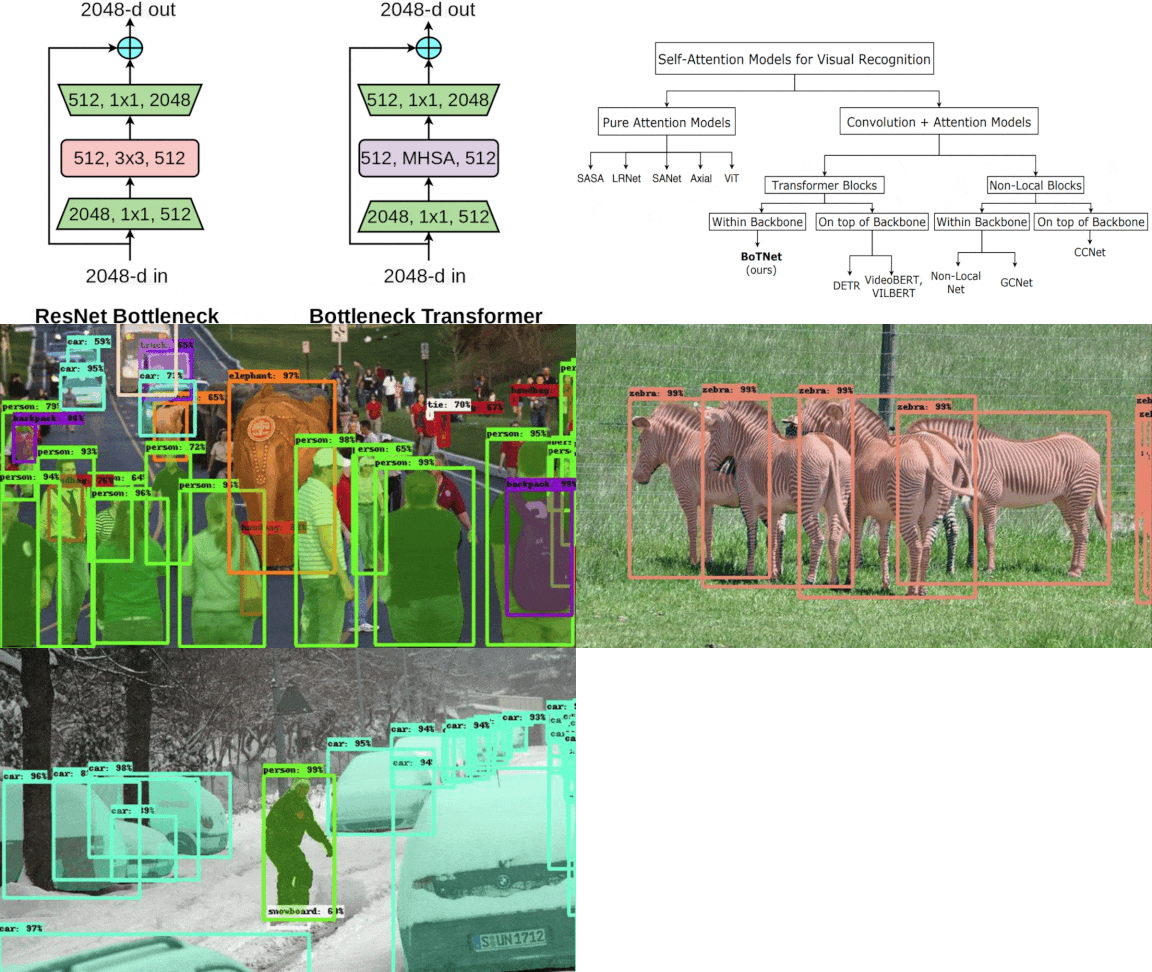
Vision Models Get Some Attention: Researchers add self-attention to convolutional neural nets.
ResNet

Vision Models Get Some Attention: Researchers add self-attention to convolutional neural nets.

Self-attention is a key element in state-of-the-art language models, but it struggles to process images because its memory requirement rises rapidly with the size of the input. New research addresses the issue with a simple twist on a convolutional neural network.

March 31, 20212 min read
Same Patient, Different Views: Contrastive pretraining improves medical imaging AI.
ResNet

Same Patient, Different Views: Contrastive pretraining improves medical imaging AI.

When you lack labeled training data, pretraining a model on unlabeled data can compensate. New research pretrained a model three times to boost performance on a medical imaging task.

March 31, 20212 min read
Vision Models Get Some Attention: Researchers add self-attention to convolutional neural nets.
ResNet

Vision Models Get Some Attention: Researchers add self-attention to convolutional neural nets.

Self-attention is a key element in state-of-the-art language models, but it struggles to process images because its memory requirement rises rapidly with the size of the input. New research addresses the issue with a simple twist on a convolutional neural network.

March 31, 20212 min read
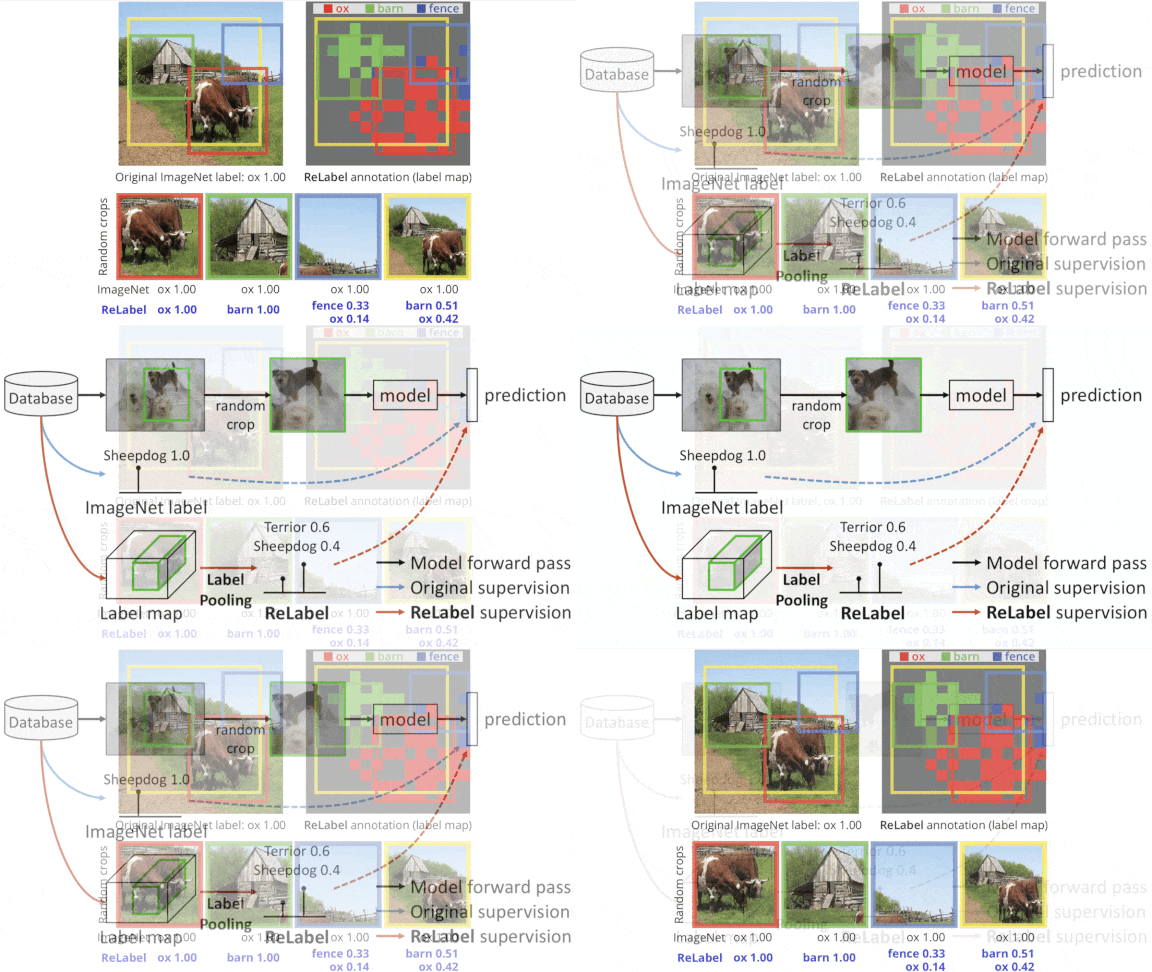
Good Labels for Cropped Images: AI technique adds text labels to random image crops.
ResNet

Good Labels for Cropped Images: AI technique adds text labels to random image crops.

In training an image recognition model, it’s not uncommon to augment the data by cropping original images randomly. But if an image contains several objects, a cropped version may no longer match its label. Researchers developed a way to make sure random crops are labeled properly.

March 17, 20212 min read
Good Labels for Cropped Images: AI technique adds text labels to random image crops.
ResNet

Good Labels for Cropped Images: AI technique adds text labels to random image crops.

In training an image recognition model, it’s not uncommon to augment the data by cropping original images randomly. But if an image contains several objects, a cropped version may no longer match its label. Researchers developed a way to make sure random crops are labeled properly.

March 17, 20212 min read
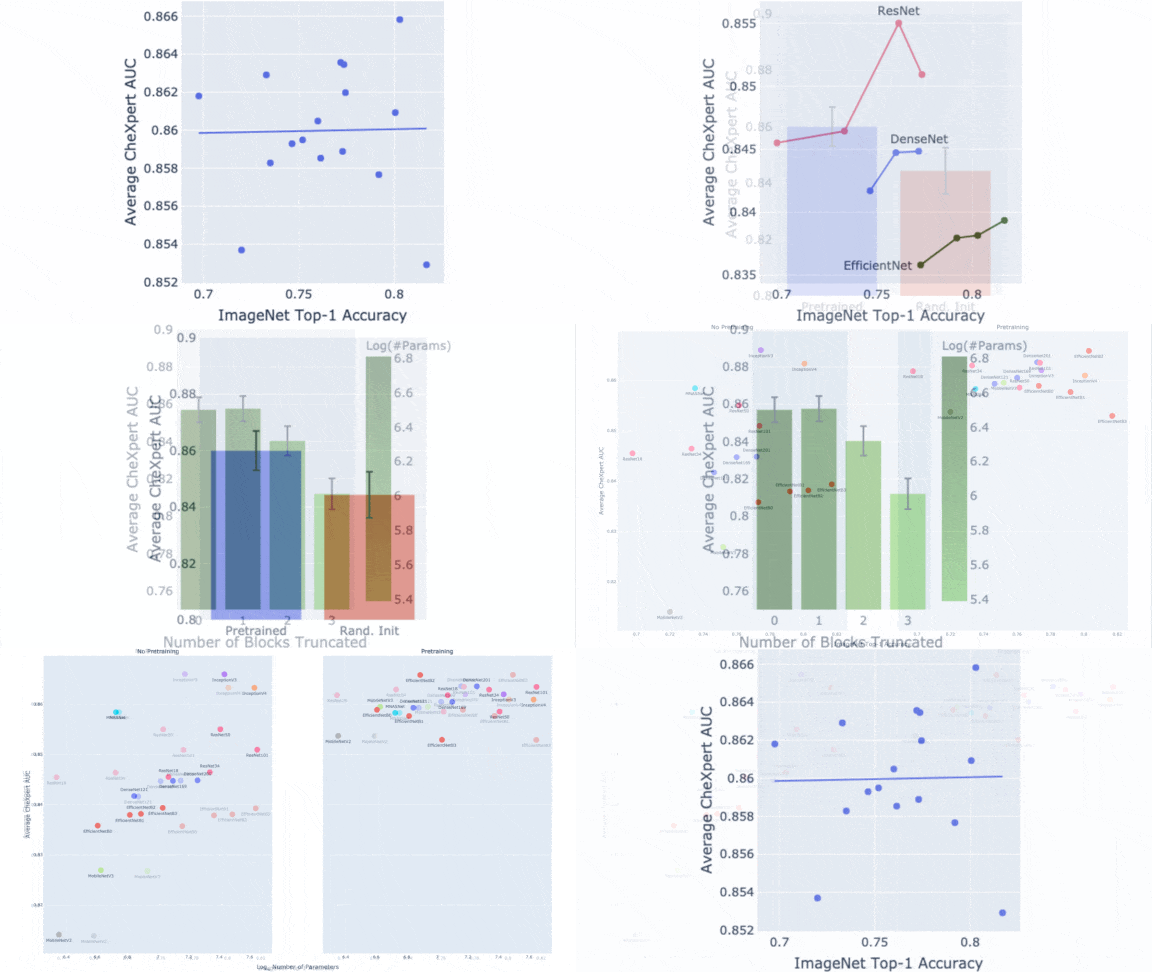
ImageNet Performance, No Panacea: ImageNet pretraining won't always improve computer vision.
ResNet

ImageNet Performance, No Panacea: ImageNet pretraining won't always improve computer vision.

It’s commonly assumed that models pretrained to achieve high performance on ImageNet will perform better on other visual tasks after fine-tuning. But is it always true? A new study reached surprising conclusions.

March 10, 20212 min read
ImageNet Performance, No Panacea: ImageNet pretraining won't always improve computer vision.
ResNet

ImageNet Performance, No Panacea: ImageNet pretraining won't always improve computer vision.

It’s commonly assumed that models pretrained to achieve high performance on ImageNet will perform better on other visual tasks after fine-tuning. But is it always true? A new study reached surprising conclusions.

March 10, 20212 min read
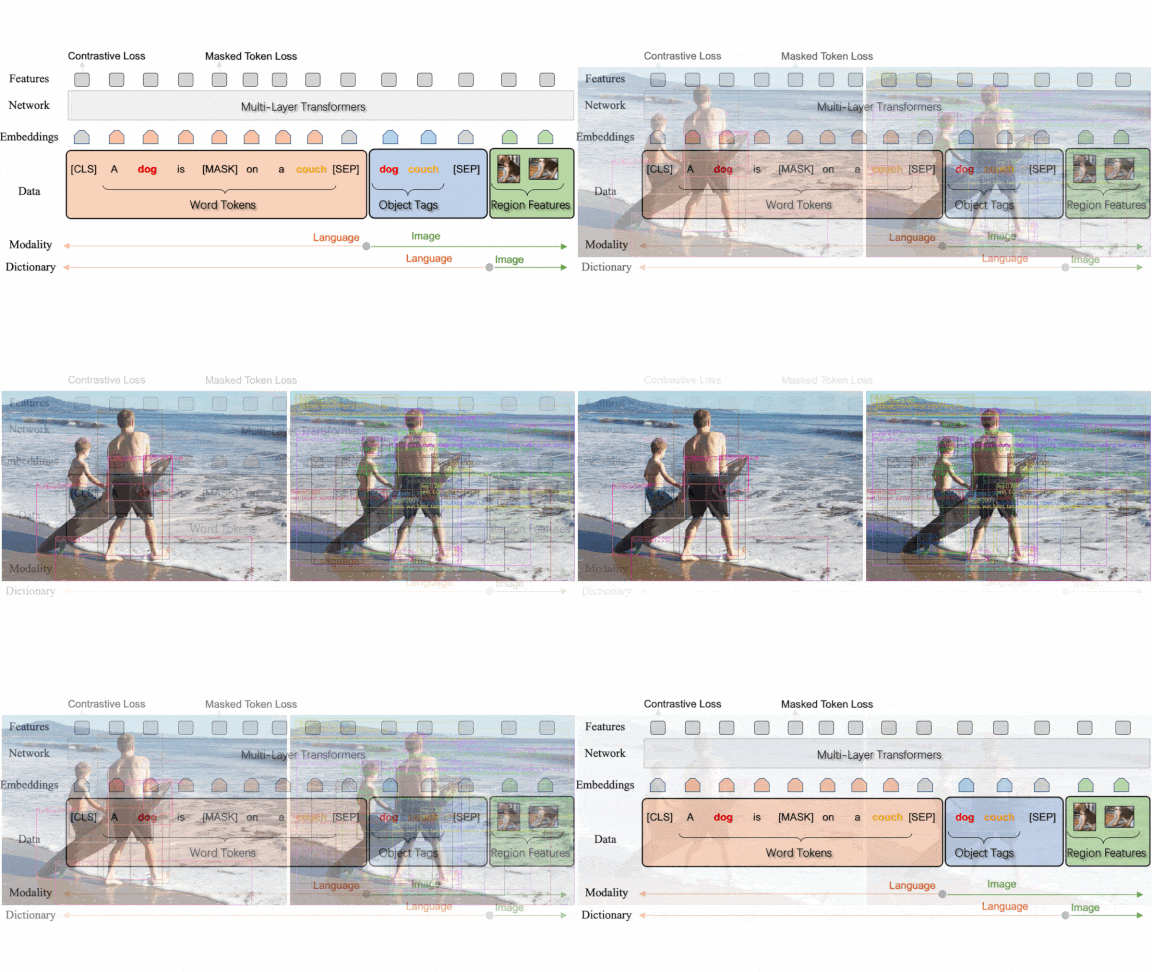
Sharper Eyes For Vision+Language: AI research shows improved image and text matching.
ResNet

Sharper Eyes For Vision+Language: AI research shows improved image and text matching.

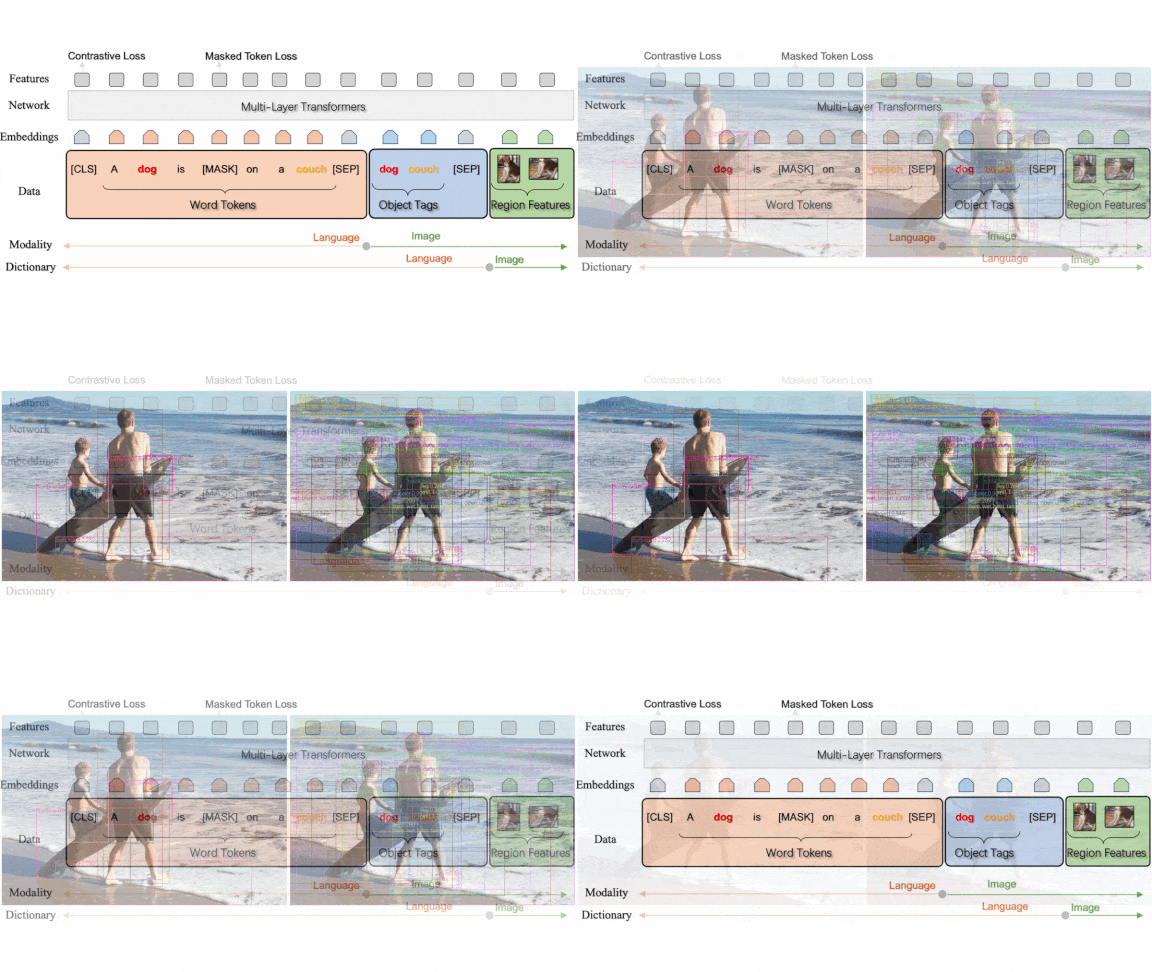
Models that interpret the interplay of words and images tend to be trained on richer bodies of text than images. Recent research worked toward giving such models a more balanced knowledge of the two domains.

February 24, 20212 min read
Sharper Eyes For Vision+Language: AI research shows improved image and text matching.
ResNet

Sharper Eyes For Vision+Language: AI research shows improved image and text matching.

Models that interpret the interplay of words and images tend to be trained on richer bodies of text than images. Recent research worked toward giving such models a more balanced knowledge of the two domains.

February 24, 20212 min read
Facing Failure to Generalize: Why some AI models exhibit underspecification.
ResNet

Facing Failure to Generalize: Why some AI models exhibit underspecification.

The same models trained on the same data may show the same performance in the lab, and yet respond very differently to data they haven’t seen before. New work finds this inconsistency to be pervasive.

February 17, 20212 min read
How Art Makes AI Feel: How an AI model feels about art.
ResNet

How Art Makes AI Feel: How an AI model feels about art.

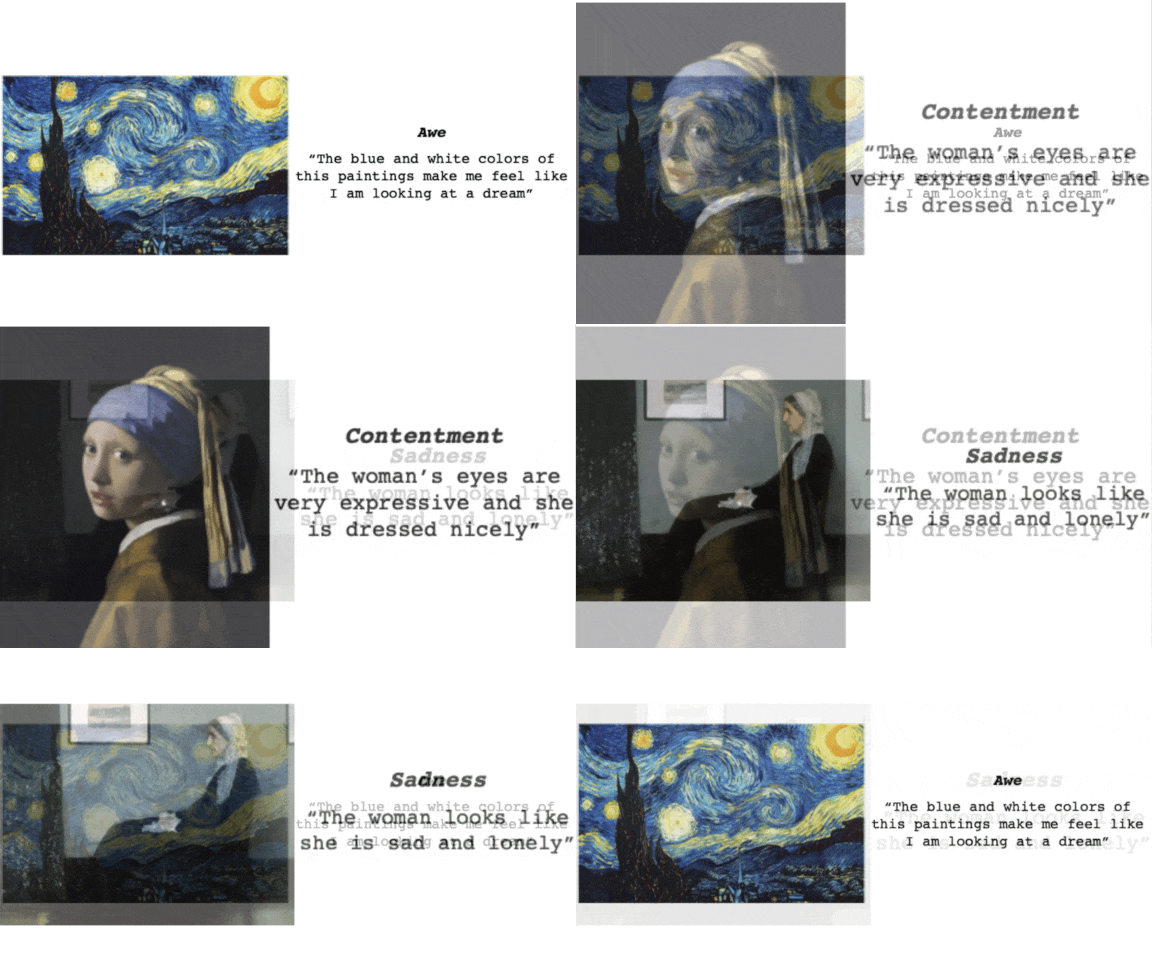
An automated art critic spells out the emotional impact of images. Led by Panos Achlioptas, researchers at Ecole Polytechnique, King Abdullah University, and Stanford University trained a deep learning system to generate subjective interpretations of art.

February 17, 20212 min read

Subscribe to The Batch

Stay updated with weekly AI News and Insights delivered to your inbox