Abeba Birhane: Clean up web datasets
From language to vision models, deep neural networks are marked by improved performance, higher efficiency, and better generalizations. Yet, these systems are also marked by perpetuation of bias and injustice.
6 Posts

From language to vision models, deep neural networks are marked by improved performance, higher efficiency, and better generalizations. Yet, these systems are also marked by perpetuation of bias and injustice.

From language to vision models, deep neural networks are marked by improved performance, higher efficiency, and better generalizations. Yet, these systems are also marked by perpetuation of bias and injustice.
The emerging generation of trillion-parameter models needs datasets of billions of examples, but the most readily available source of examples on that scale — the web — is polluted with bias and antisocial expressions. A new study examines the issue.

The emerging generation of trillion-parameter models needs datasets of billions of examples, but the most readily available source of examples on that scale — the web — is polluted with bias and antisocial expressions. A new study examines the issue.

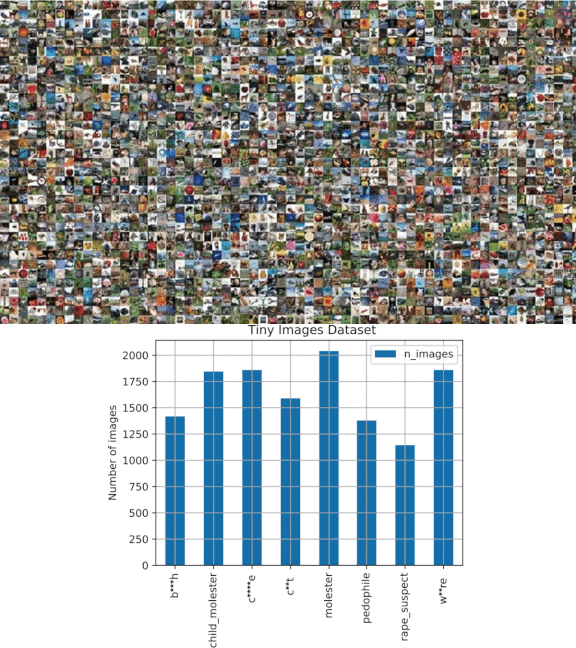
MIT withdrew a popular computer vision dataset after researchers found that it was rife with social bias. Researchers found racist, misogynistic, and demeaning labels among the nearly 80 million pictures in Tiny Images, a collection of 32-by-32 pixel color photos.

MIT withdrew a popular computer vision dataset after researchers found that it was rife with social bias. Researchers found racist, misogynistic, and demeaning labels among the nearly 80 million pictures in Tiny Images, a collection of 32-by-32 pixel color photos.
Stay updated with weekly AI News and Insights delivered to your inbox