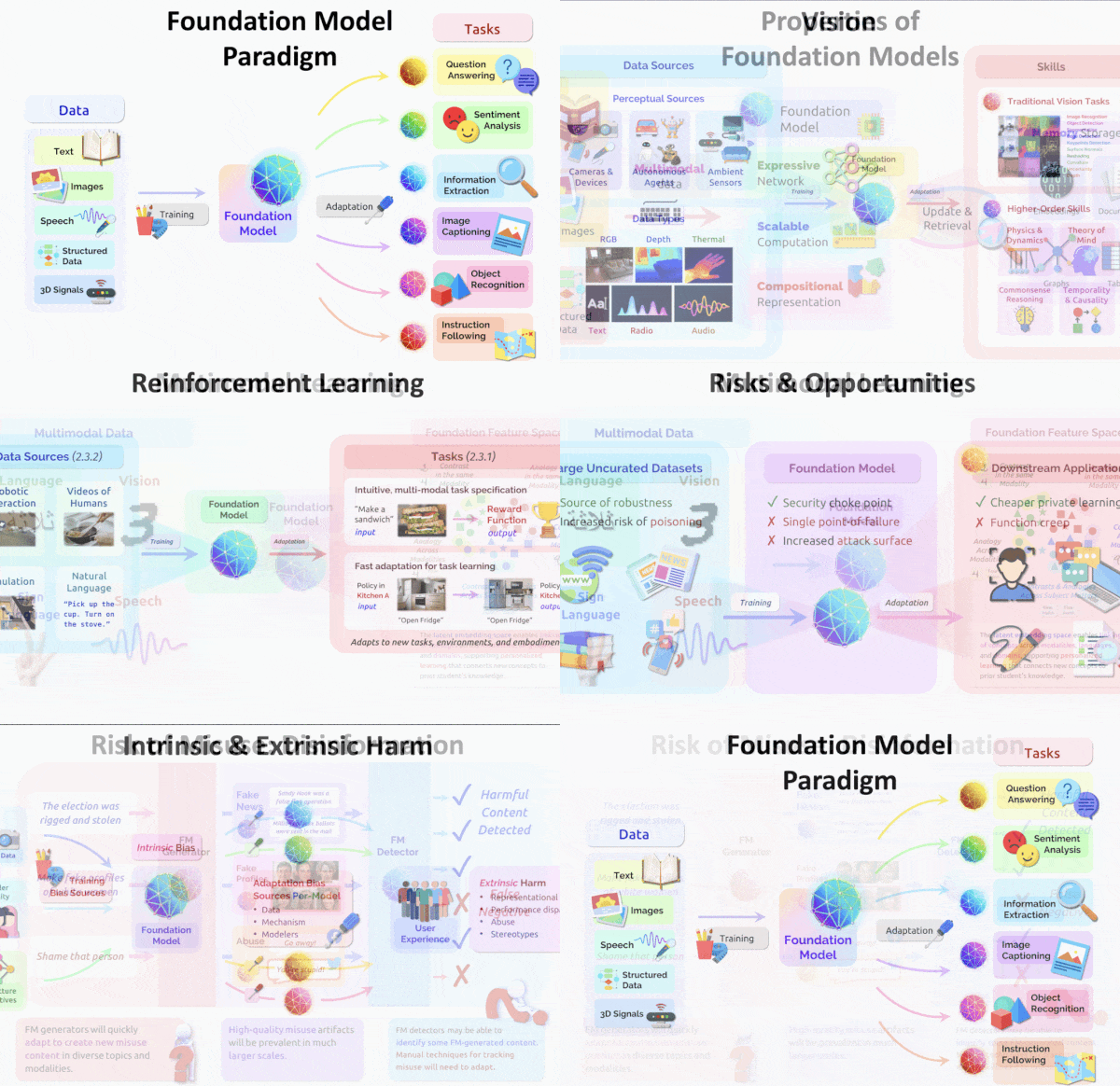
Weak Foundations Make Weak Models: Foundation AI Models Pass Flaws to Fine-Tuned Variants
Stanford University

Weak Foundations Make Weak Models: Foundation AI Models Pass Flaws to Fine-Tuned Variants

A new study examines a major strain of recent research: huge models pretrained on immense quantities of uncurated, unlabeled data and then fine-tuned on a smaller, curated corpus.
August 25, 20212 min read
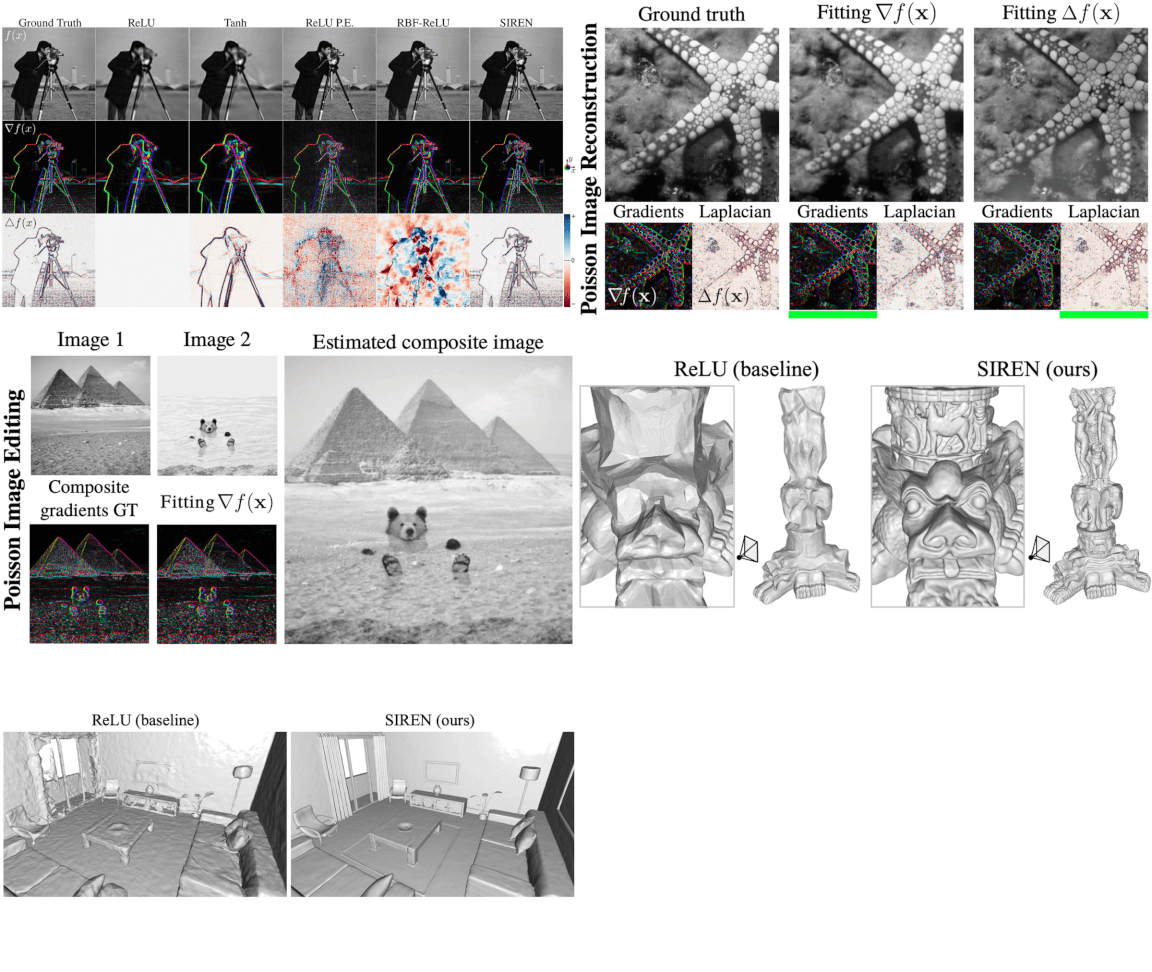
Upgrade for ReLU: The sin(x) activation function is an alternative to ReLU.
Stanford University

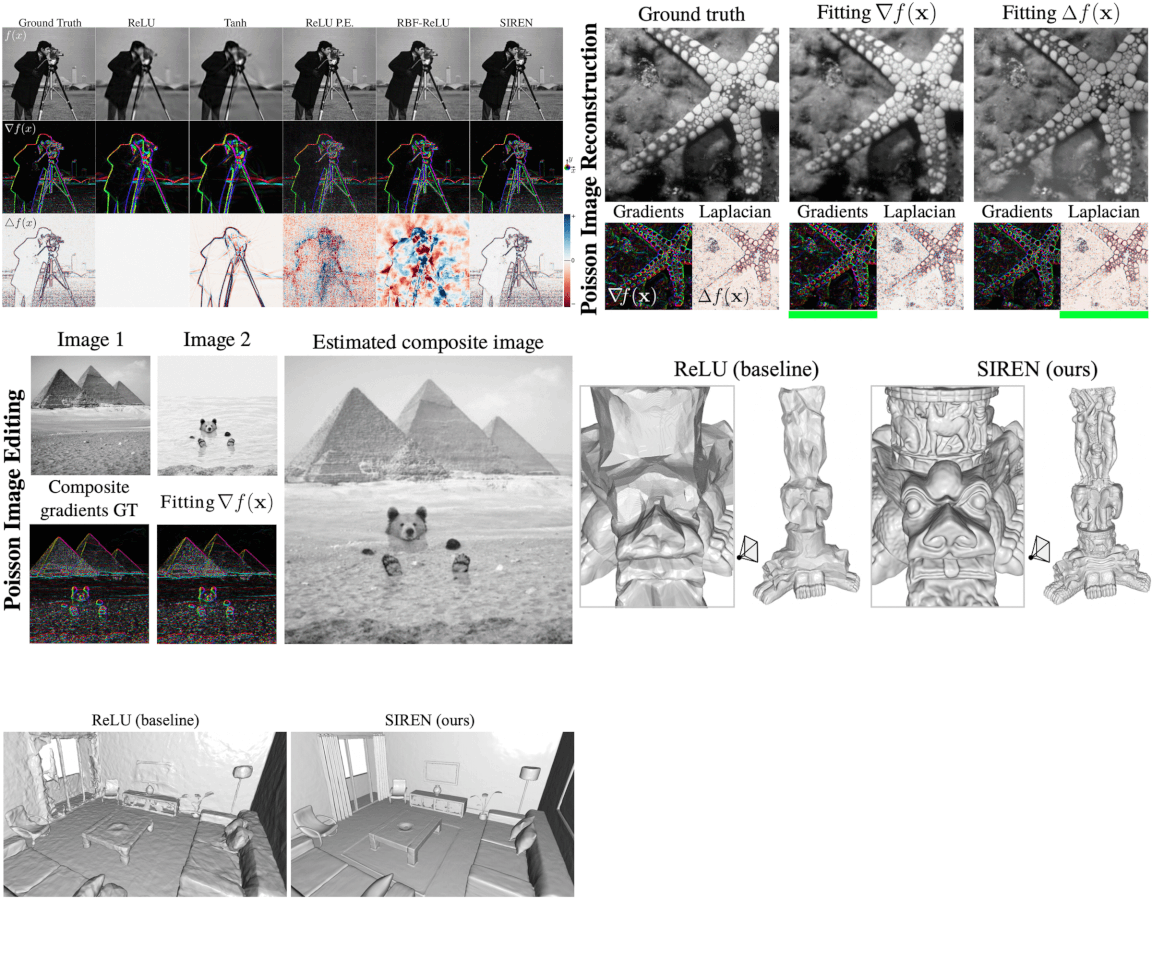
Upgrade for ReLU: The sin(x) activation function is an alternative to ReLU.

The activation function known as ReLU builds complex nonlinear functions across layers of a neural network, making functions that outline flat faces and sharp edges. But how much of the world breaks down into perfect polyhedra?

August 5, 20212 min read
Upgrade for ReLU: The sin(x) activation function is an alternative to ReLU.
Stanford University

Upgrade for ReLU: The sin(x) activation function is an alternative to ReLU.

The activation function known as ReLU builds complex nonlinear functions across layers of a neural network, making functions that outline flat faces and sharp edges. But how much of the world breaks down into perfect polyhedra?

August 5, 20212 min read
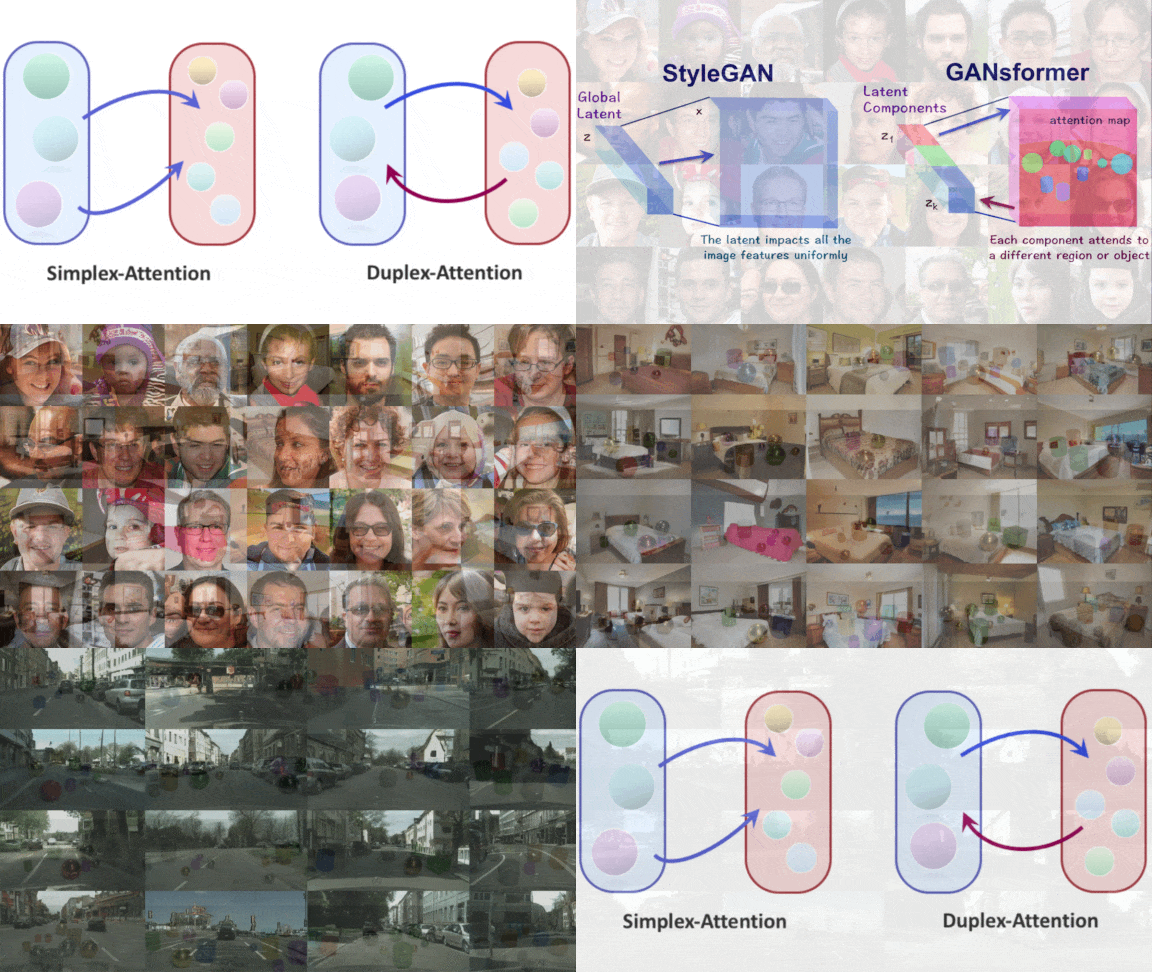
Attention for Image Generation: Combining GANs and transformers for more believable images.
Stanford University

Attention for Image Generation: Combining GANs and transformers for more believable images.

Attention quantifies how each part of one input affects the various parts of another. Researchers added a step that reverses this comparison to produce more convincing images.

April 7, 20212 min read
Attention for Image Generation: Combining GANs and transformers for more believable images.
Stanford University

Attention for Image Generation: Combining GANs and transformers for more believable images.

Attention quantifies how each part of one input affects the various parts of another. Researchers added a step that reverses this comparison to produce more convincing images.

April 7, 20212 min read
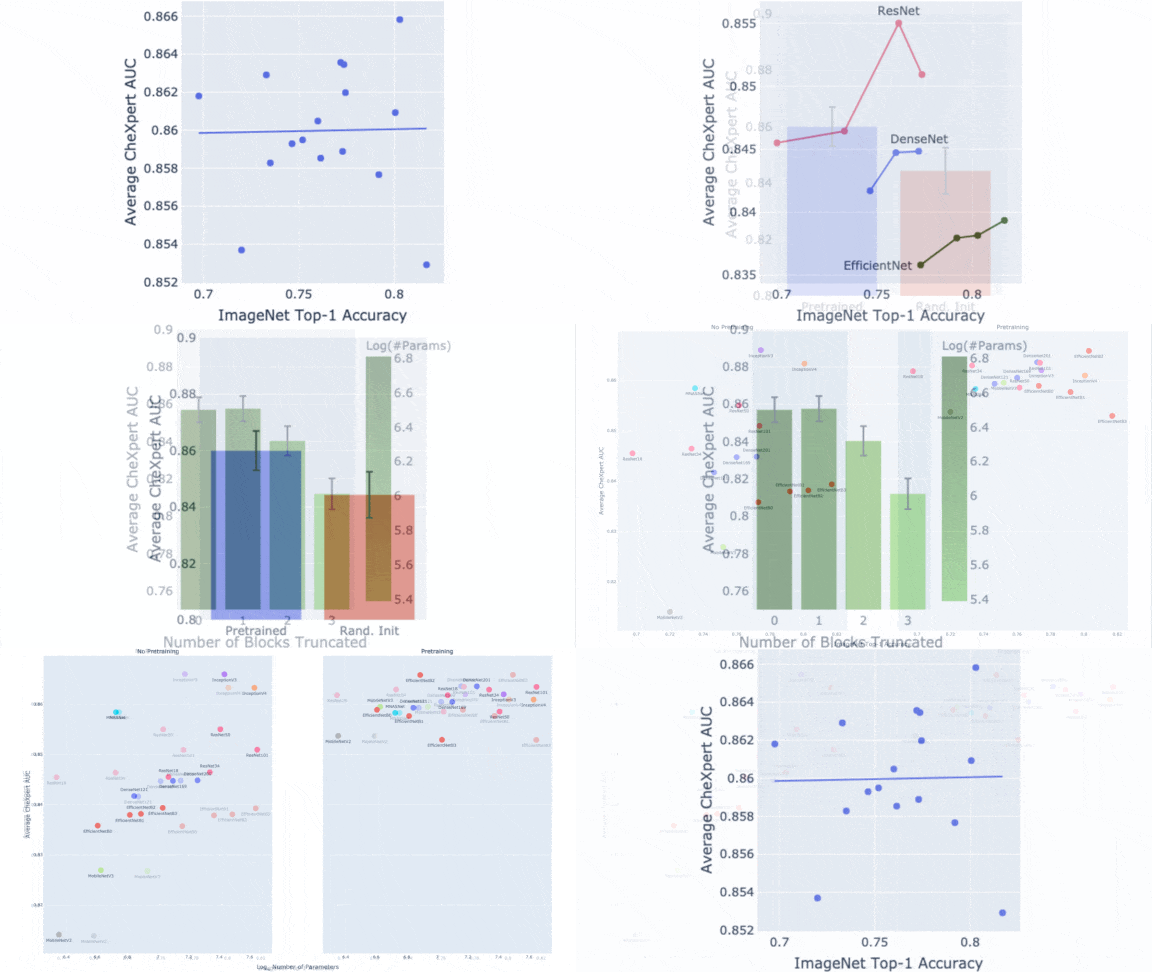
ImageNet Performance, No Panacea: ImageNet pretraining won't always improve computer vision.
Stanford University

ImageNet Performance, No Panacea: ImageNet pretraining won't always improve computer vision.

It’s commonly assumed that models pretrained to achieve high performance on ImageNet will perform better on other visual tasks after fine-tuning. But is it always true? A new study reached surprising conclusions.

March 10, 20212 min read
ImageNet Performance, No Panacea: ImageNet pretraining won't always improve computer vision.
Stanford University

ImageNet Performance, No Panacea: ImageNet pretraining won't always improve computer vision.

It’s commonly assumed that models pretrained to achieve high performance on ImageNet will perform better on other visual tasks after fine-tuning. But is it always true? A new study reached surprising conclusions.

March 10, 20212 min read
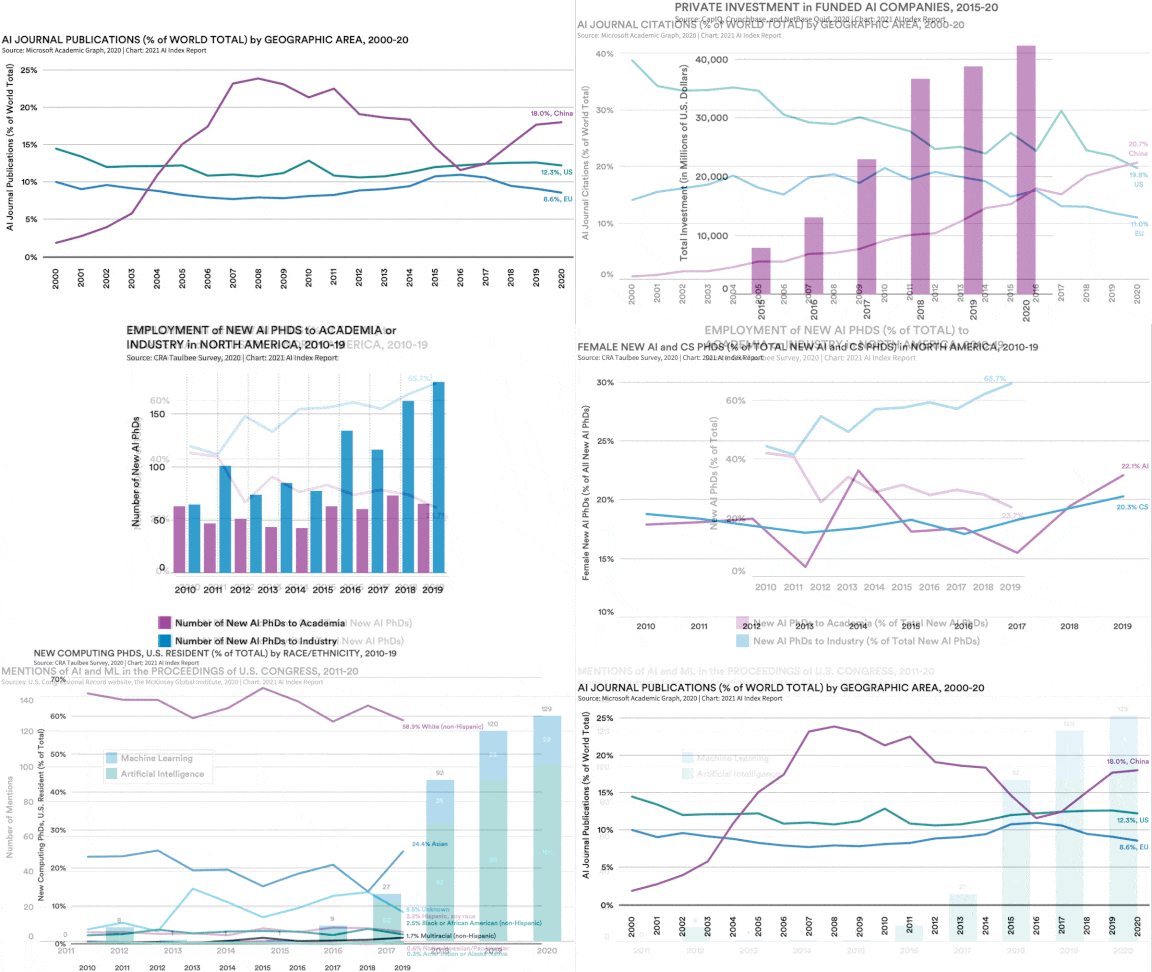
AI for Business Is Booming: Stanford's 2021 AI Index shows commercial AI on the rise.
Stanford University

AI for Business Is Booming: Stanford's 2021 AI Index shows commercial AI on the rise.

Commercial AI research and deployments are on the rise, a new study highlights. The latest edition of the AI Index, an annual report from Stanford University, documents key trends in the field including the growing importance of private industry and the erosion of U.S. dominance in research.

March 10, 20212 min read
AI for Business Is Booming: Stanford's 2021 AI Index shows commercial AI on the rise.
Stanford University

AI for Business Is Booming: Stanford's 2021 AI Index shows commercial AI on the rise.

Commercial AI research and deployments are on the rise, a new study highlights. The latest edition of the AI Index, an annual report from Stanford University, documents key trends in the field including the growing importance of private industry and the erosion of U.S. dominance in research.

March 10, 20212 min read
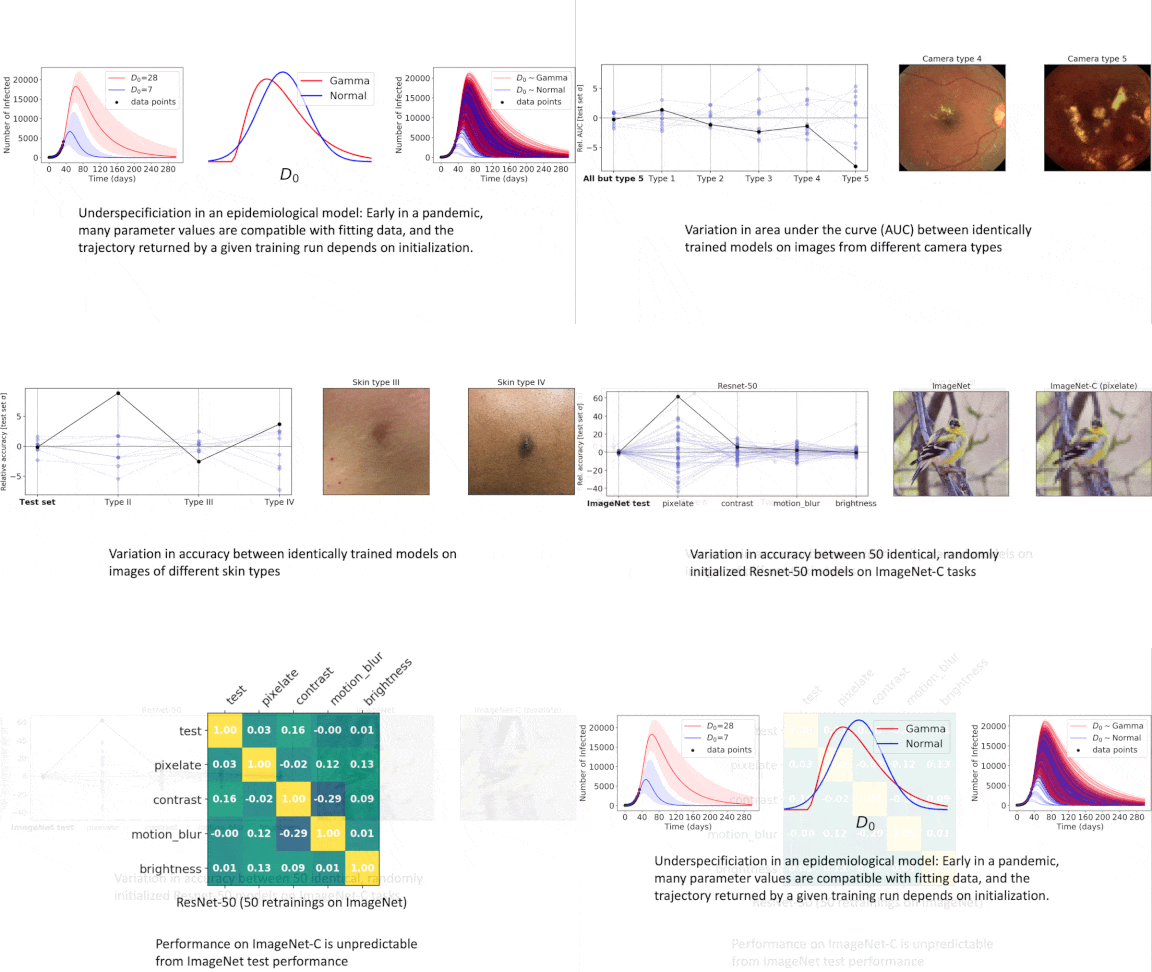
Facing Failure to Generalize: Why some AI models exhibit underspecification.
Stanford University

Facing Failure to Generalize: Why some AI models exhibit underspecification.

The same models trained on the same data may show the same performance in the lab, and yet respond very differently to data they haven’t seen before. New work finds this inconsistency to be pervasive.

February 17, 20212 min read
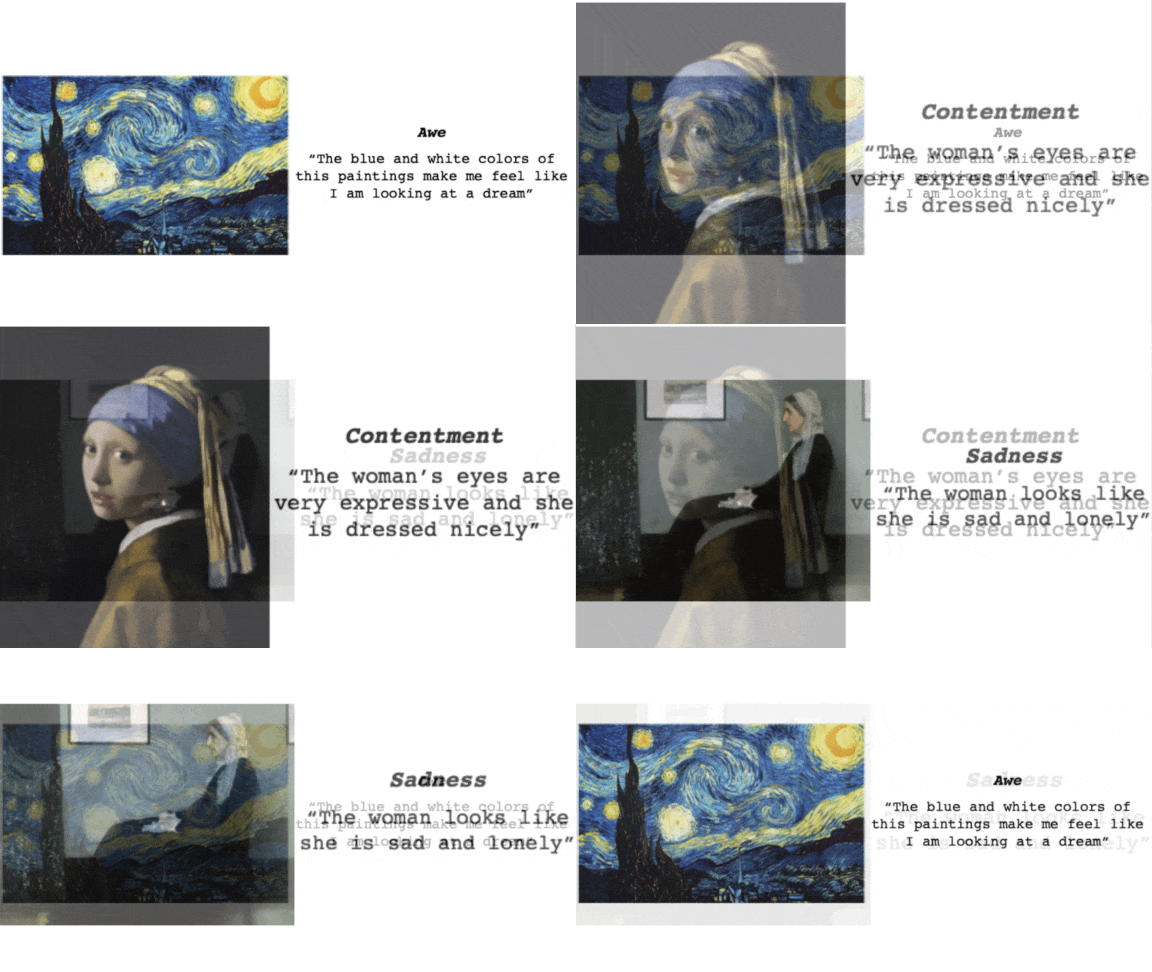
How Art Makes AI Feel: How an AI model feels about art.
Stanford University

How Art Makes AI Feel: How an AI model feels about art.

An automated art critic spells out the emotional impact of images. Led by Panos Achlioptas, researchers at Ecole Polytechnique, King Abdullah University, and Stanford University trained a deep learning system to generate subjective interpretations of art.

February 17, 20212 min read
Facing Failure to Generalize: Why some AI models exhibit underspecification.
Stanford University

Facing Failure to Generalize: Why some AI models exhibit underspecification.

The same models trained on the same data may show the same performance in the lab, and yet respond very differently to data they haven’t seen before. New work finds this inconsistency to be pervasive.

February 17, 20212 min read
How Art Makes AI Feel: How an AI model feels about art.
Stanford University

How Art Makes AI Feel: How an AI model feels about art.

An automated art critic spells out the emotional impact of images. Led by Panos Achlioptas, researchers at Ecole Polytechnique, King Abdullah University, and Stanford University trained a deep learning system to generate subjective interpretations of art.

February 17, 20212 min read
Stanford University

Pain Points in Black and White: Medical AI system predicts knee pain from Black patients.

A model designed to assess medical patients’ pain levels matched the patients’ own reports better than doctors’ estimates did — when the patients were Black.

February 3, 20211 min read
Stanford University

Pain Points in Black and White: Medical AI system predicts knee pain from Black patients.

A model designed to assess medical patients’ pain levels matched the patients’ own reports better than doctors’ estimates did — when the patients were Black.

February 3, 20211 min read

Subscribe to The Batch

Stay updated with weekly AI News and Insights delivered to your inbox