
Sep 25, 2019
Robots Put Down Stakes
Construction projects require teams of surveyors who continually map blueprints to precise, real-world locations. Drones might do it faster, saving time and money.

16 Posts
Construction projects require teams of surveyors who continually map blueprints to precise, real-world locations. Drones might do it faster, saving time and money.

Not long ago, text-to-speech systems could read only a sentence at a time, and they were ranked according to their ability to accomplish that limited task. Now that they can orate entire books, we need new benchmarks.

Construction projects require teams of surveyors who continually map blueprints to precise, real-world locations. Drones might do it faster, saving time and money.

The latest language models are great at answering questions about a given text passage. However, these models are also powerful enough to recognize an individual writer’s style, which can clue them in to the right answers. New research measures such annotator bias in several data sets.

I read an interesting paper comparing the results of traditional passive learning (sitting in a lecture) versus active methods like the flipped classroom, where students watch videos at home and work on exercises in class.

I read an interesting paper comparing the results of traditional passive learning (sitting in a lecture) versus active methods like the flipped classroom, where students watch videos at home and work on exercises in class.

As deep learning becomes more resource-intensive, labs with better funding tend to achieve better results. One consequence is that less wealthy organizations often can’t replicate state-of-the-art successes. Some observers are calling it a crisis.

Not long ago, text-to-speech systems could read only a sentence at a time, and they were ranked according to their ability to accomplish that limited task. Now that they can orate entire books, we need new benchmarks.

I read an interesting paper comparing the results of traditional passive learning (sitting in a lecture) versus active methods like the flipped classroom, where students watch videos at home and work on exercises in class.

A growing number of nations use AI to track their citizens. A new report sheds light on who’s watching and how. “The Global Expansion of AI Surveillance” details which countries are buying surveillance gear, which companies are supplying it, and what technologies are most in-demand.

The latest language models are great at answering questions about a given text passage. However, these models are also powerful enough to recognize an individual writer’s style, which can clue them in to the right answers. New research measures such annotator bias in several data sets.
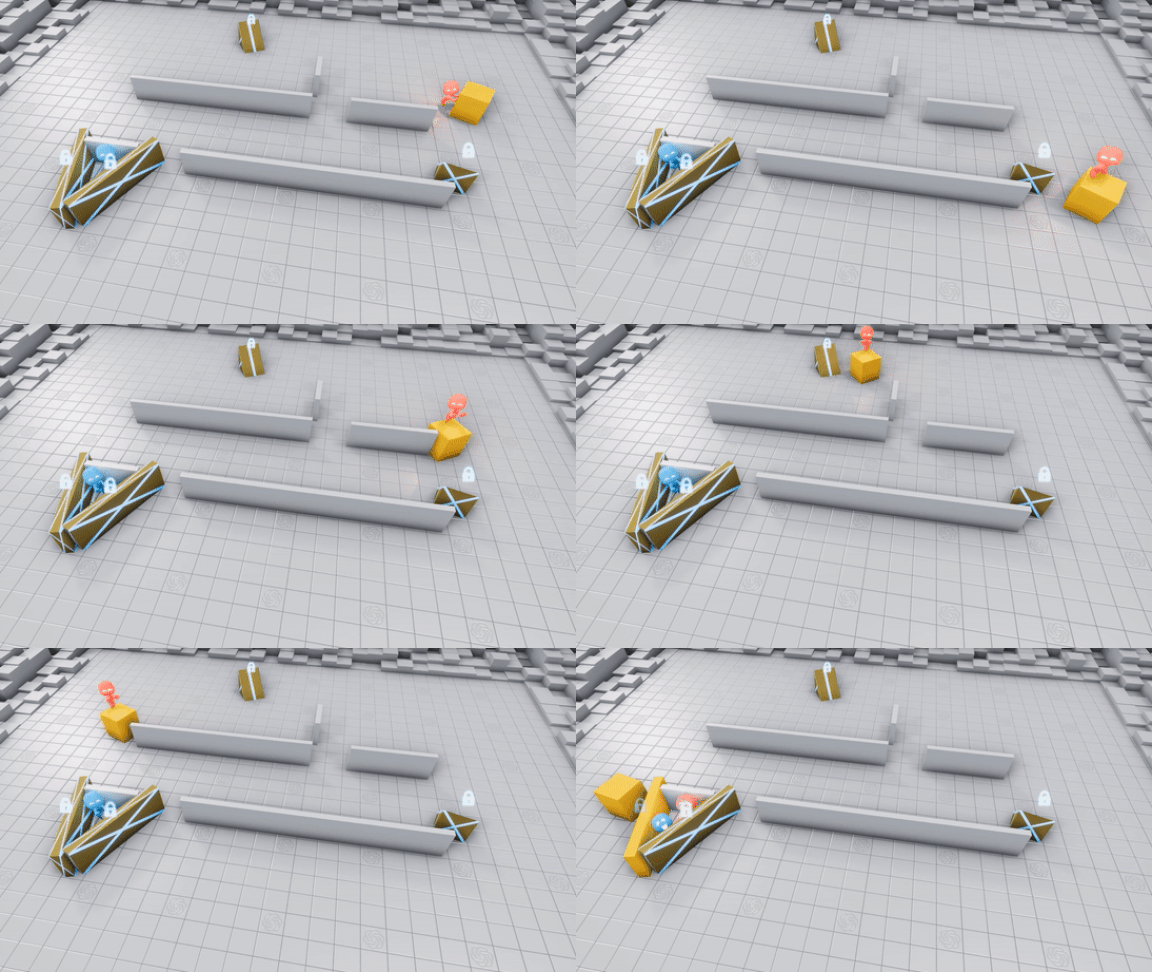
Independent research lab OpenAI designed virtual agents to play hide-and-seek. They evolved increasingly clever strategies, eventually hacking the game world’s physics to gain advantage.

I read an interesting paper comparing the results of traditional passive learning (sitting in a lecture) versus active methods like the flipped classroom, where students watch videos at home and work on exercises in class.
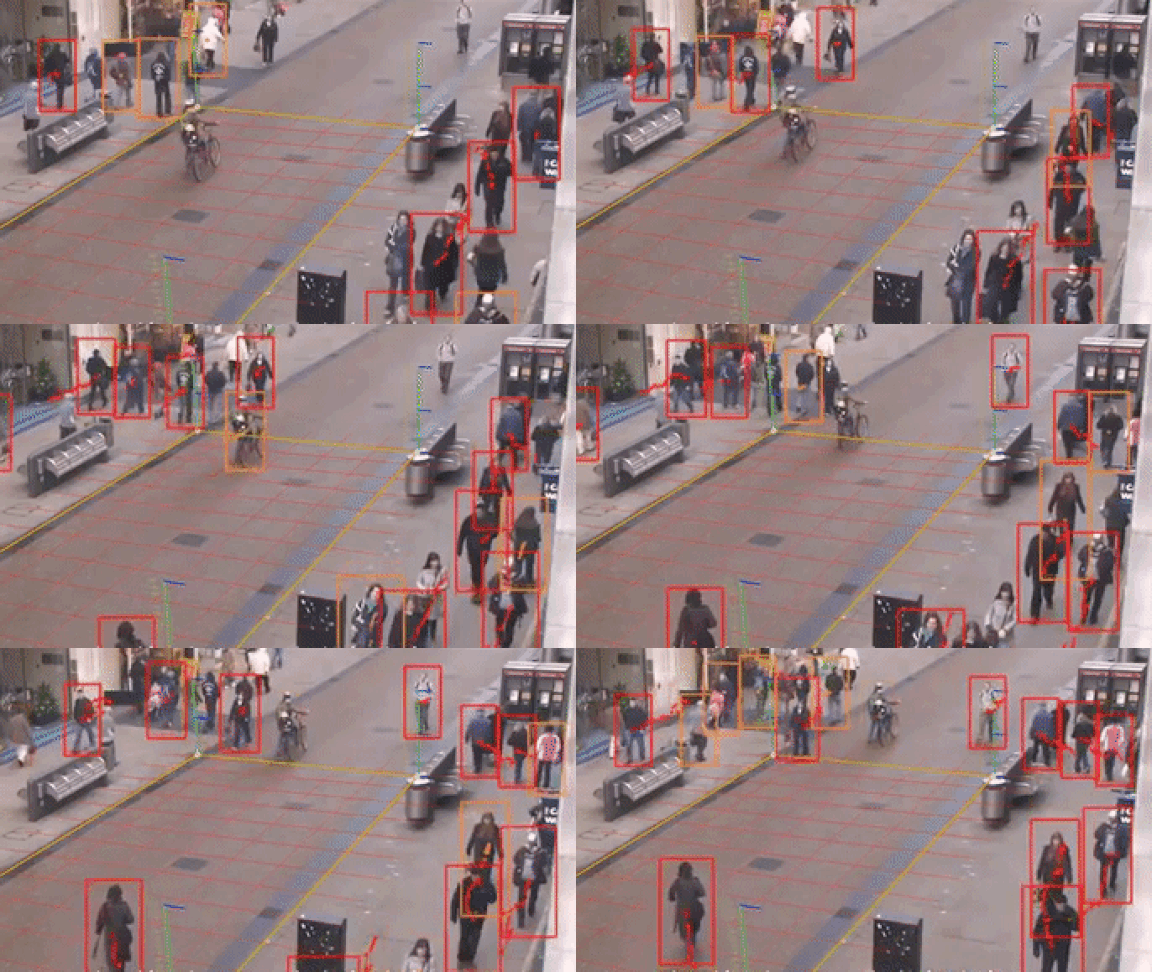
A growing number of nations use AI to track their citizens. A new report sheds light on who’s watching and how. “The Global Expansion of AI Surveillance” details which countries are buying surveillance gear, which companies are supplying it, and what technologies are most in-demand.

As deep learning becomes more resource-intensive, labs with better funding tend to achieve better results. One consequence is that less wealthy organizations often can’t replicate state-of-the-art successes. Some observers are calling it a crisis.
Stay updated with weekly AI News and Insights delivered to your inbox