More Data for Medical AI: AI recognizes medical scans without iodine dye.
U-Net

More Data for Medical AI: AI recognizes medical scans without iodine dye.

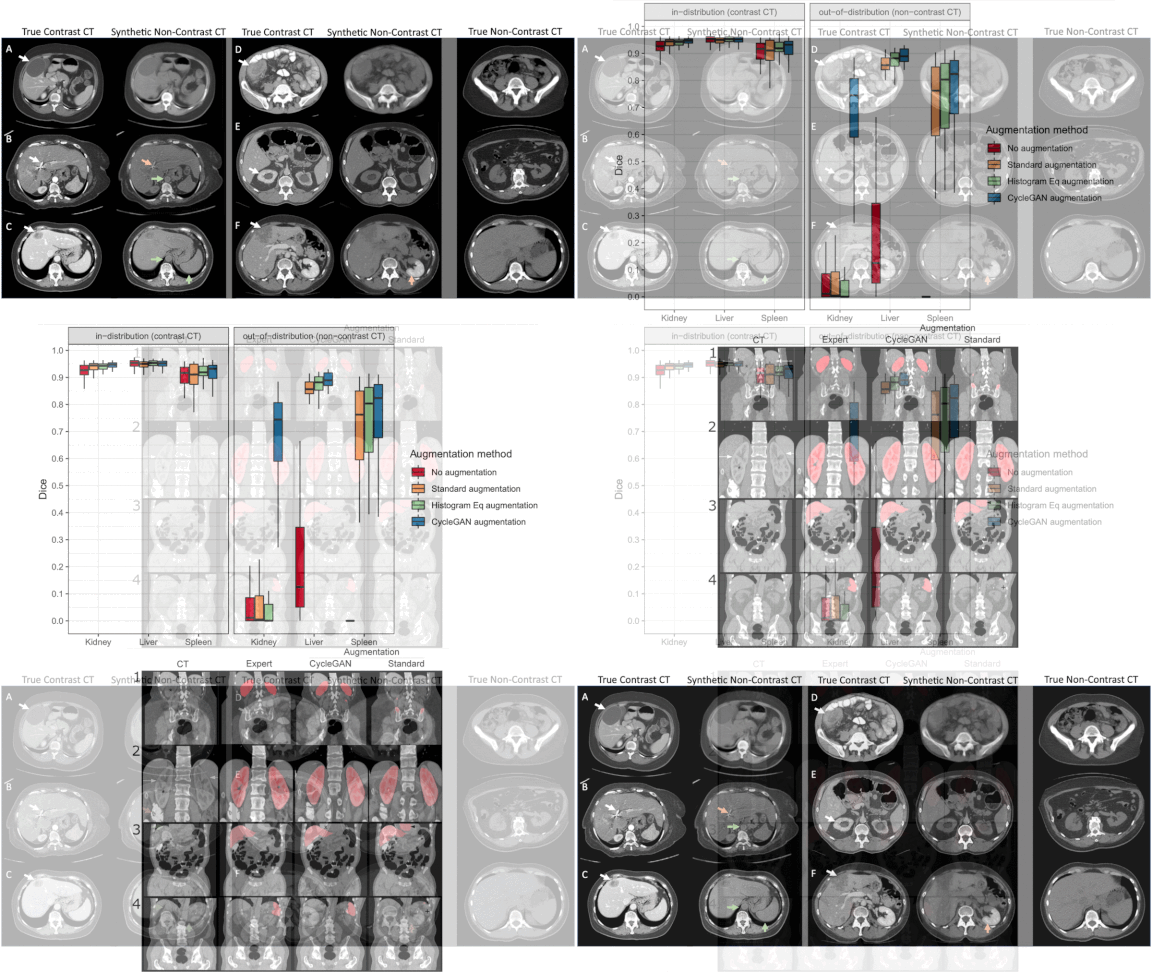
Convolutional neural networks are good at recognizing disease symptoms in medical scans of patients who were injected with iodine-based dye, that makes their organs more visible. But some patients can’t take the dye. Now synthetic scans from a GAN are helping CNNs learn to analyze undyed images.
September 30, 20202 min read
Guess What Happens Next: Research teaches robots to predict unseen obstacles.
U-Net

Guess What Happens Next: Research teaches robots to predict unseen obstacles.

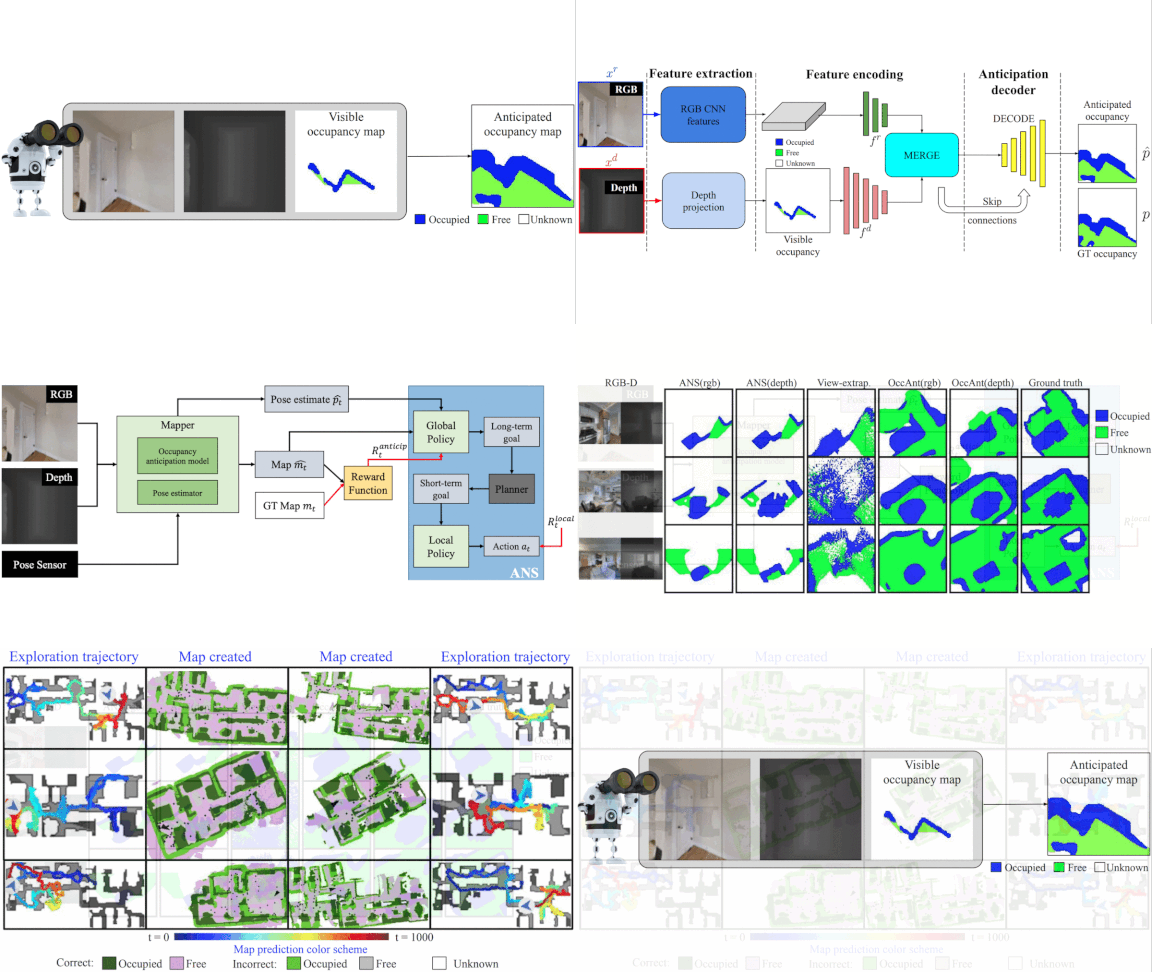
New research teaches robots to anticipate what’s coming rather than focusing on what’s right in front of them. Researchers developed Occupancy Anticipation (OA), a navigation system that predicts unseen obstacles in addition to observing those in its field of view.

September 23, 20202 min read
Guess What Happens Next: Research teaches robots to predict unseen obstacles.
U-Net

Guess What Happens Next: Research teaches robots to predict unseen obstacles.

New research teaches robots to anticipate what’s coming rather than focusing on what’s right in front of them. Researchers developed Occupancy Anticipation (OA), a navigation system that predicts unseen obstacles in addition to observing those in its field of view.

September 23, 20202 min read
Guest Speaker: Deepfake method syncs up mouth movements with words.
U-Net

Guest Speaker: Deepfake method syncs up mouth movements with words.

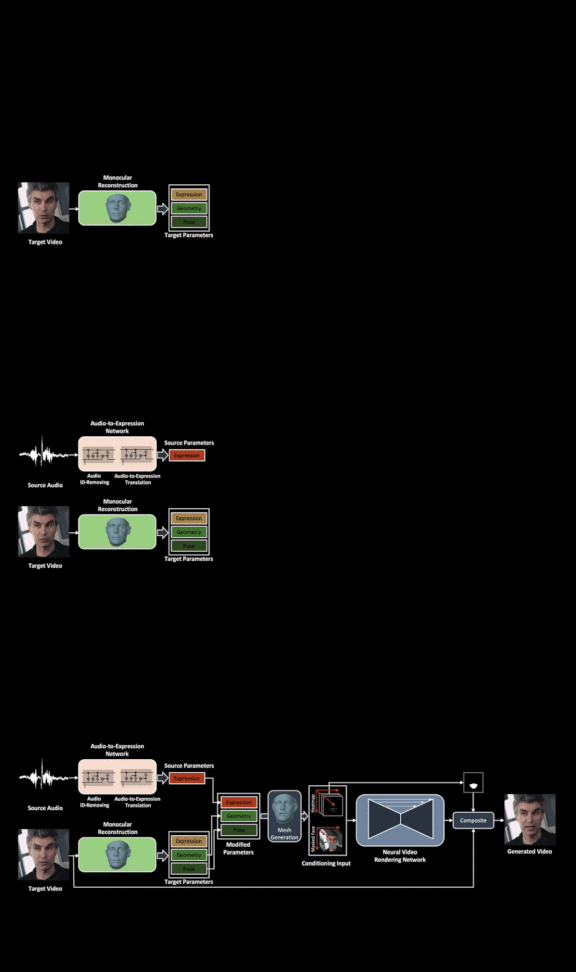
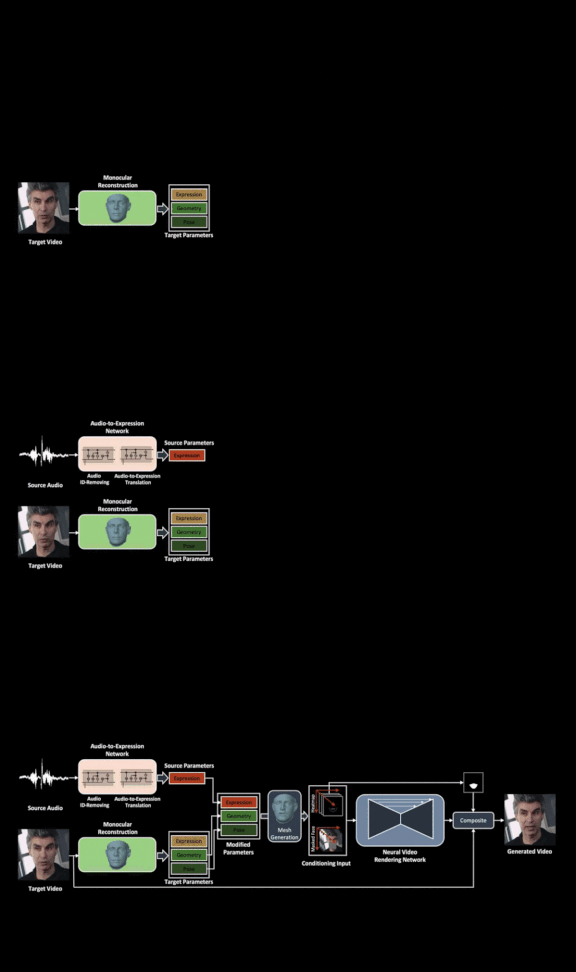
Deepfake videos in which one person appears to speak another’s words have appeared in entertainment, advertising, and politics. New research ups the ante for an application that enables new forms of both creative expression and

March 11, 20202 min read
Guest Speaker: Deepfake method syncs up mouth movements with words.
U-Net

Guest Speaker: Deepfake method syncs up mouth movements with words.

Deepfake videos in which one person appears to speak another’s words have appeared in entertainment, advertising, and politics. New research ups the ante for an application that enables new forms of both creative expression and

March 11, 20202 min read
Locating Landmarks on the Fly: AI model identifies stationary objects from radar scans.
U-Net

Locating Landmarks on the Fly: AI model identifies stationary objects from radar scans.

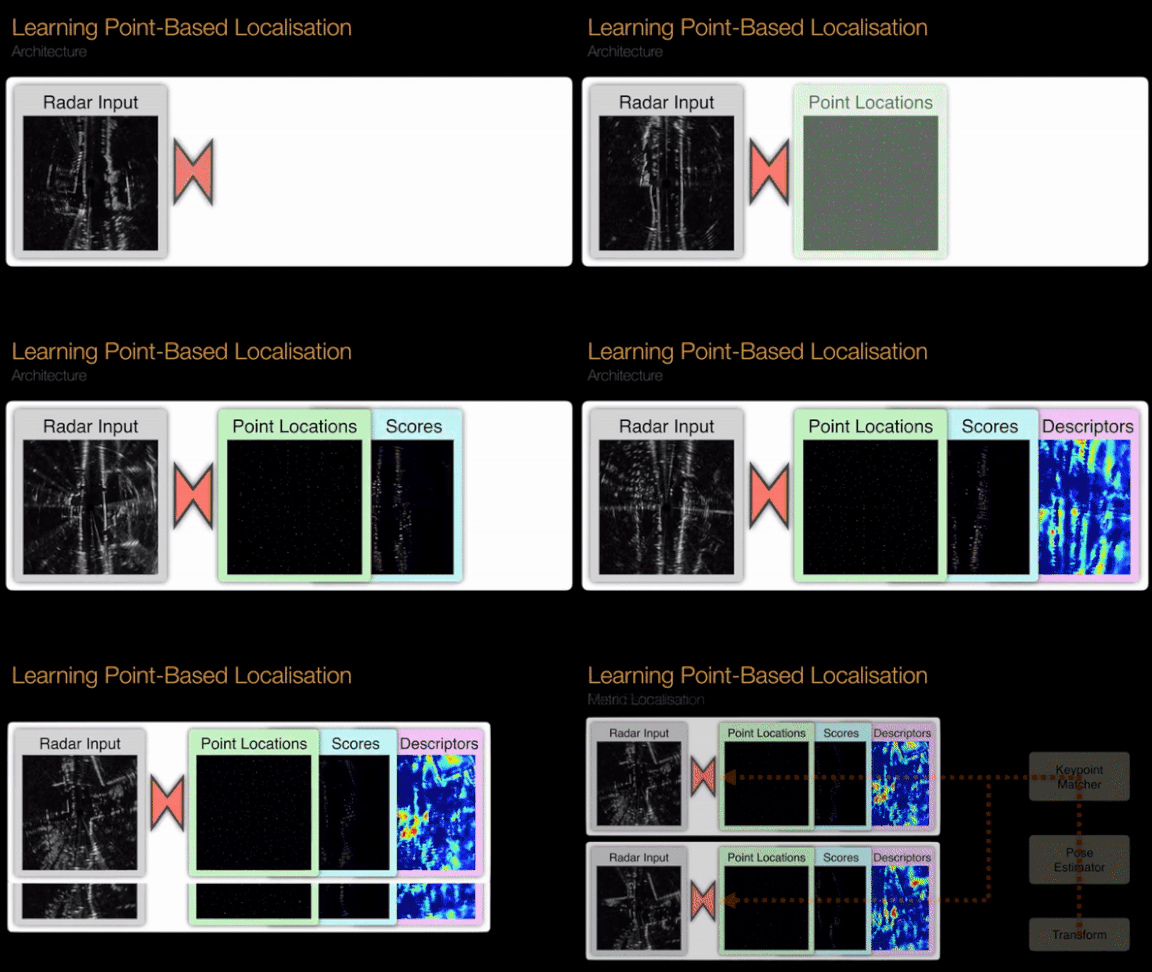
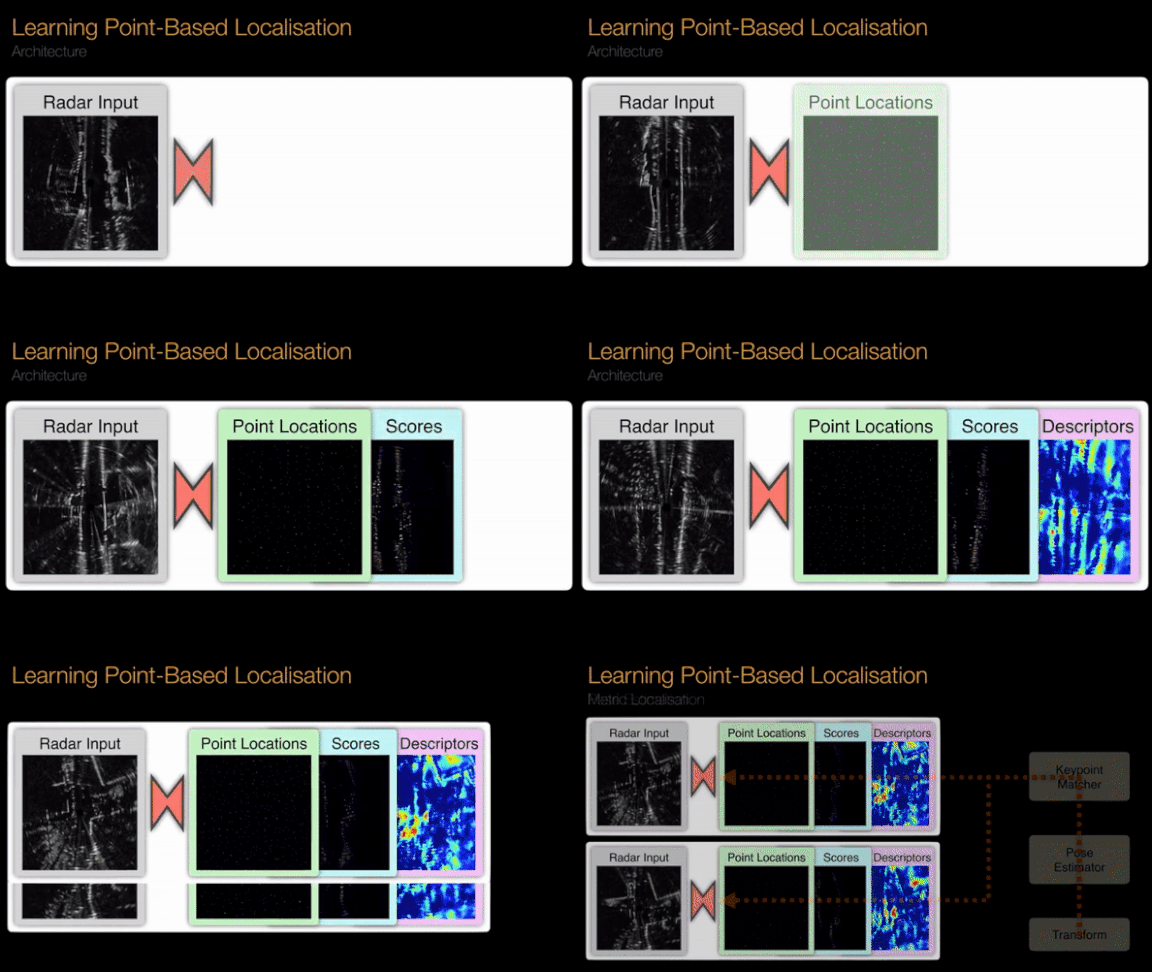
Directions such as “turn left at the big tree, go three blocks, and stop at the big red house on your left” can get you to your destination because they refer to stationary landmarks. New research enables self-driving cars to identify such stable indicators on their own.

March 4, 20202 min read
Locating Landmarks on the Fly: AI model identifies stationary objects from radar scans.
U-Net

Locating Landmarks on the Fly: AI model identifies stationary objects from radar scans.

Directions such as “turn left at the big tree, go three blocks, and stop at the big red house on your left” can get you to your destination because they refer to stationary landmarks. New research enables self-driving cars to identify such stable indicators on their own.

March 4, 20202 min read
Periscope Vision: Researchers used deep learning to see around corners.
U-Net

Periscope Vision: Researchers used deep learning to see around corners.

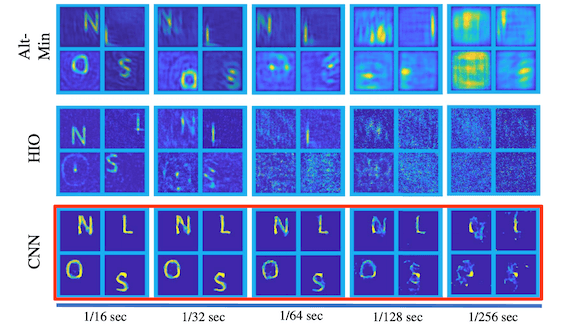
Wouldn’t it be great to see around corners? Deep learning researchers are working on it. Researchers developed deep-inverse correlography, a technique that interprets reflected light to reveal objects outside the line of sight.

February 19, 20202 min read
Periscope Vision: Researchers used deep learning to see around corners.
U-Net

Periscope Vision: Researchers used deep learning to see around corners.

Wouldn’t it be great to see around corners? Deep learning researchers are working on it. Researchers developed deep-inverse correlography, a technique that interprets reflected light to reveal objects outside the line of sight.

February 19, 20202 min read
Anonymous Faces
U-Net

Anonymous Faces

A number of countries restrict commercial use of personal data without consent unless they’re fully anonymized. A new paper proposes a way to anonymize images of faces, purportedly without degrading their usefulness in applications that rely on face recognition.

October 2, 20192 min read
Anonymous Faces
U-Net

Anonymous Faces

A number of countries restrict commercial use of personal data without consent unless they’re fully anonymized. A new paper proposes a way to anonymize images of faces, purportedly without degrading their usefulness in applications that rely on face recognition.

October 2, 20192 min read
Points Paint the Picture
U-Net

Points Paint the Picture

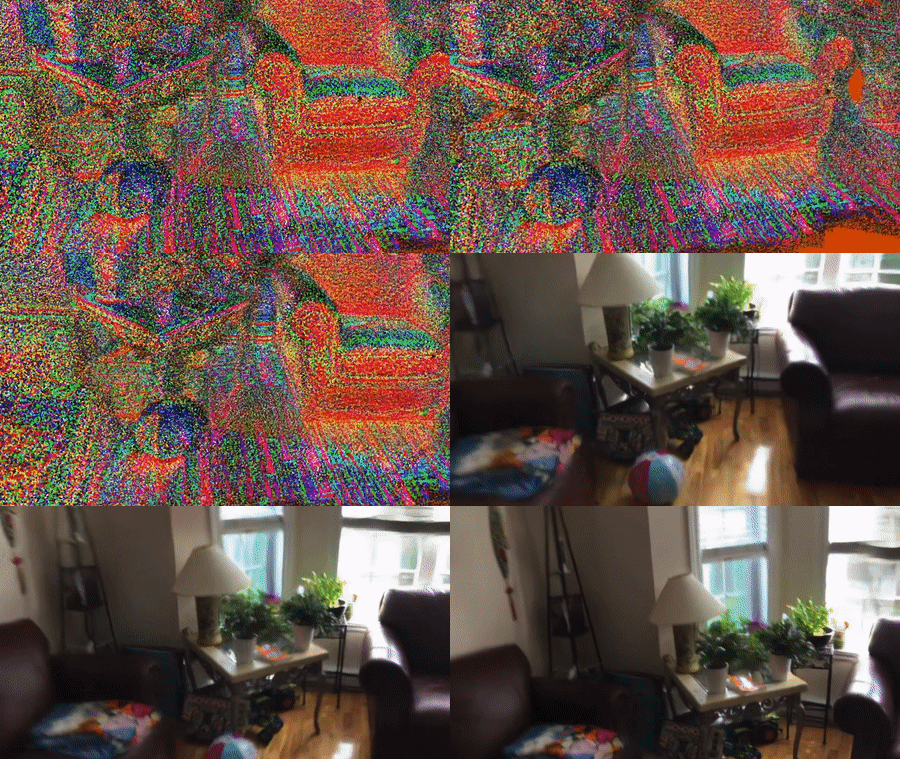
Creating a virtual representation of a scene using traditional polygons and texture maps involves several complex operations, and even neural-network approaches have required manual preprocessing. Researchers propose a new deep-learning pipeline that visualizes scenes with far less fuss.

September 4, 20192 min read
Points Paint the Picture
U-Net

Points Paint the Picture

Creating a virtual representation of a scene using traditional polygons and texture maps involves several complex operations, and even neural-network approaches have required manual preprocessing. Researchers propose a new deep-learning pipeline that visualizes scenes with far less fuss.

September 4, 20192 min read

Subscribe to The Batch

Stay updated with weekly AI News and Insights delivered to your inbox