Forecasting Multiple Time Series: Amazon’s Chronos-2 sorts out tangled variables to make better predictions
Transformers

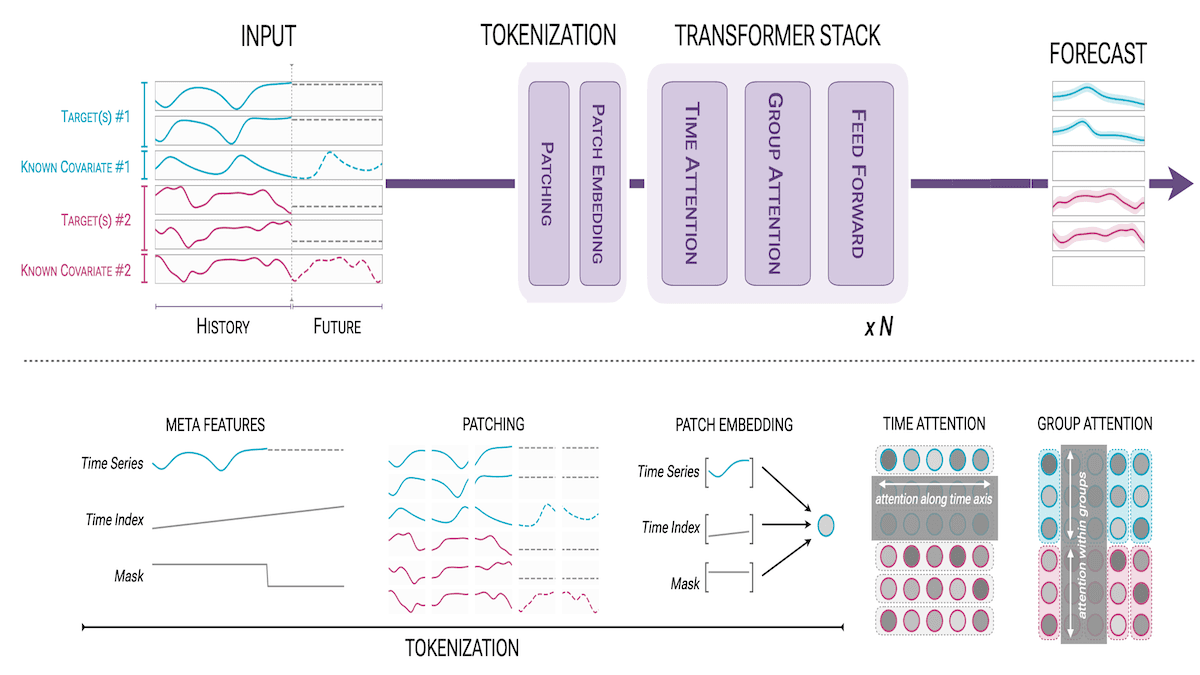
Forecasting Multiple Time Series: Amazon’s Chronos-2 sorts out tangled variables to make better predictions

Transformers are well suited to predicting future values of time series like energy prices, wages, or weather, but often — as in those examples — multiple time series often influence one another. Researchers built a model that can forecast multiple time series simultaneously.

November 12, 20253 min read
Reasoning Without “Thinking”: All about Ant Group’s Ling-1T, an open, non-reasoning model that outperforms closed competitors
Transformers

Reasoning Without “Thinking”: All about Ant Group’s Ling-1T, an open, non-reasoning model that outperforms closed competitors

Reasoning models typically learn to undertake a separate process of “thinking” through their output of before they produce final response. Ant Group built a top non-reasoning model that can take similar steps as part of its immediate response.

October 22, 20253 min read
DeepSeek Cuts Inference Costs: DeepSeek-V3.2-Exp streamlines processing using a "lightning indexer," boosting efficiency
Transformers

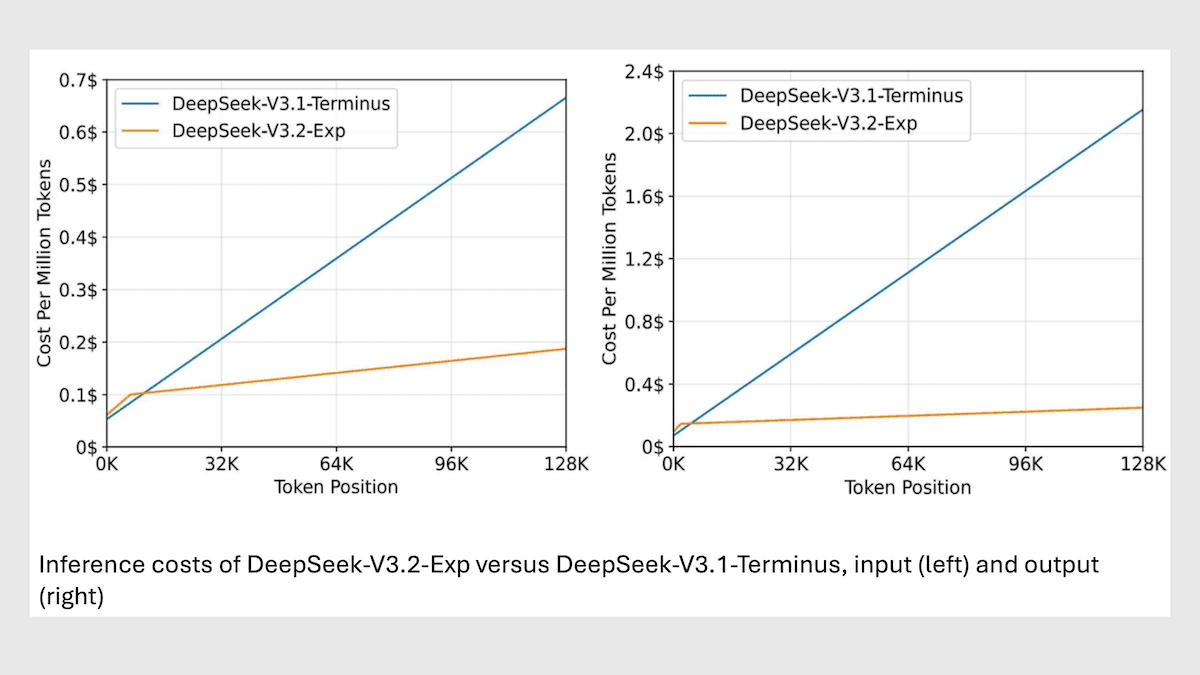
DeepSeek Cuts Inference Costs: DeepSeek-V3.2-Exp streamlines processing using a "lightning indexer," boosting efficiency

DeepSeek’s latest large language model can cut inference costs by more than half and processes long contexts dramatically faster relative to its predecessor.

October 15, 20253 min read
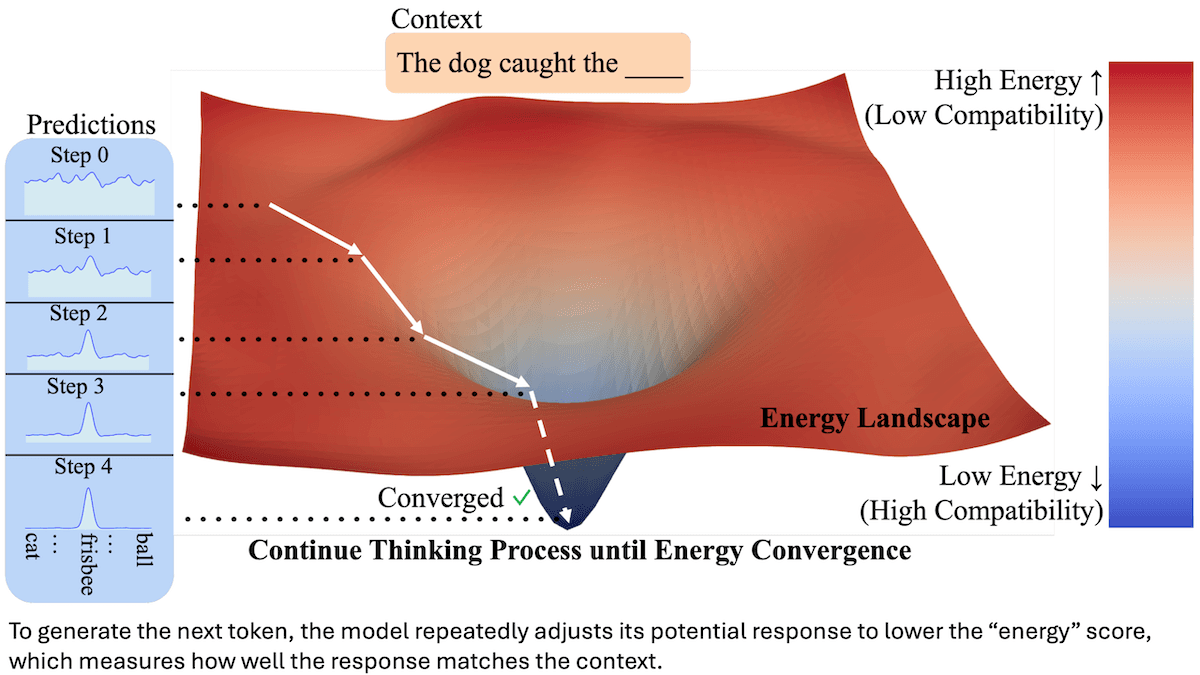
Transformers Energized: Energy-Based Transformers (EBTs) use gradient descent to gradually predict the next token
Transformers

Transformers Energized: Energy-Based Transformers (EBTs) use gradient descent to gradually predict the next token

A new type of transformer can check its work. Instead of guessing the next output token in one shot like a typical transformer, it starts with a rough version of the token and improves it step by step.

September 17, 20253 min read
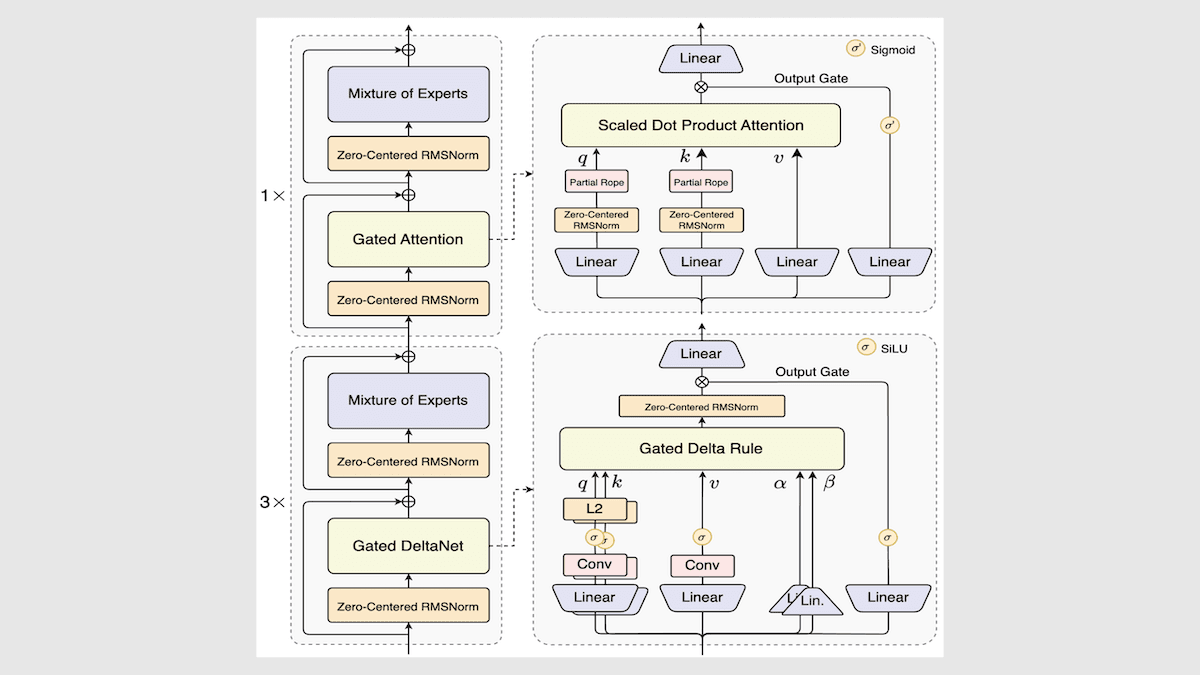
Qwen3-Next Accelerates: Alibaba’s new model uses hybrid attention layers and a sparse MoE architecture for speed and performance
Transformers

Qwen3-Next Accelerates: Alibaba’s new model uses hybrid attention layers and a sparse MoE architecture for speed and performance

Alibaba updated its popular Qwen3 open-weights models with a number of fresh, speed-boosting tweaks.

September 17, 20253 min read
10 Million Tokens of Input Context: ATLAS, a transformer-like architecture, can process a context window as large as ten million tokens
Transformers

10 Million Tokens of Input Context: ATLAS, a transformer-like architecture, can process a context window as large as ten million tokens

An alternative to attention enables large language models to track relationships among words across extraordinarily wide spans of text.

September 10, 20253 min read
Better Video, Fewer Tokens: STORM Processes Fewer Tokens And Still Beats GPT-4o On Video Understanding Benchmarks
Transformers

Better Video, Fewer Tokens: STORM Processes Fewer Tokens And Still Beats GPT-4o On Video Understanding Benchmarks

Researchers reduced the number of tokens needed to represent video frames to be fed to a transformer.

June 11, 20252 min read
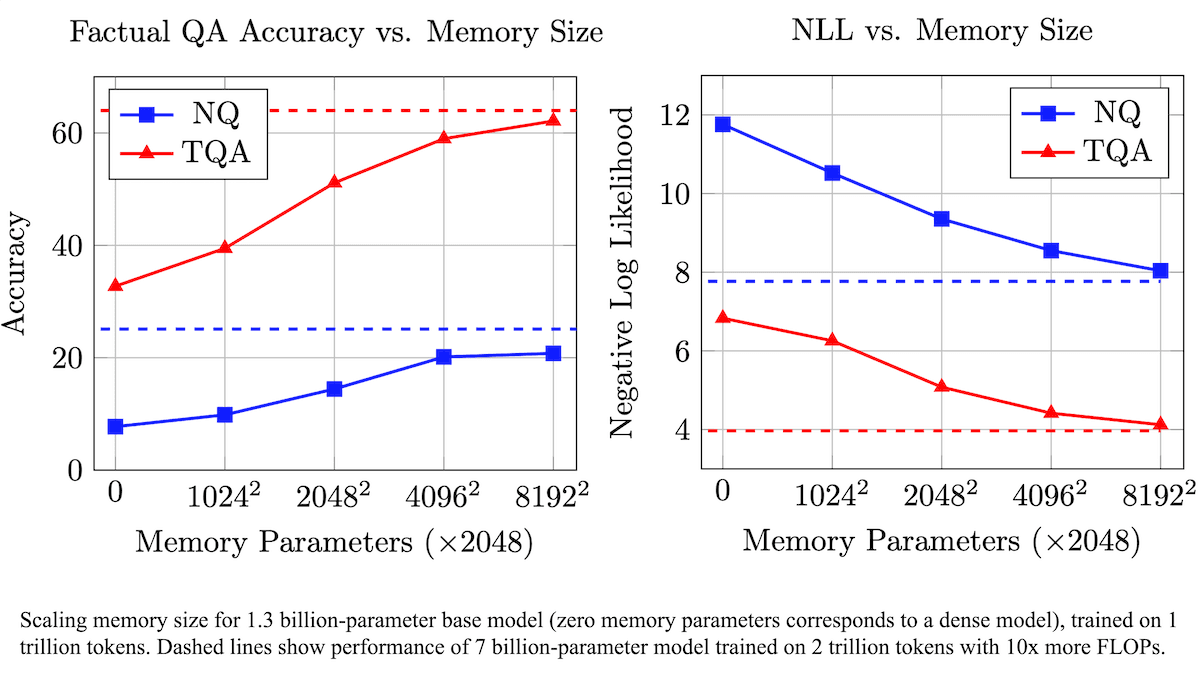
Memory Layers for More-Factual Output: Meta researchers build Llama-style models that recall details without needing more computing resources
Transformers

Memory Layers for More-Factual Output: Meta researchers build Llama-style models that recall details without needing more computing resources

Improving a large language model’s factual accuracy typically requires making it bigger, which in turn, involves more computation. Researchers devised an architecture that enables models to recall relevant details without significantly increasing the amount of computation required.

May 14, 20253 min read
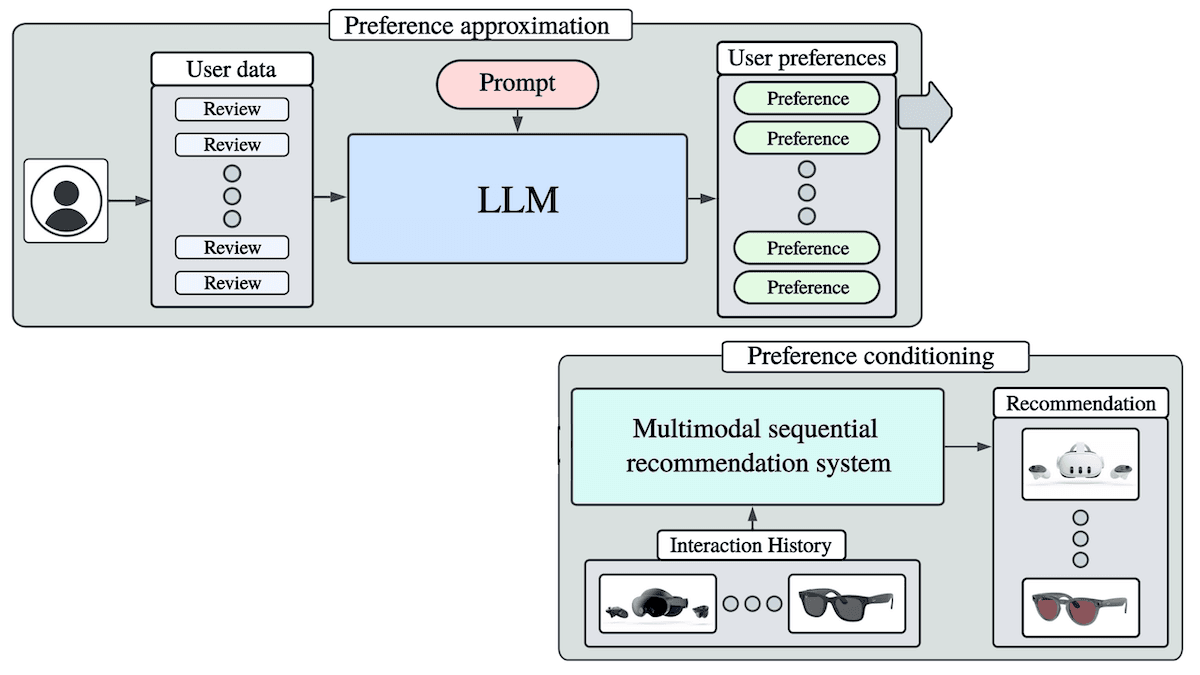
Inferring Customer Preferences: LLMs boost shopping recommendations by decoding what users want
Transformers

Inferring Customer Preferences: LLMs boost shopping recommendations by decoding what users want

Large language models can improve systems that recommend items to purchase by inferring customer preferences.

April 30, 20252 min read
Toward LLMs That Understand Misspellings: New byte-based model beats Llama 3 on spelling, noise, and translation
Transformers

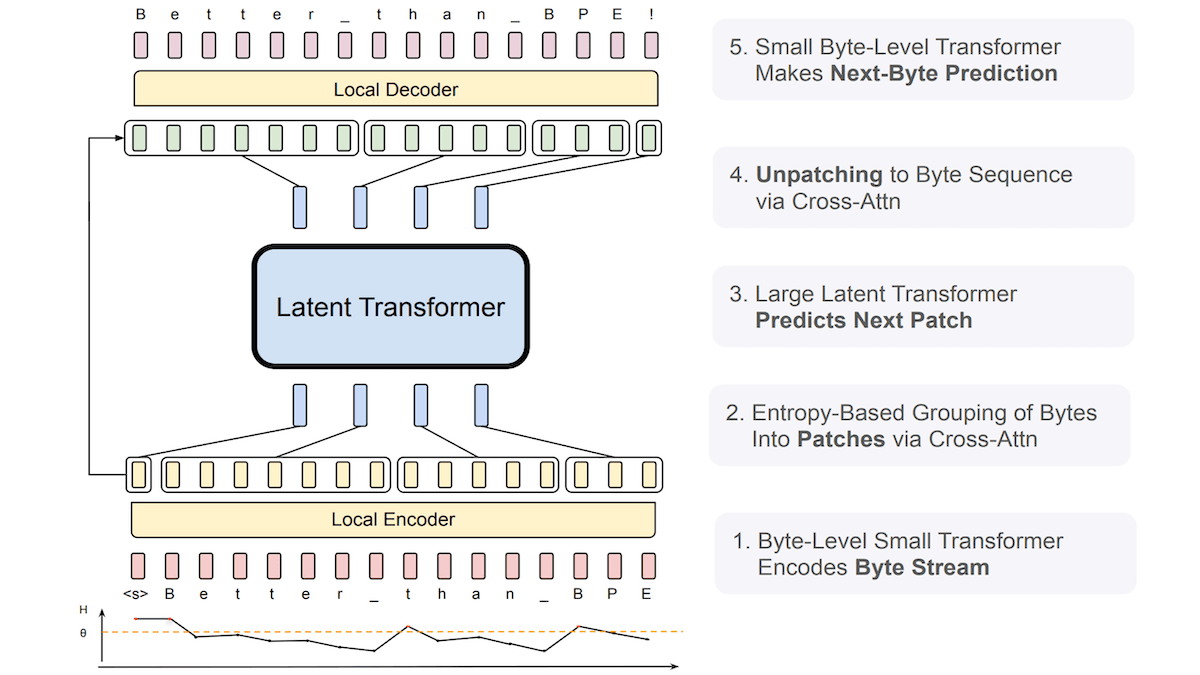
Toward LLMs That Understand Misspellings: New byte-based model beats Llama 3 on spelling, noise, and translation

Researchers built a model that’s more robust to noisy inputs like misspellings, smarter about character-level information like the number of R's in strawberry, and potentially better able to understand unfamiliar languages that might share groups of letters with familiar languages.

April 16, 20253 min read
Better Than Trees for Tabular Data: Transformers can outperform decision trees at predicting unlabeled spreadsheet cells
Transformers

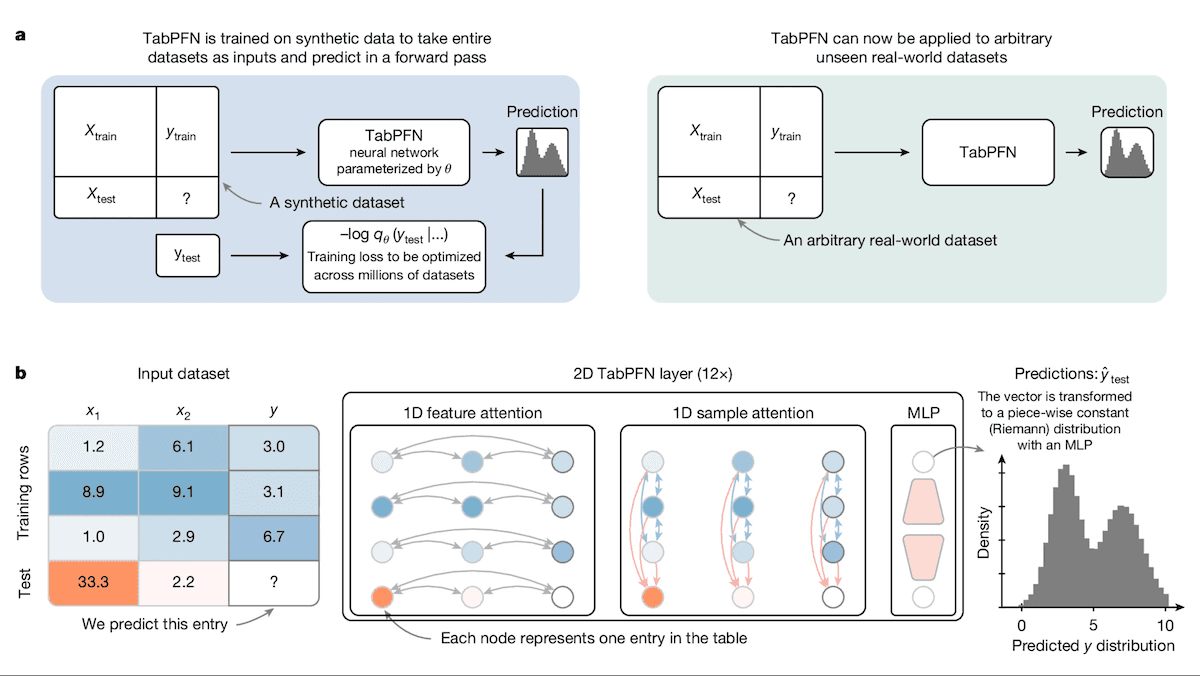
Better Than Trees for Tabular Data: Transformers can outperform decision trees at predicting unlabeled spreadsheet cells

If you have a collection of variables that represent, say, a cancer patient and you want to classify the patient’s illness as likely cancer or not, algorithms based on decision trees, such as gradient-boosted trees, typically perform better than neural networks.

April 9, 20253 min read
Reasoning in Vectors, Not Text: Meta introduces Chain of Continuous Thought (Coconut) to improve next-token prediction
Transformers

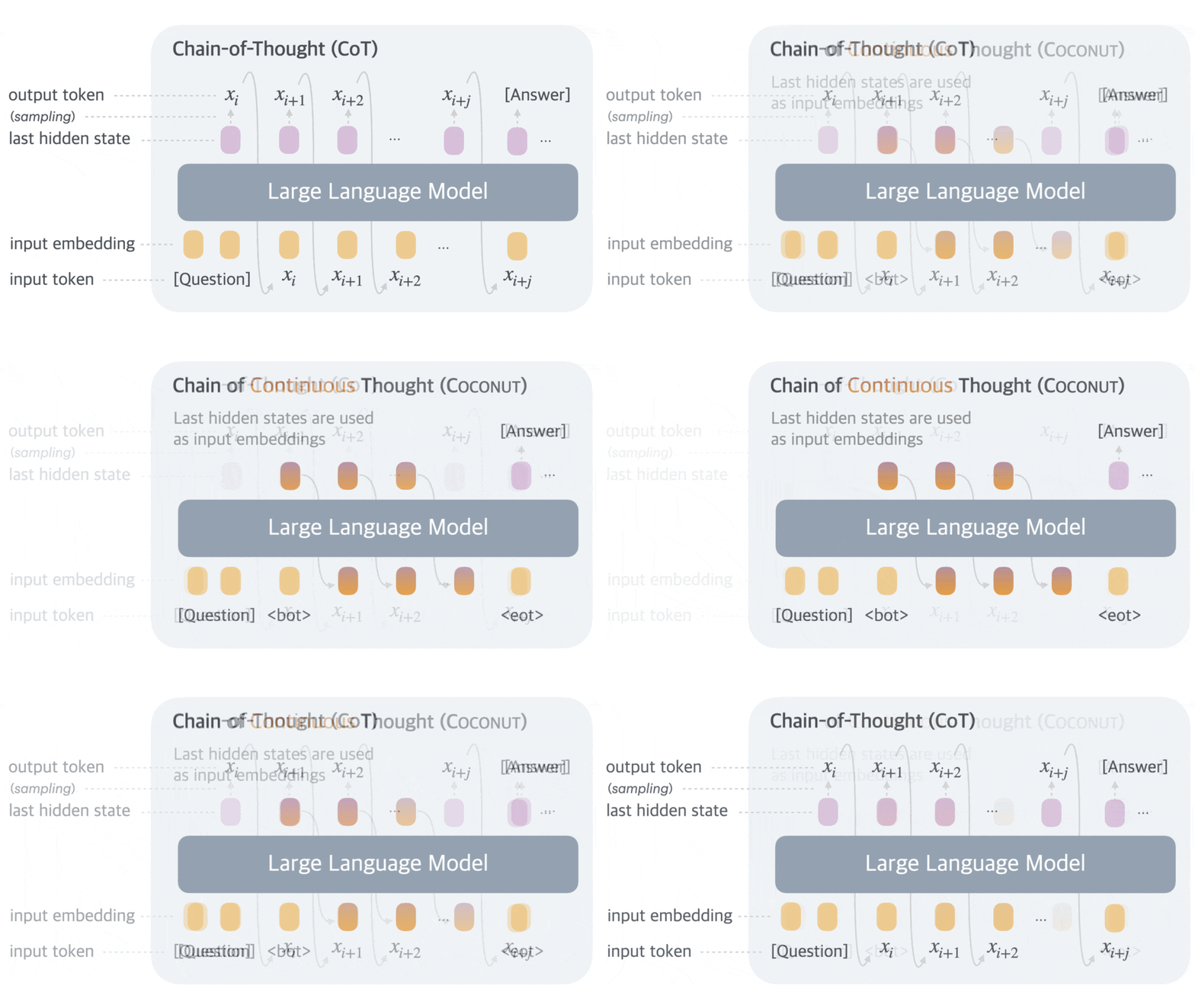
Reasoning in Vectors, Not Text: Meta introduces Chain of Continuous Thought (Coconut) to improve next-token prediction

Although large language models can improve their performance by generating a chain of thought (CoT) — intermediate text tokens that break down the process of responding to a prompt into a series of steps.

February 26, 20253 min read
Reasoning in Vectors, Not Text: Meta introduces Chain of Continuous Thought (Coconut) to improve next-token prediction
Transformers

Reasoning in Vectors, Not Text: Meta introduces Chain of Continuous Thought (Coconut) to improve next-token prediction

Although large language models can improve their performance by generating a chain of thought (CoT) — intermediate text tokens that break down the process of responding to a prompt into a series of steps.

February 26, 20253 min read
Calibrating Contrast: X-CLR, an approach to contrastive learning for better vision models
Transformers

Calibrating Contrast: X-CLR, an approach to contrastive learning for better vision models

Contrastive loss functions make it possible to produce good embeddings without labeled data. A twist on this idea makes even more useful embeddings.

January 15, 20252 min read
Calibrating Contrast: X-CLR, an approach to contrastive learning for better vision models
Transformers

Calibrating Contrast: X-CLR, an approach to contrastive learning for better vision models

Contrastive loss functions make it possible to produce good embeddings without labeled data. A twist on this idea makes even more useful embeddings.

January 15, 20252 min read

Subscribe to The Batch

Stay updated with weekly AI News and Insights delivered to your inbox