Dynamic Benchmarks: A platform for fooling language models
Stanford University

Dynamic Benchmarks: A platform for fooling language models

Benchmarks provide a scientific basis for evaluating model performance, but they don’t necessarily map well to human cognitive abilities. Facebook aims to close the gap through a dynamic benchmarking method that keeps humans in the loop.
October 14, 20202 min read
More Efficient Action Recognition: Using Active Shift Layer to analyze time series data
Stanford University

More Efficient Action Recognition: Using Active Shift Layer to analyze time series data

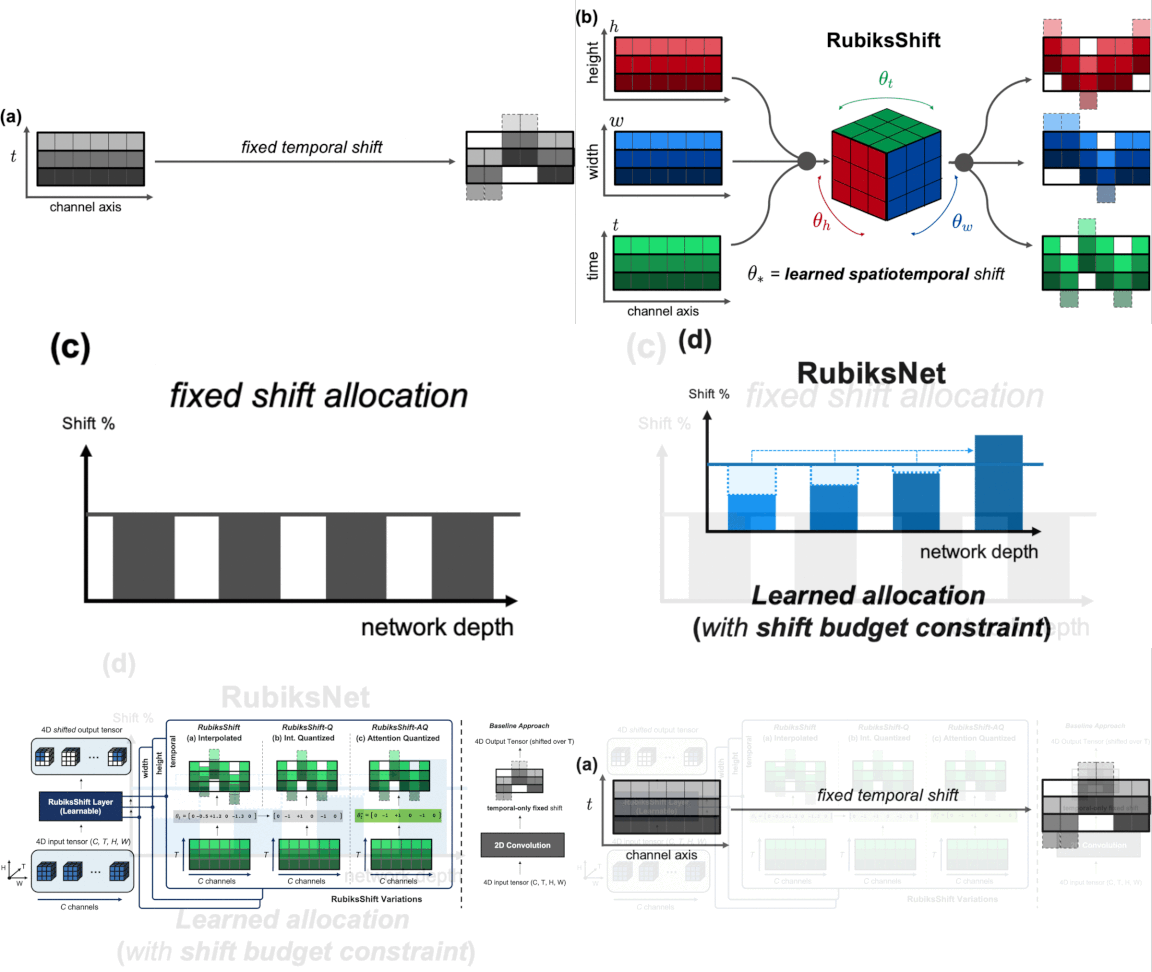
Recognizing actions performed in a video requires understanding each frame and relationships between the frames. Previous research devised a way to analyze individual images efficiently known as Active Shift Layer (ASL). New research extends this technique to the steady march of video frames.

October 7, 20202 min read
More Efficient Action Recognition: Using Active Shift Layer to analyze time series data
Stanford University

More Efficient Action Recognition: Using Active Shift Layer to analyze time series data

Recognizing actions performed in a video requires understanding each frame and relationships between the frames. Previous research devised a way to analyze individual images efficiently known as Active Shift Layer (ASL). New research extends this technique to the steady march of video frames.

October 7, 20202 min read
The Internet in a Knowledge Graph: How DiffBot is building the world's largest knowledge graph
Stanford University

The Internet in a Knowledge Graph: How DiffBot is building the world's largest knowledge graph

An ambitious company is using deep learning to extract and find associations from all the information on the internet — and it isn’t Google. Diffbot built a system that reads web code, parses text, classifies images, and assembles them into what it says is the world’s largest knowledge graph.

September 23, 20202 min read
The Internet in a Knowledge Graph: How DiffBot is building the world's largest knowledge graph
Stanford University

The Internet in a Knowledge Graph: How DiffBot is building the world's largest knowledge graph

An ambitious company is using deep learning to extract and find associations from all the information on the internet — and it isn’t Google. Diffbot built a system that reads web code, parses text, classifies images, and assembles them into what it says is the world’s largest knowledge graph.

September 23, 20202 min read
Human-Level X-Ray Diagnosis: A research summary of CheXbert for labeling chest x-rays
Stanford University

Human-Level X-Ray Diagnosis: A research summary of CheXbert for labeling chest x-rays

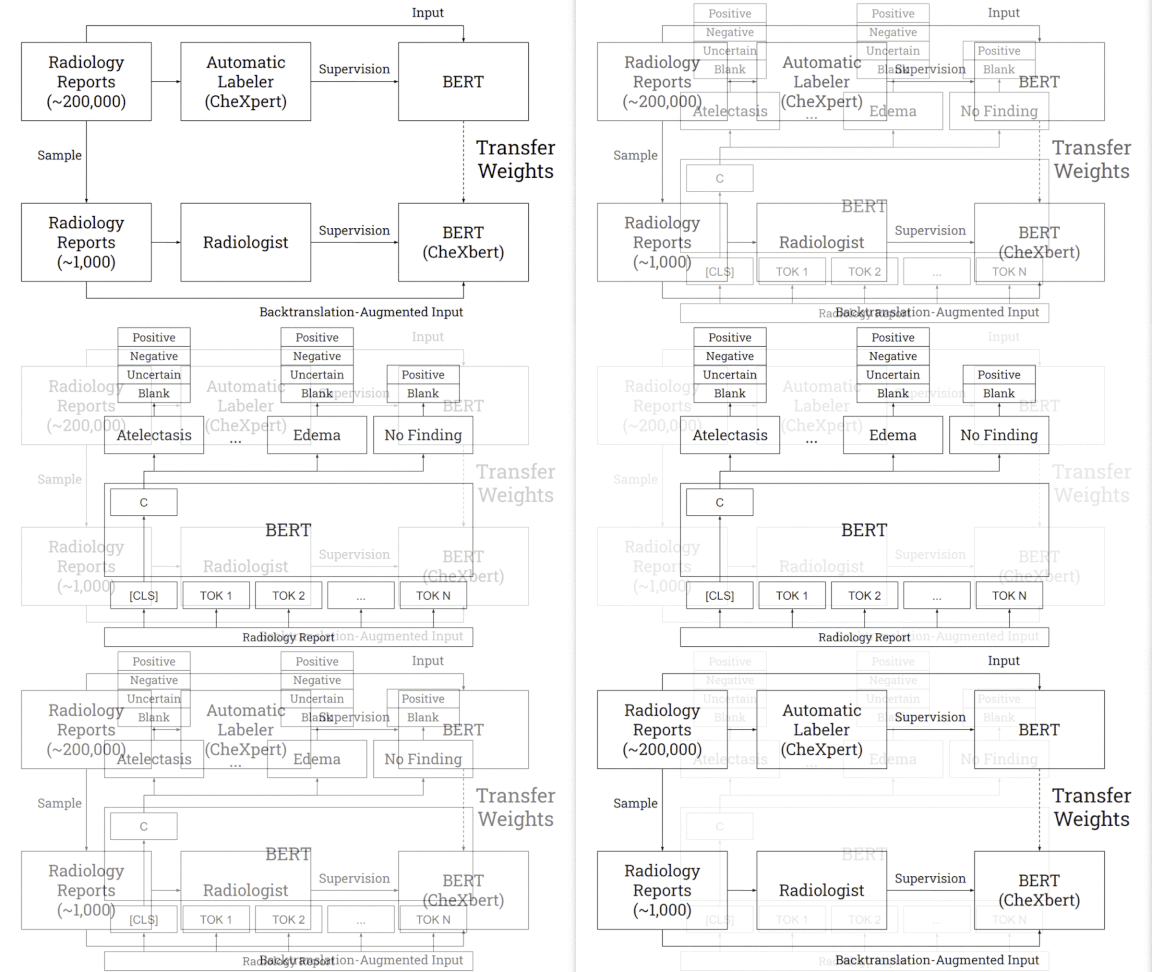
Like nurses who can’t decipher a doctor’s handwriting, machine learning models can’t decipher medical scans — without labels. Conveniently, natural language models can read medical records to extract labels for X-ray images.

May 20, 20202 min read
Human-Level X-Ray Diagnosis: A research summary of CheXbert for labeling chest x-rays
Stanford University

Human-Level X-Ray Diagnosis: A research summary of CheXbert for labeling chest x-rays

Like nurses who can’t decipher a doctor’s handwriting, machine learning models can’t decipher medical scans — without labels. Conveniently, natural language models can read medical records to extract labels for X-ray images.

May 20, 20202 min read
Toward AI We Can Count On: Public trust recommendations from AI researchers
Stanford University

Toward AI We Can Count On: Public trust recommendations from AI researchers

A consortium of top AI experts proposed concrete steps to help machine learning engineers secure the public’s trust. Dozens of researchers and technologists recommended actions to counter public skepticism toward artificial intelligence, fueled by issues like data privacy.

April 29, 20201 min read
Toward AI We Can Count On: Public trust recommendations from AI researchers
Stanford University

Toward AI We Can Count On: Public trust recommendations from AI researchers

A consortium of top AI experts proposed concrete steps to help machine learning engineers secure the public’s trust. Dozens of researchers and technologists recommended actions to counter public skepticism toward artificial intelligence, fueled by issues like data privacy.

April 29, 20201 min read
Moderating the ML Roller Coaster: A technique to avoid double descent in AI
Stanford University

Moderating the ML Roller Coaster: A technique to avoid double descent in AI

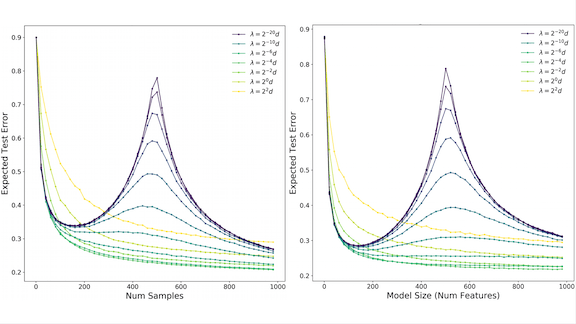
Wait a minute — we added training data, and our model’s performance got worse?! New research offers a way to avoid so-called double descent.

April 22, 20202 min read
Moderating the ML Roller Coaster: A technique to avoid double descent in AI
Stanford University

Moderating the ML Roller Coaster: A technique to avoid double descent in AI

Wait a minute — we added training data, and our model’s performance got worse?! New research offers a way to avoid so-called double descent.

April 22, 20202 min read
Online Conference Goes Antiviral: A conference explored how AI was deployed against Covid-19.
Stanford University

Online Conference Goes Antiviral: A conference explored how AI was deployed against Covid-19.

AI experts convened to discuss how to combat the coronavirus crisis. An online conference hosted by Stanford University’s Institute for Human-Centered AI explored how machine learning is being deployed to address this pandemic — and prepare for the next one.

April 8, 20202 min read
Online Conference Goes Antiviral: A conference explored how AI was deployed against Covid-19.
Stanford University

Online Conference Goes Antiviral: A conference explored how AI was deployed against Covid-19.

AI experts convened to discuss how to combat the coronavirus crisis. An online conference hosted by Stanford University’s Institute for Human-Centered AI explored how machine learning is being deployed to address this pandemic — and prepare for the next one.

April 8, 20202 min read
Chatbots Disagree on Covid-19: Medical chatbots offered conflicting Covid advice.
Stanford University

Chatbots Disagree on Covid-19: Medical chatbots offered conflicting Covid advice.

Chatbots designed to recognize Covid-19 symptoms dispense alarmingly inconsistent recommendations. Given the same symptoms, eight high-profile medical bots responded with divergent, often conflicting advice.

April 1, 20201 min read
Chatbots Disagree on Covid-19: Medical chatbots offered conflicting Covid advice.
Stanford University

Chatbots Disagree on Covid-19: Medical chatbots offered conflicting Covid advice.

Chatbots designed to recognize Covid-19 symptoms dispense alarmingly inconsistent recommendations. Given the same symptoms, eight high-profile medical bots responded with divergent, often conflicting advice.

April 1, 20201 min read

Subscribe to The Batch

Stay updated with weekly AI News and Insights delivered to your inbox