Preserving Detail in Image Inputs: Better image compression for computer vision datasets
ResNet

Preserving Detail in Image Inputs: Better image compression for computer vision datasets

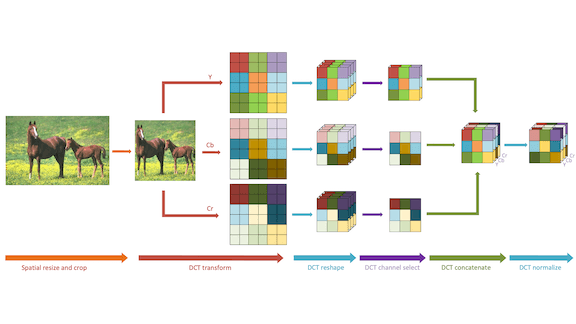
Given real-world constraints on memory and processing time, images are often downsampled before they’re fed into a neural network. But the process removes fine details, and that degrades accuracy. A new technique squeezes images with less compromise.

April 22, 20202 min read
Preserving Detail in Image Inputs: Better image compression for computer vision datasets
ResNet

Preserving Detail in Image Inputs: Better image compression for computer vision datasets

Given real-world constraints on memory and processing time, images are often downsampled before they’re fed into a neural network. But the process removes fine details, and that degrades accuracy. A new technique squeezes images with less compromise.
April 22, 20202 min read
Outside the Norm: Batch normalization contributes to neural network accuracy.
ResNet

Outside the Norm: Batch normalization contributes to neural network accuracy.

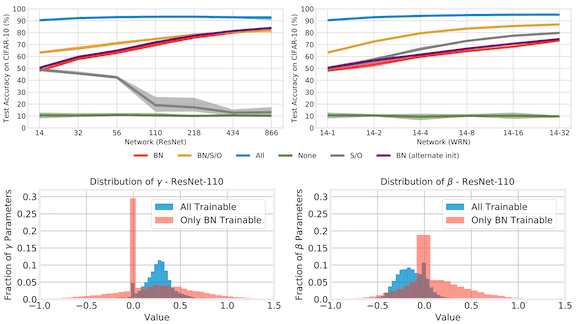
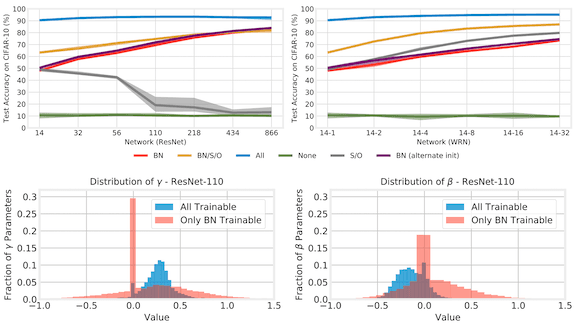
Batch normalization is a technique that normalizes layer outputs to accelerate neural network training. But new research shows that it has other effects that may be more important.

April 8, 20202 min read
Outside the Norm: Batch normalization contributes to neural network accuracy.
ResNet

Outside the Norm: Batch normalization contributes to neural network accuracy.

Batch normalization is a technique that normalizes layer outputs to accelerate neural network training. But new research shows that it has other effects that may be more important.

April 8, 20202 min read
Self-Supervised Simplicity: Image classification with simple contrastive learning (SimCLR)
ResNet

Self-Supervised Simplicity: Image classification with simple contrastive learning (SimCLR)

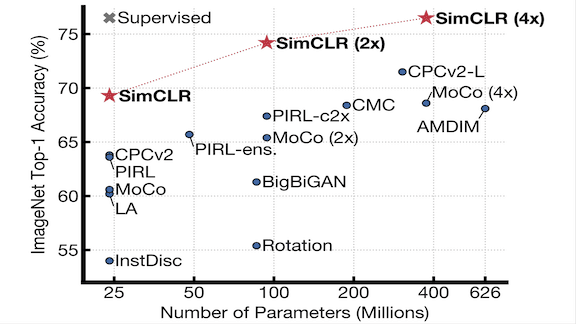
A simple linear classifier paired with a self-supervised feature extractor outperformed a supervised deep learning model on ImageNet, according to new research.

March 18, 20202 min read
Self-Supervised Simplicity: Image classification with simple contrastive learning (SimCLR)
ResNet

Self-Supervised Simplicity: Image classification with simple contrastive learning (SimCLR)

A simple linear classifier paired with a self-supervised feature extractor outperformed a supervised deep learning model on ImageNet, according to new research.

March 18, 20202 min read
Surgical Speed-Up: An AI tool for diagnosing brain tumor scans
ResNet

Surgical Speed-Up: An AI tool for diagnosing brain tumor scans

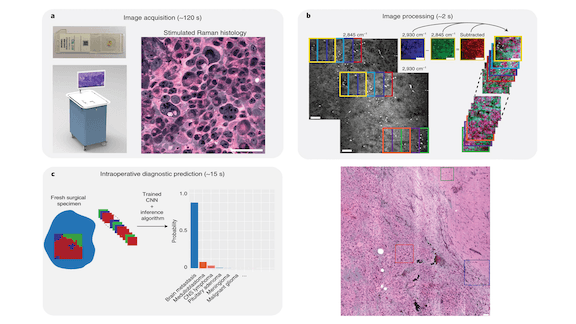
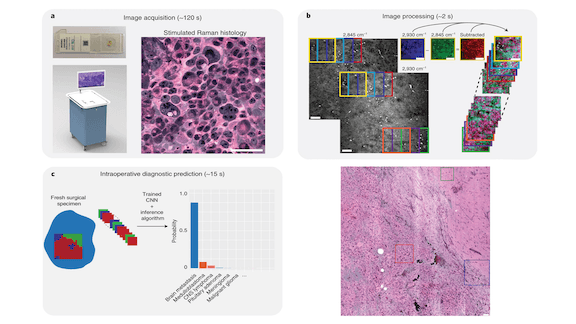
Every second counts when a patient’s skull is open in the operating room. A new technique based on deep learning can shorten some brain surgeries. During brain cancer operations, surgeons must stop in mid-operation for up to a half hour while a pathologist analyzes the tumor tissue.

February 26, 20202 min read
Surgical Speed-Up: An AI tool for diagnosing brain tumor scans
ResNet

Surgical Speed-Up: An AI tool for diagnosing brain tumor scans

Every second counts when a patient’s skull is open in the operating room. A new technique based on deep learning can shorten some brain surgeries. During brain cancer operations, surgeons must stop in mid-operation for up to a half hour while a pathologist analyzes the tumor tissue.

February 26, 20202 min read
Convolution Revolution
ResNet

Convolution Revolution

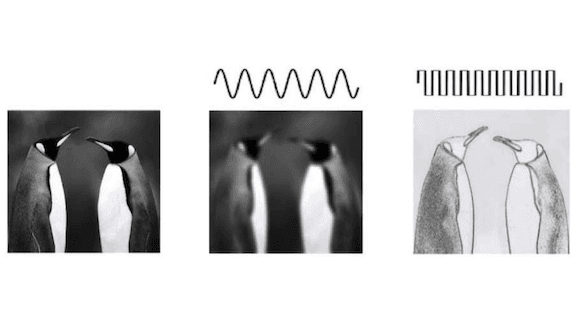
Looking at images, people see outlines before the details within them. A replacement for the traditional convolutional layer decomposes images based on this distinction between coarse and fine features.

November 13, 20192 min read
Convolution Revolution
ResNet

Convolution Revolution

Looking at images, people see outlines before the details within them. A replacement for the traditional convolutional layer decomposes images based on this distinction between coarse and fine features.

November 13, 20192 min read
High Accuracy, Low Compute
ResNet

High Accuracy, Low Compute

As neural networks have become more accurate, they’ve also ballooned in size and computational cost. That makes many state-of-the-art models impractical to run on phones and potentially smaller, less powerful devices.

October 16, 20192 min read
High Accuracy, Low Compute
ResNet

High Accuracy, Low Compute

As neural networks have become more accurate, they’ve also ballooned in size and computational cost. That makes many state-of-the-art models impractical to run on phones and potentially smaller, less powerful devices.

October 16, 20192 min read
Honey, I Shrunk the Network!
ResNet

Honey, I Shrunk the Network!

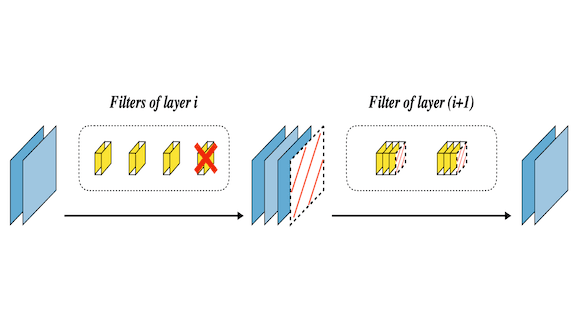
Deep learning models can be unwieldy and often impractical to run on smaller devices without major modification. Researchers at Facebook AI Research found a way to compress neural networks with minimal sacrifice in accuracy.

September 4, 20192 min read
Honey, I Shrunk the Network!
ResNet

Honey, I Shrunk the Network!

Deep learning models can be unwieldy and often impractical to run on smaller devices without major modification. Researchers at Facebook AI Research found a way to compress neural networks with minimal sacrifice in accuracy.

September 4, 20192 min read
Scaling Bayes
ResNet

Scaling Bayes

Neural networks are good at making predictions, but they’re not so good at estimating how certain they are. If the training data set is small and many sets of model parameters fit the data well, for instance, the network may not realize this explicitly, leading to overly confident predictions.

August 28, 20192 min read

Subscribe to The Batch

Stay updated with weekly AI News and Insights delivered to your inbox