Online Clues to Mental Illness: NLP model spots signs of mental illness in Facebook posts.
Natural Language Processing

Online Clues to Mental Illness: NLP model spots signs of mental illness in Facebook posts.

Can social media posts reveal early signs of mental illness? A new machine learning model shows promising results. Researchers developed a model that analyzes messages and images posted by Facebook users for indicators of psychological problems.

January 6, 20212 min read
Online Clues to Mental Illness: NLP model spots signs of mental illness in Facebook posts.
Natural Language Processing

Online Clues to Mental Illness: NLP model spots signs of mental illness in Facebook posts.

Can social media posts reveal early signs of mental illness? A new machine learning model shows promising results. Researchers developed a model that analyzes messages and images posted by Facebook users for indicators of psychological problems.

January 6, 20212 min read
The Proof Is in the Network: A transformer model that generates mathematical proofs
Natural Language Processing

The Proof Is in the Network: A transformer model that generates mathematical proofs

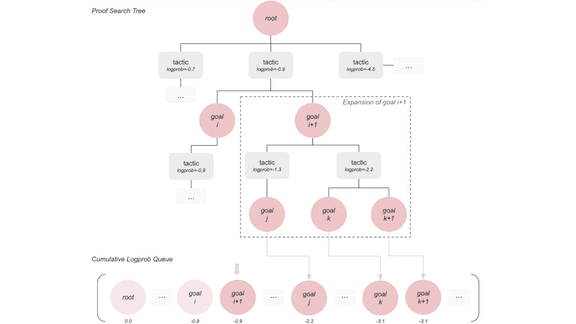
OpenAI’s Generative Pre-Trained Transformer (GPT) architecture has created coherent essays, images, and code. Now it generates mathematical proofs as well.

November 11, 20202 min read
The Proof Is in the Network: A transformer model that generates mathematical proofs
Natural Language Processing

The Proof Is in the Network: A transformer model that generates mathematical proofs

OpenAI’s Generative Pre-Trained Transformer (GPT) architecture has created coherent essays, images, and code. Now it generates mathematical proofs as well.

November 11, 20202 min read
Propaganda Watch: How military contractors fight disinformation with AI
Natural Language Processing

Propaganda Watch: How military contractors fight disinformation with AI

The U.S. military enlisted natural language processing to combat disinformation. Primer, a San Francisco startup, is developing a system for the Department of Defense that sifts through news, social media, research, and reports to spot propaganda campaigns.

November 4, 20201 min read
Propaganda Watch: How military contractors fight disinformation with AI
Natural Language Processing

Propaganda Watch: How military contractors fight disinformation with AI

The U.S. military enlisted natural language processing to combat disinformation. Primer, a San Francisco startup, is developing a system for the Department of Defense that sifts through news, social media, research, and reports to spot propaganda campaigns.

November 4, 20201 min read
Toward 1 Trillion Parameters: Microsoft upgrades its DeepSpeed optimization library.
Natural Language Processing

Toward 1 Trillion Parameters: Microsoft upgrades its DeepSpeed optimization library.

An open source library could spawn trillion-parameter neural networks and help small-time developers build big-league models. Microsoft upgraded DeepSpeed, a library that accelerates the PyTorch deep learning framework.

September 16, 20202 min read
Toward 1 Trillion Parameters: Microsoft upgrades its DeepSpeed optimization library.
Natural Language Processing

Toward 1 Trillion Parameters: Microsoft upgrades its DeepSpeed optimization library.

An open source library could spawn trillion-parameter neural networks and help small-time developers build big-league models. Microsoft upgraded DeepSpeed, a library that accelerates the PyTorch deep learning framework.

September 16, 20202 min read
Generation Text: How beta testers reacted to GPT-3
Natural Language Processing

Generation Text: How beta testers reacted to GPT-3

People granted early access to OpenAI’s latest language model are raving about its way with words — and more. Beta testers of GPT-3 are showing off the model’s ability to write business memos, craft blogs, pen tweets, and even generate computer code.

July 29, 20202 min read
Generation Text: How beta testers reacted to GPT-3
Natural Language Processing

Generation Text: How beta testers reacted to GPT-3

People granted early access to OpenAI’s latest language model are raving about its way with words — and more. Beta testers of GPT-3 are showing off the model’s ability to write business memos, craft blogs, pen tweets, and even generate computer code.

July 29, 20202 min read
AI Makes Headlines: Primer introduces an automated headline generator.
Natural Language Processing

AI Makes Headlines: Primer introduces an automated headline generator.

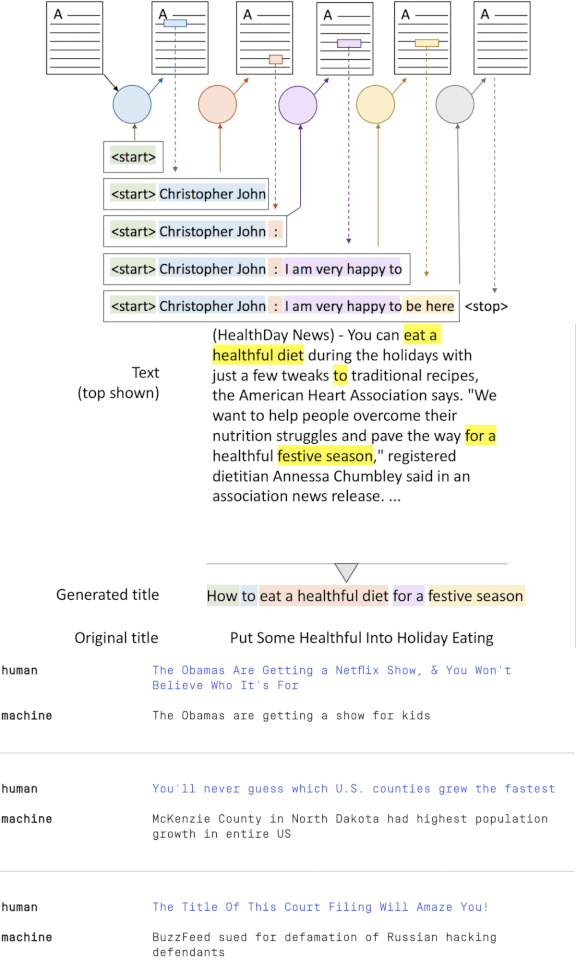
Which headline was written by a computer? A: FIFA to Decide on 2022 World Cup in March B: Decision in March on 48-team 2022 World Cup, Says Infantino

July 15, 20202 min read
AI Makes Headlines: Primer introduces an automated headline generator.
Natural Language Processing

AI Makes Headlines: Primer introduces an automated headline generator.

Which headline was written by a computer? A: FIFA to Decide on 2022 World Cup in March B: Decision in March on 48-team 2022 World Cup, Says Infantino

July 15, 20202 min read
Tiny Images, Outsized Biases: Why MIT withdrew the Tiny Images dataset
Natural Language Processing

Tiny Images, Outsized Biases: Why MIT withdrew the Tiny Images dataset

MIT withdrew a popular computer vision dataset after researchers found that it was rife with social bias. Researchers found racist, misogynistic, and demeaning labels among the nearly 80 million pictures in Tiny Images, a collection of 32-by-32 pixel color photos.

July 8, 20202 min read
Tiny Images, Outsized Biases: Why MIT withdrew the Tiny Images dataset
Natural Language Processing

Tiny Images, Outsized Biases: Why MIT withdrew the Tiny Images dataset

MIT withdrew a popular computer vision dataset after researchers found that it was rife with social bias. Researchers found racist, misogynistic, and demeaning labels among the nearly 80 million pictures in Tiny Images, a collection of 32-by-32 pixel color photos.

July 8, 20202 min read
Outing Hidden Hatred: How Facebook built a hate speech detector
Natural Language Processing

Outing Hidden Hatred: How Facebook built a hate speech detector

Facebook uses automated systems to block hate speech, but hateful posts can slip through when seemingly benign words and pictures combine to create a nasty message. The social network is tackling this problem by enhancing AI’s ability to recognize context.

June 17, 20202 min read

Subscribe to The Batch

Stay updated with weekly AI News and Insights delivered to your inbox