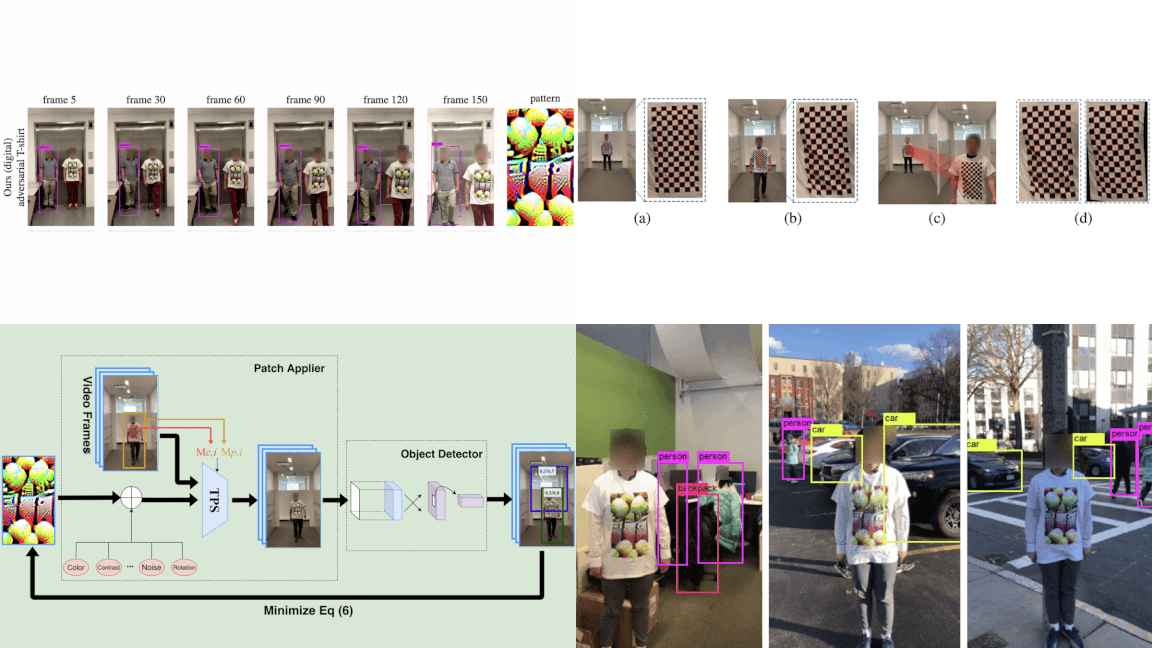
Hidden in Plain Sight: Researchers make clothes that fool face recognition.
MIT

Hidden in Plain Sight: Researchers make clothes that fool face recognition.

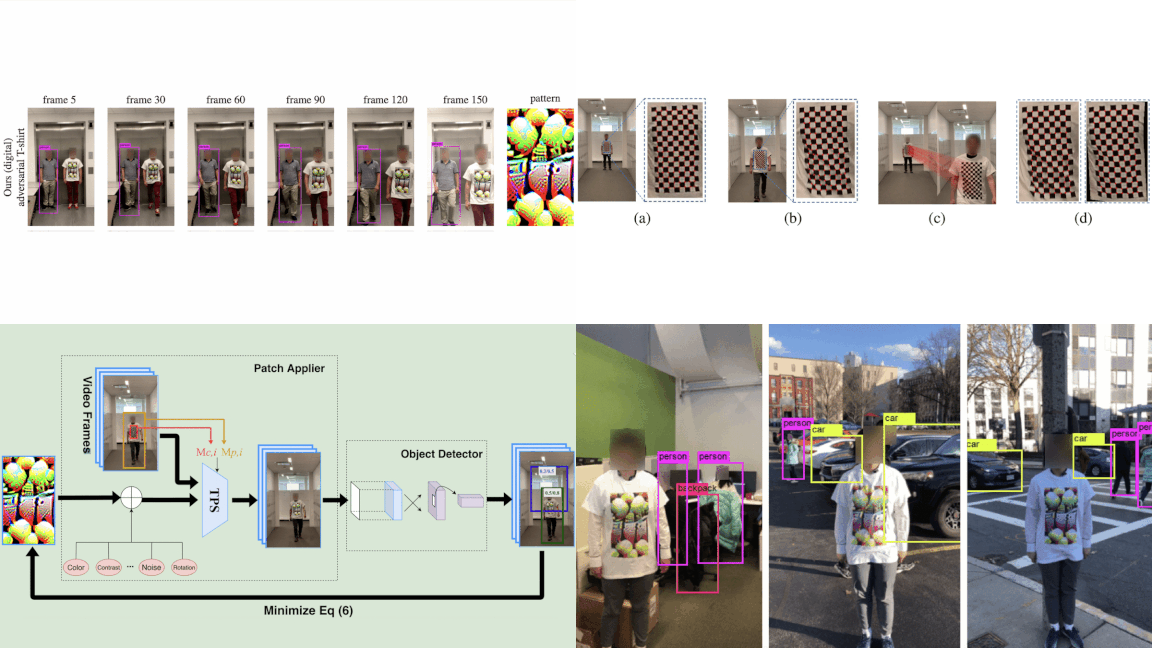
With the rise of AI-driven surveillance, anonymity is in fashion. Researchers are working on clothing that evades face recognition systems and designed a t-shirt that tricks a variety of object detection models into failing to spot people.
August 12, 20202 min read
Hidden in Plain Sight: Researchers make clothes that fool face recognition.
MIT

Hidden in Plain Sight: Researchers make clothes that fool face recognition.

With the rise of AI-driven surveillance, anonymity is in fashion. Researchers are working on clothing that evades face recognition systems and designed a t-shirt that tricks a variety of object detection models into failing to spot people.

August 12, 20202 min read
AI in Regions Rich and Poor: How companies in Africa and the Middle East use AI
MIT

AI in Regions Rich and Poor: How companies in Africa and the Middle East use AI

Companies in Africa and the Middle East are building AI capacity in very different ways, a new study found. AI is growing fast in both regions despite shortages of talent and data.

July 22, 20201 min read
AI in Regions Rich and Poor: How companies in Africa and the Middle East use AI
MIT

AI in Regions Rich and Poor: How companies in Africa and the Middle East use AI

Companies in Africa and the Middle East are building AI capacity in very different ways, a new study found. AI is growing fast in both regions despite shortages of talent and data.

July 22, 20201 min read
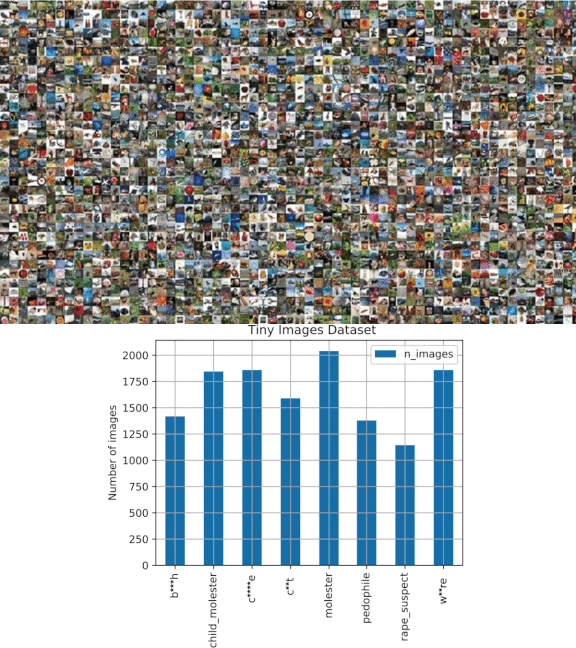
Tiny Images, Outsized Biases: Why MIT withdrew the Tiny Images dataset
MIT

Tiny Images, Outsized Biases: Why MIT withdrew the Tiny Images dataset

MIT withdrew a popular computer vision dataset after researchers found that it was rife with social bias. Researchers found racist, misogynistic, and demeaning labels among the nearly 80 million pictures in Tiny Images, a collection of 32-by-32 pixel color photos.

July 8, 20202 min read
Tiny Images, Outsized Biases: Why MIT withdrew the Tiny Images dataset
MIT

Tiny Images, Outsized Biases: Why MIT withdrew the Tiny Images dataset

MIT withdrew a popular computer vision dataset after researchers found that it was rife with social bias. Researchers found racist, misogynistic, and demeaning labels among the nearly 80 million pictures in Tiny Images, a collection of 32-by-32 pixel color photos.

July 8, 20202 min read
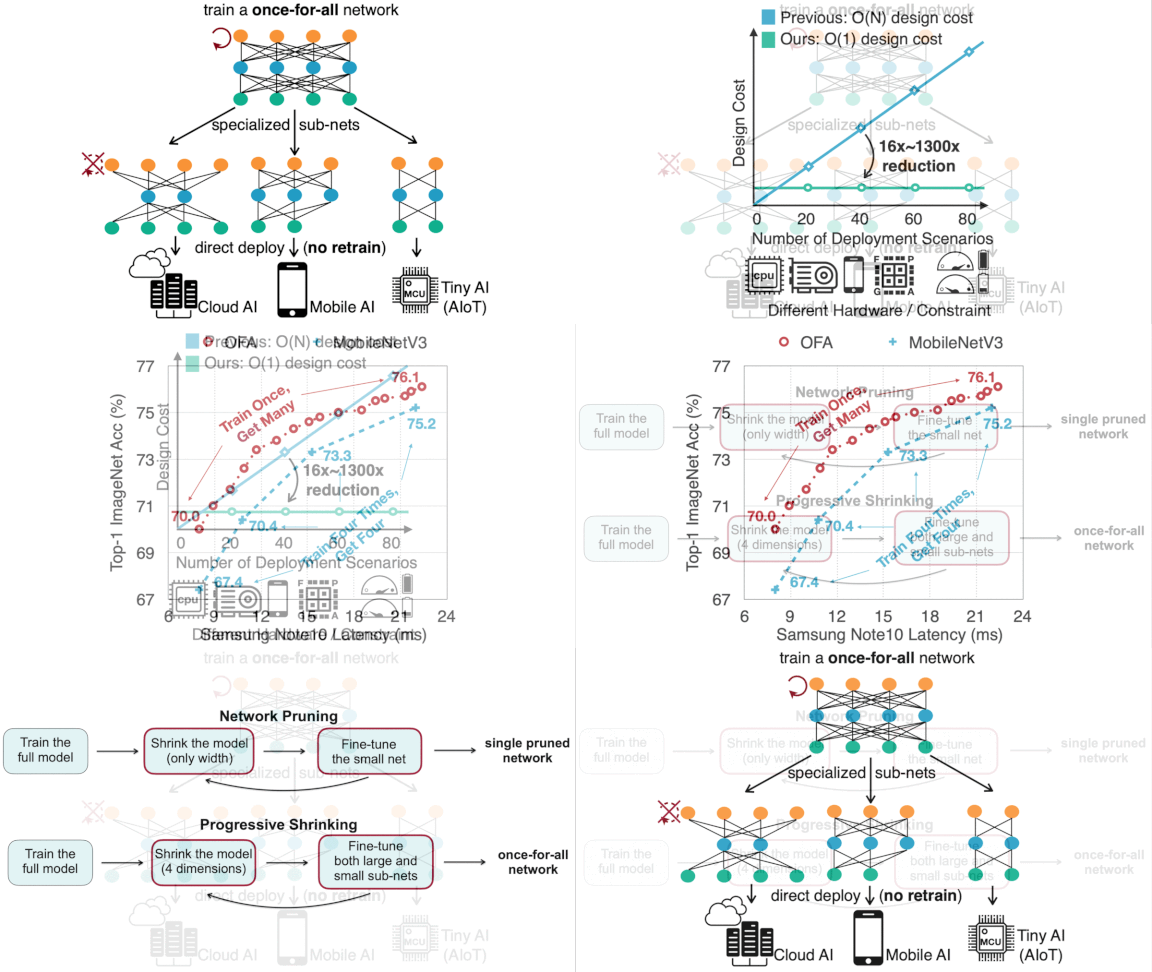
Build Once, Run Anywhere: The Once-For-All technique adapts AI models to edge devices.
MIT

Build Once, Run Anywhere: The Once-For-All technique adapts AI models to edge devices.

From server to smartphone, devices with less processing speed and memory require smaller networks. Instead of building and training separate models to run on a variety of hardware, a new approach trains a single network that can be adapted to any device.

June 24, 20202 min read
Build Once, Run Anywhere: The Once-For-All technique adapts AI models to edge devices.
MIT

Build Once, Run Anywhere: The Once-For-All technique adapts AI models to edge devices.

From server to smartphone, devices with less processing speed and memory require smaller networks. Instead of building and training separate models to run on a variety of hardware, a new approach trains a single network that can be adapted to any device.

June 24, 20202 min read
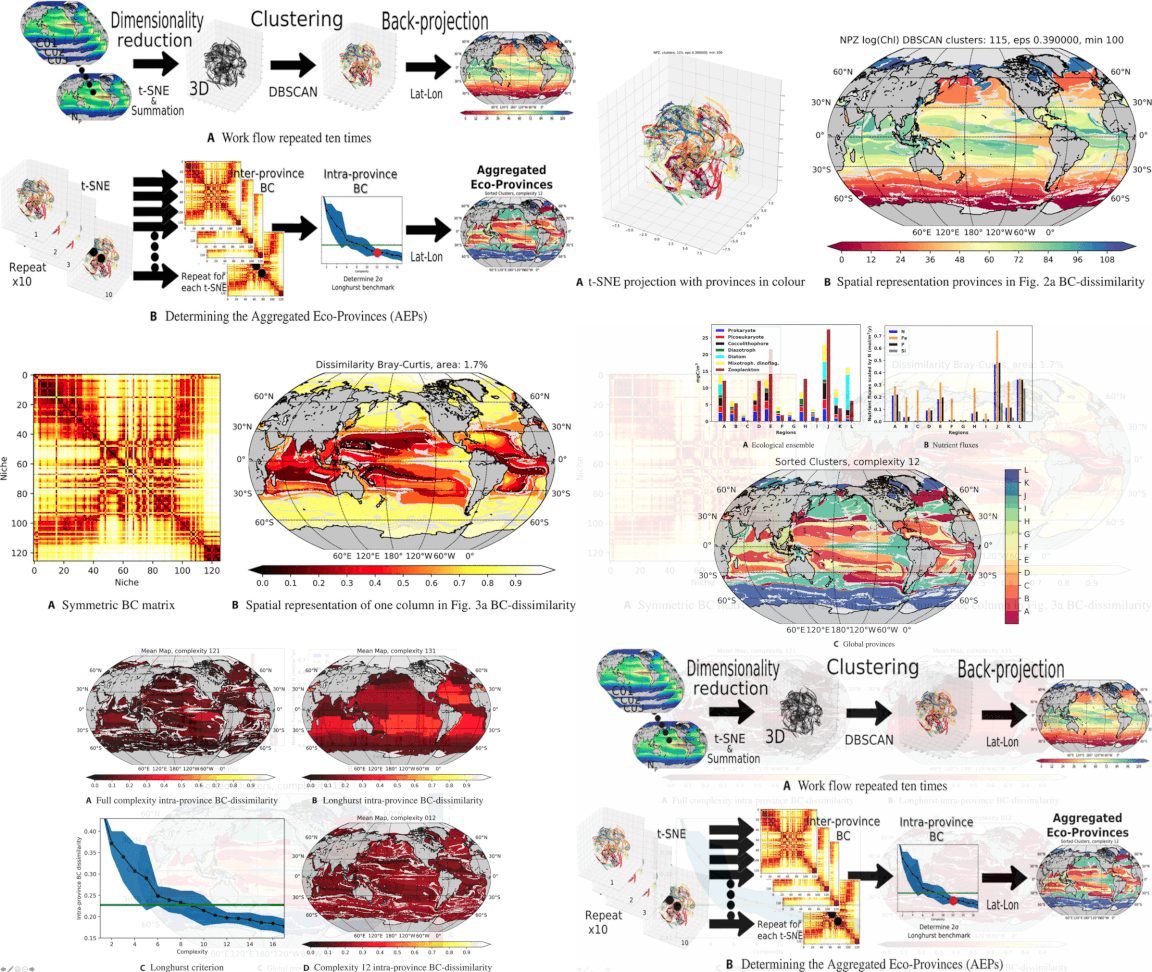
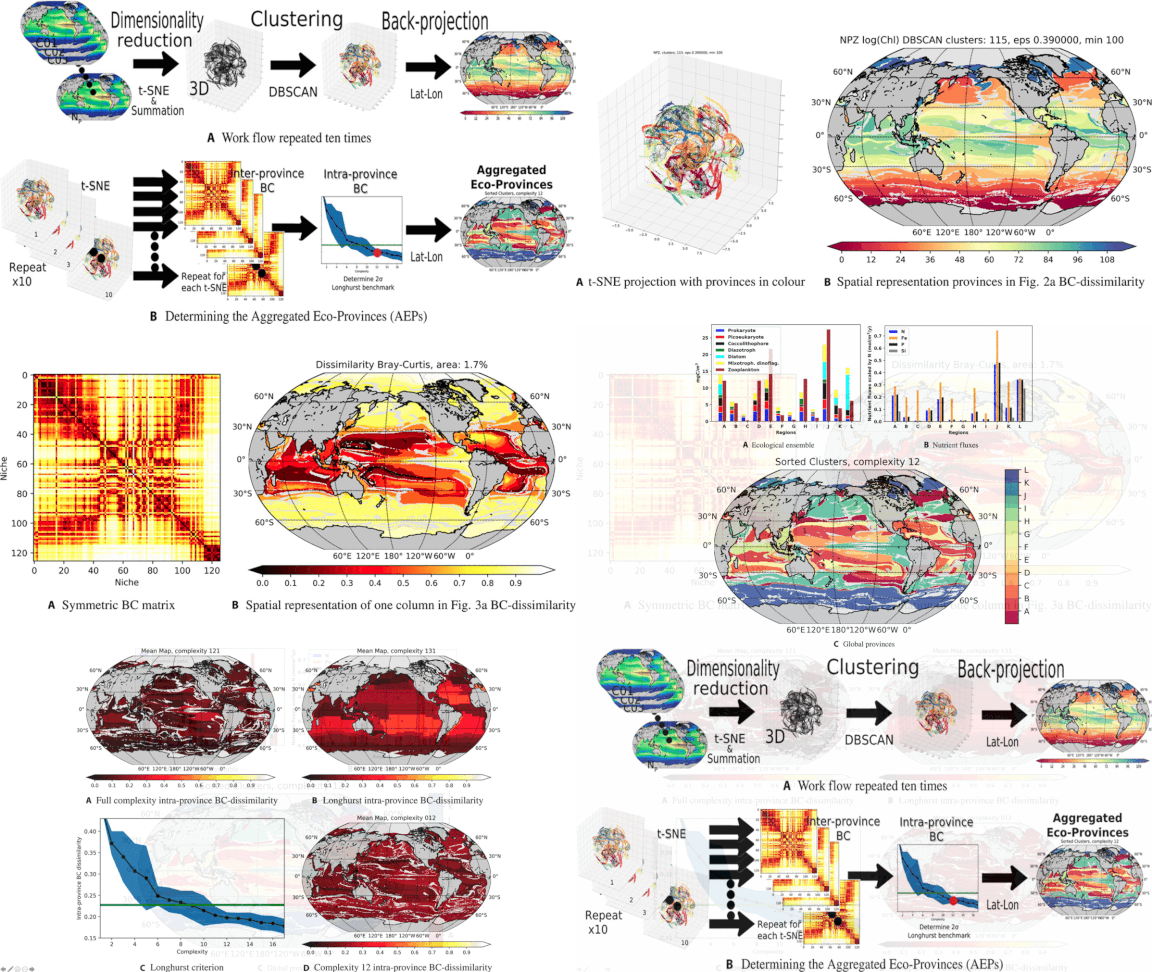
Underwater Atlas: Deep learning helps scientists map undersea ecosystems.
MIT

Underwater Atlas: Deep learning helps scientists map undersea ecosystems.

The ocean contains distinct ecosystems, but they’re much harder to see than terrestrial forests or savannas. A new model helps scientists better understand patterns of undersea life, which is threatened by pollution, invasive species, and warming temperatures.

June 10, 20201 min read
Running Fast, Standing Still: Some state of the art machine learning progress is illusory.
MIT

Running Fast, Standing Still: Some state of the art machine learning progress is illusory.

Machine learning researchers report better and better results, but some of that progress may be illusory. Some models that appear to set a new state of the art haven’t been compared properly to their predecessors, Science News reports based on several published surveys.

June 10, 20201 min read
Underwater Atlas: Deep learning helps scientists map undersea ecosystems.
MIT

Underwater Atlas: Deep learning helps scientists map undersea ecosystems.

The ocean contains distinct ecosystems, but they’re much harder to see than terrestrial forests or savannas. A new model helps scientists better understand patterns of undersea life, which is threatened by pollution, invasive species, and warming temperatures.

June 10, 20201 min read
Running Fast, Standing Still: Some state of the art machine learning progress is illusory.
MIT

Running Fast, Standing Still: Some state of the art machine learning progress is illusory.

Machine learning researchers report better and better results, but some of that progress may be illusory. Some models that appear to set a new state of the art haven’t been compared properly to their predecessors, Science News reports based on several published surveys.

June 10, 20201 min read
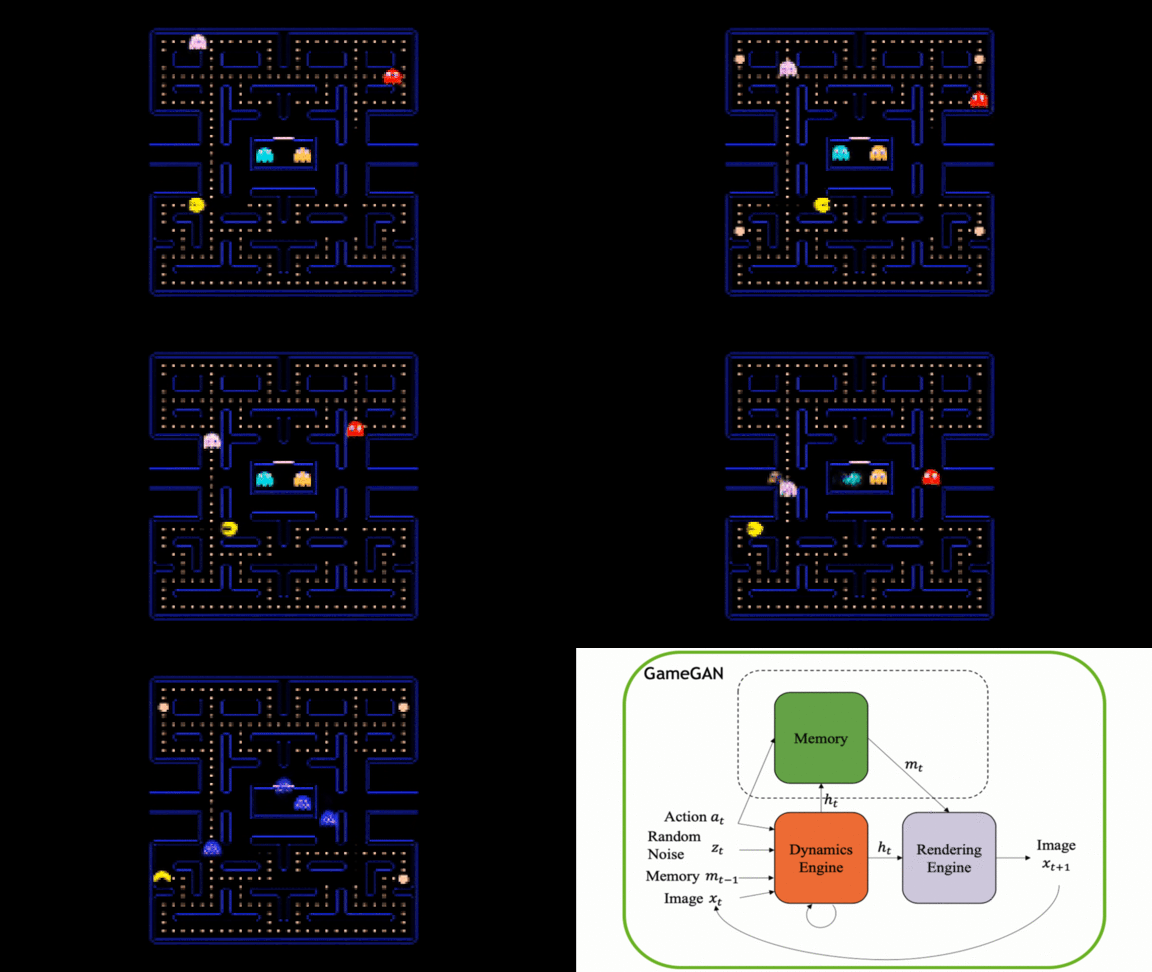
Playing With GANs: GameGAN generated a fully functional Pac-Man.
MIT

Playing With GANs: GameGAN generated a fully functional Pac-Man.

Generative adversarial networks don’t just produce pretty pictures. They can build world models, too. A GAN generated a fully functional replica of the classic video game Pac-Man.

May 27, 20202 min read
Playing With GANs: GameGAN generated a fully functional Pac-Man.
MIT

Playing With GANs: GameGAN generated a fully functional Pac-Man.

Generative adversarial networks don’t just produce pretty pictures. They can build world models, too. A GAN generated a fully functional replica of the classic video game Pac-Man.

May 27, 20202 min read
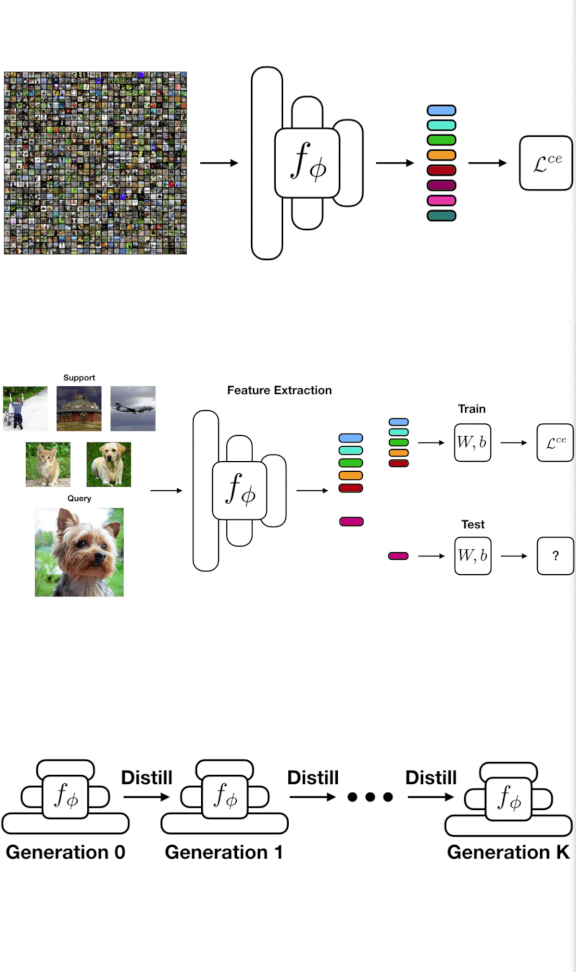
Small Data the Simple Way: A training technique that can outperform few-shot learning
MIT

Small Data the Simple Way: A training technique that can outperform few-shot learning

Few-shot learning seeks to build models that adapt to novel tasks based on small numbers of training examples. This sort of learning typically involves complicated techniques, but researchers achieved state-of-the-art results using a simpler approach.

May 20, 20202 min read

Subscribe to The Batch

Stay updated with weekly AI News and Insights delivered to your inbox