AI Engineers Weigh In on AI Ethics: Survey Shows How AI Engineers Feel About Ethical Issues
Google

AI Engineers Weigh In on AI Ethics: Survey Shows How AI Engineers Feel About Ethical Issues

Machine learning researchers tend to trust international organizations, distrust military forces, and disagree on how much disclosure is necessary when describing new models, a new study found.


September 15, 20212 min read
Perceptrons Are All You Need: Google Brain's Multi-Layer Perceptron Rivals Transformers
Google

Perceptrons Are All You Need: Google Brain's Multi-Layer Perceptron Rivals Transformers

The paper that introduced the transformer famously declared, “Attention is all you need.” To the contrary, new work shows you may not need transformer-style attention at all.What’s new: Hanxiao Liu and colleagues at Google

September 8, 20212 min read
Perceptrons Are All You Need: Google Brain's Multi-Layer Perceptron Rivals Transformers
Google

Perceptrons Are All You Need: Google Brain's Multi-Layer Perceptron Rivals Transformers

The paper that introduced the transformer famously declared, “Attention is all you need.” To the contrary, new work shows you may not need transformer-style attention at all.What’s new: Hanxiao Liu and colleagues at Google

September 8, 20212 min read
Deep Unlearning: AI Researchers Teach Models to Unlearn Data
Google

Deep Unlearning: AI Researchers Teach Models to Unlearn Data

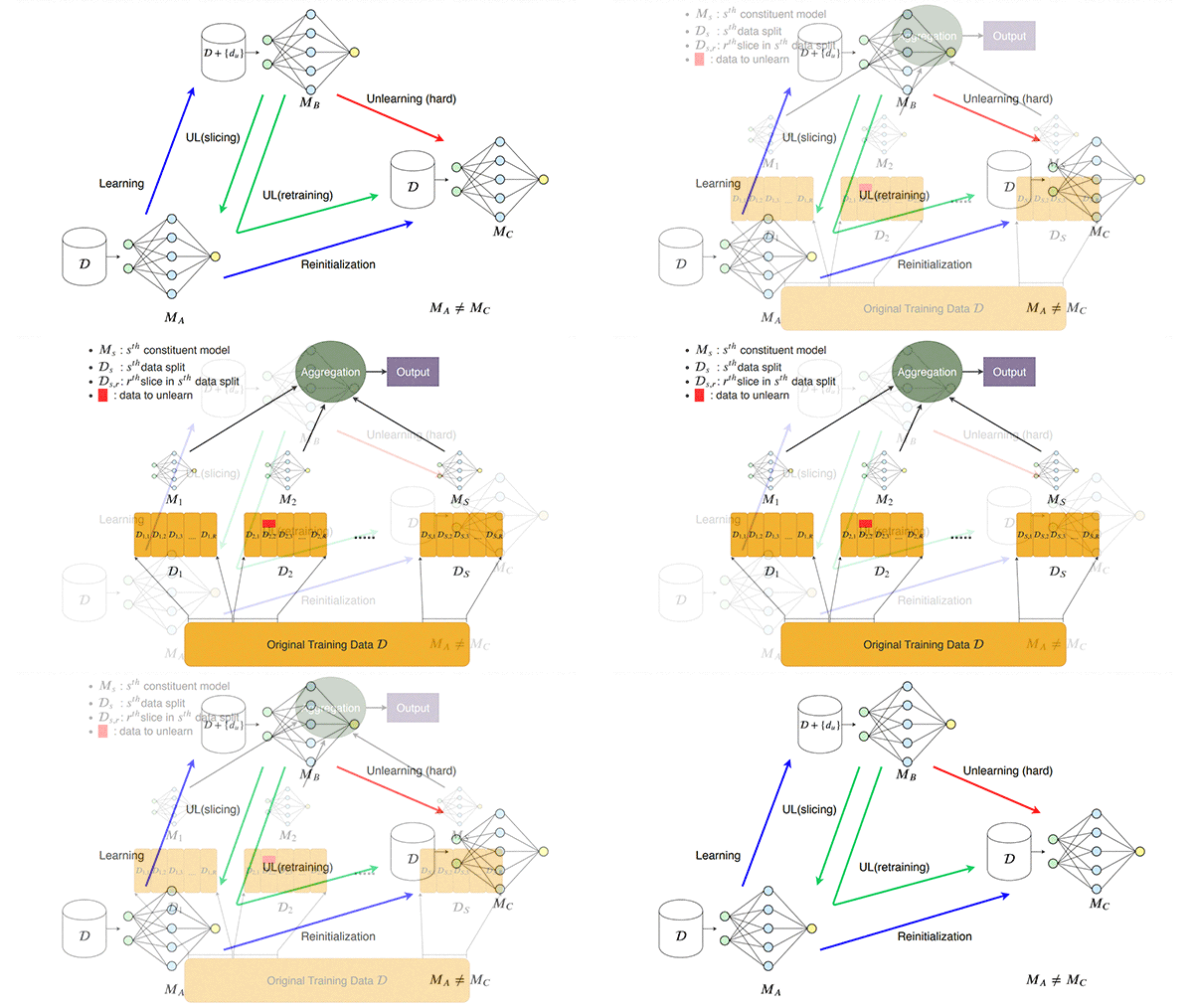
Privacy advocates want deep learning systems to forget what they’ve learned. What’s new: Researchers are seeking ways to remove the influence of particular training examples, such as an individual’s personal information, from a trained model without affecting its performance, Wired reported.

September 1, 20211 min read
Deep Unlearning: AI Researchers Teach Models to Unlearn Data
Google

Deep Unlearning: AI Researchers Teach Models to Unlearn Data

Privacy advocates want deep learning systems to forget what they’ve learned. What’s new: Researchers are seeking ways to remove the influence of particular training examples, such as an individual’s personal information, from a trained model without affecting its performance, Wired reported.

September 1, 20211 min read
User Privacy Versus Child Safety: Apple to scan user phones for images of child abuse.
Google

User Privacy Versus Child Safety: Apple to scan user phones for images of child abuse.

Apple, which has made a point of its commitment to user privacy, announced that it will scan iPhones for evidence of child abuse. The tech giant will include a machine learning model on the device.

August 18, 20212 min read
User Privacy Versus Child Safety: Apple to scan user phones for images of child abuse.
Google

User Privacy Versus Child Safety: Apple to scan user phones for images of child abuse.

Apple, which has made a point of its commitment to user privacy, announced that it will scan iPhones for evidence of child abuse. The tech giant will include a machine learning model on the device.

August 18, 20212 min read
Smaller Models, Bigger Biases: Compressed face recognition models have stronger bias.
Google

Smaller Models, Bigger Biases: Compressed face recognition models have stronger bias.

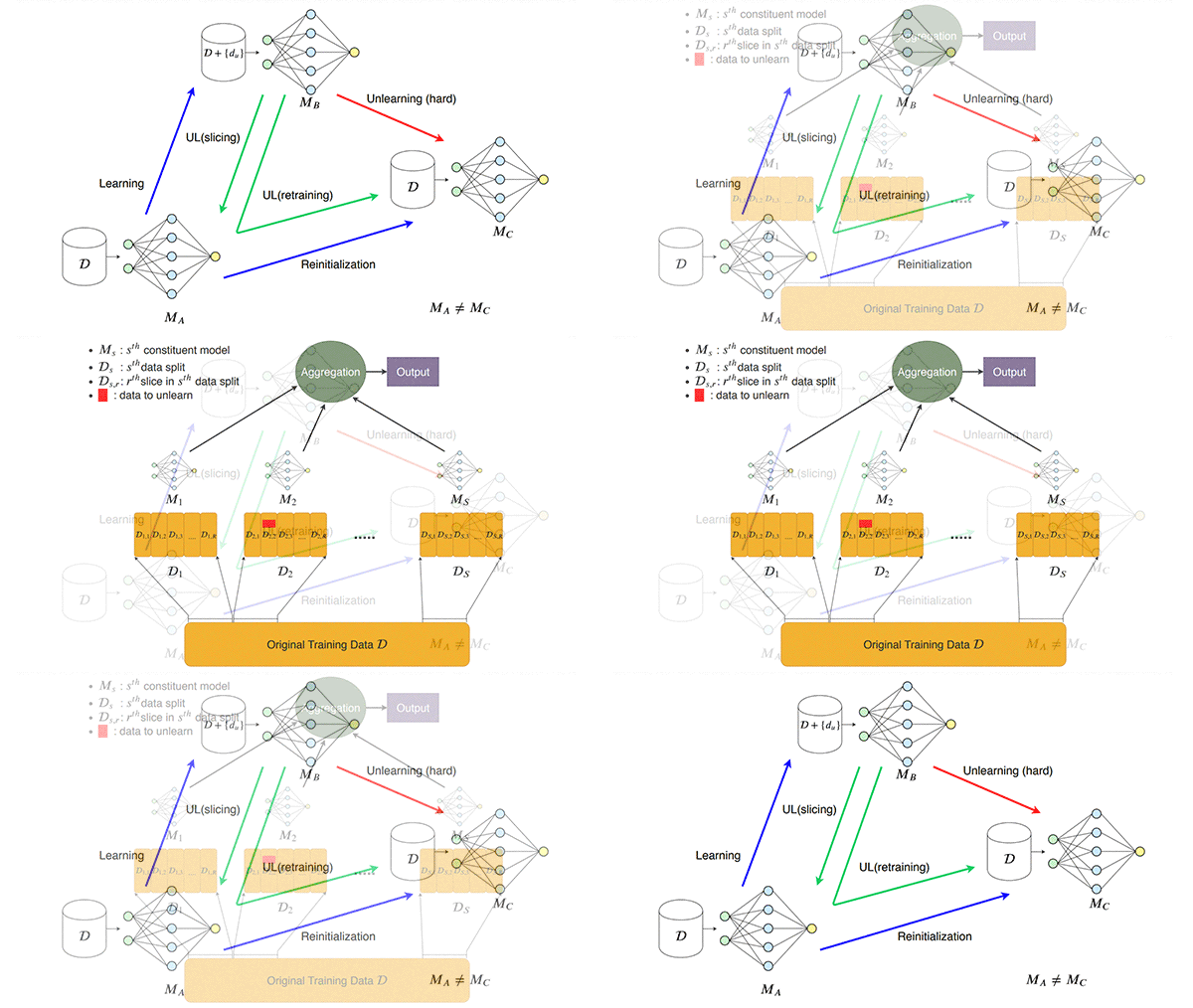
Compression methods like parameter pruning and quantization can shrink neural networks for use in devices like smartphones with little impact on accuracy — but they also exacerbate a network’s bias.

August 7, 20212 min read
Smaller Models, Bigger Biases: Compressed face recognition models have stronger bias.
Google

Smaller Models, Bigger Biases: Compressed face recognition models have stronger bias.

Compression methods like parameter pruning and quantization can shrink neural networks for use in devices like smartphones with little impact on accuracy — but they also exacerbate a network’s bias.

August 7, 20212 min read
Biomedical Treasure Chest: DeepMind open sources AlphaFold and protein databases.
Google

Biomedical Treasure Chest: DeepMind open sources AlphaFold and protein databases.

DeepMind opened access to AlphaFold, a model that finds the shapes of proteins, and to its output so far — a potential cornucopia for biomedical research. The research lab, a division of Google’s parent company Alphabet, made AlphaFold freely available.

August 4, 20212 min read
Biomedical Treasure Chest: DeepMind open sources AlphaFold and protein databases.
Google

Biomedical Treasure Chest: DeepMind open sources AlphaFold and protein databases.

DeepMind opened access to AlphaFold, a model that finds the shapes of proteins, and to its output so far — a potential cornucopia for biomedical research. The research lab, a division of Google’s parent company Alphabet, made AlphaFold freely available.

August 4, 20212 min read
Transformers Are Smarter Than You Think: Language transformers can do math, vision, and logic.
Google

Transformers Are Smarter Than You Think: Language transformers can do math, vision, and logic.

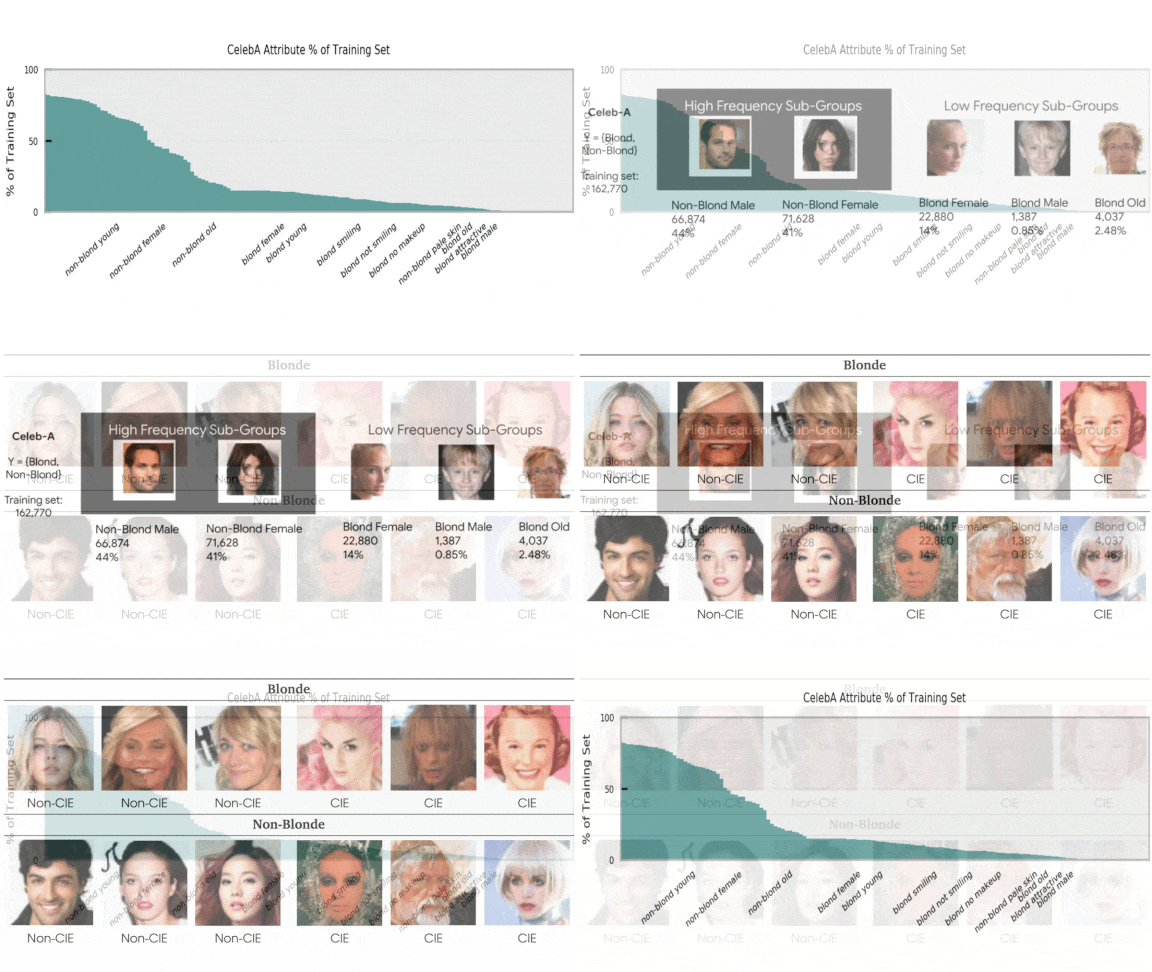
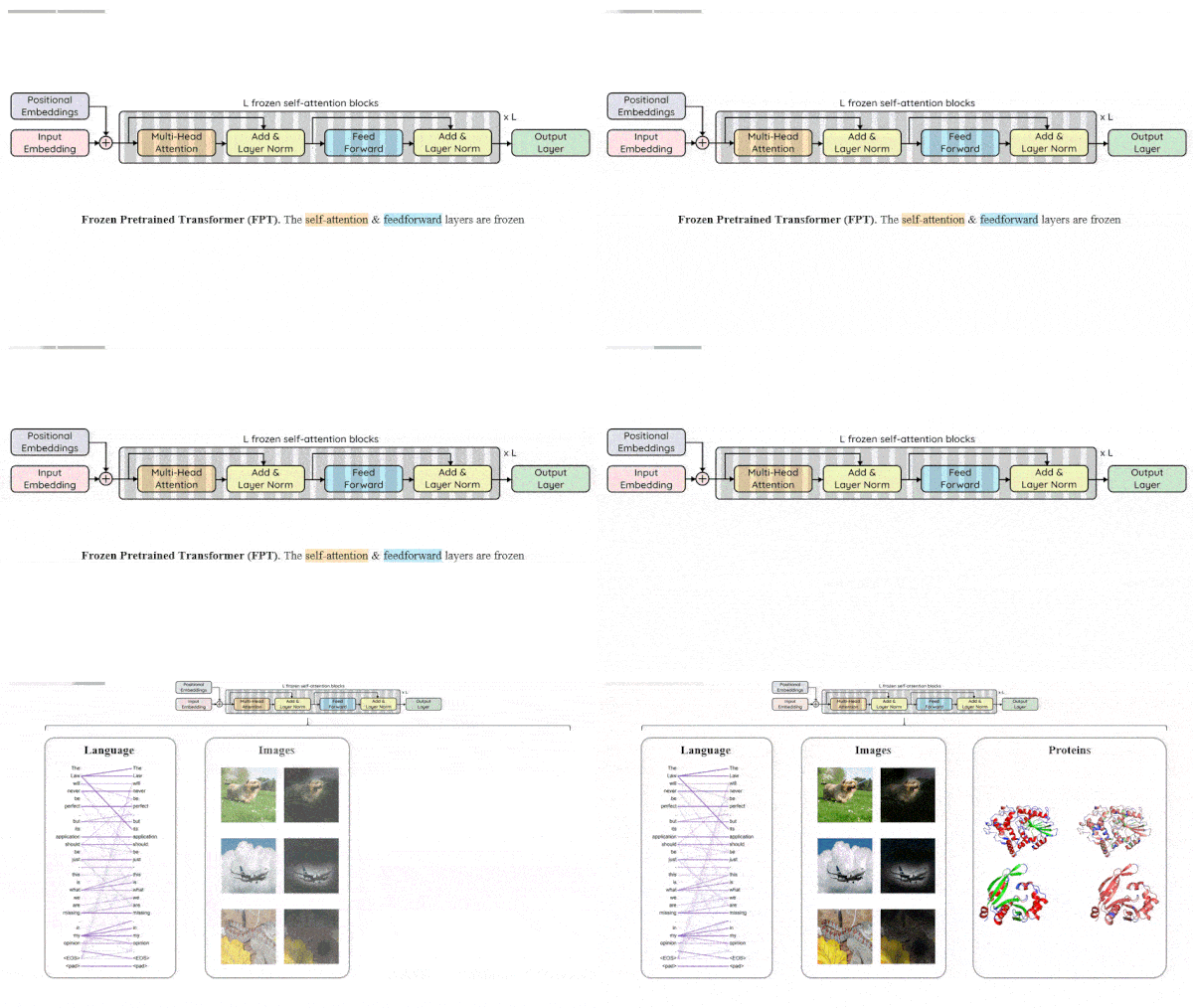
The transformer architecture has shown an uncanny ability to model not only language but also images and proteins. New research found that it can apply what it learns from the first domain to the others.

July 28, 20212 min read
Transformers Are Smarter Than You Think: Language transformers can do math, vision, and logic.
Google

Transformers Are Smarter Than You Think: Language transformers can do math, vision, and logic.

The transformer architecture has shown an uncanny ability to model not only language but also images and proteins. New research found that it can apply what it learns from the first domain to the others.

July 28, 20212 min read
I Know It When I See It: Zero-shot detection for objects not in training data.
Google

I Know It When I See It: Zero-shot detection for objects not in training data.

Object detectors typically detect only items that were labeled in their training data. A new method liberates them to locate and recognize a much wider variety of objects.

July 14, 20212 min read
I Know It When I See It: Zero-shot detection for objects not in training data.
Google

I Know It When I See It: Zero-shot detection for objects not in training data.

Object detectors typically detect only items that were labeled in their training data. A new method liberates them to locate and recognize a much wider variety of objects.

July 14, 20212 min read

Subscribe to The Batch

Stay updated with weekly AI News and Insights delivered to your inbox