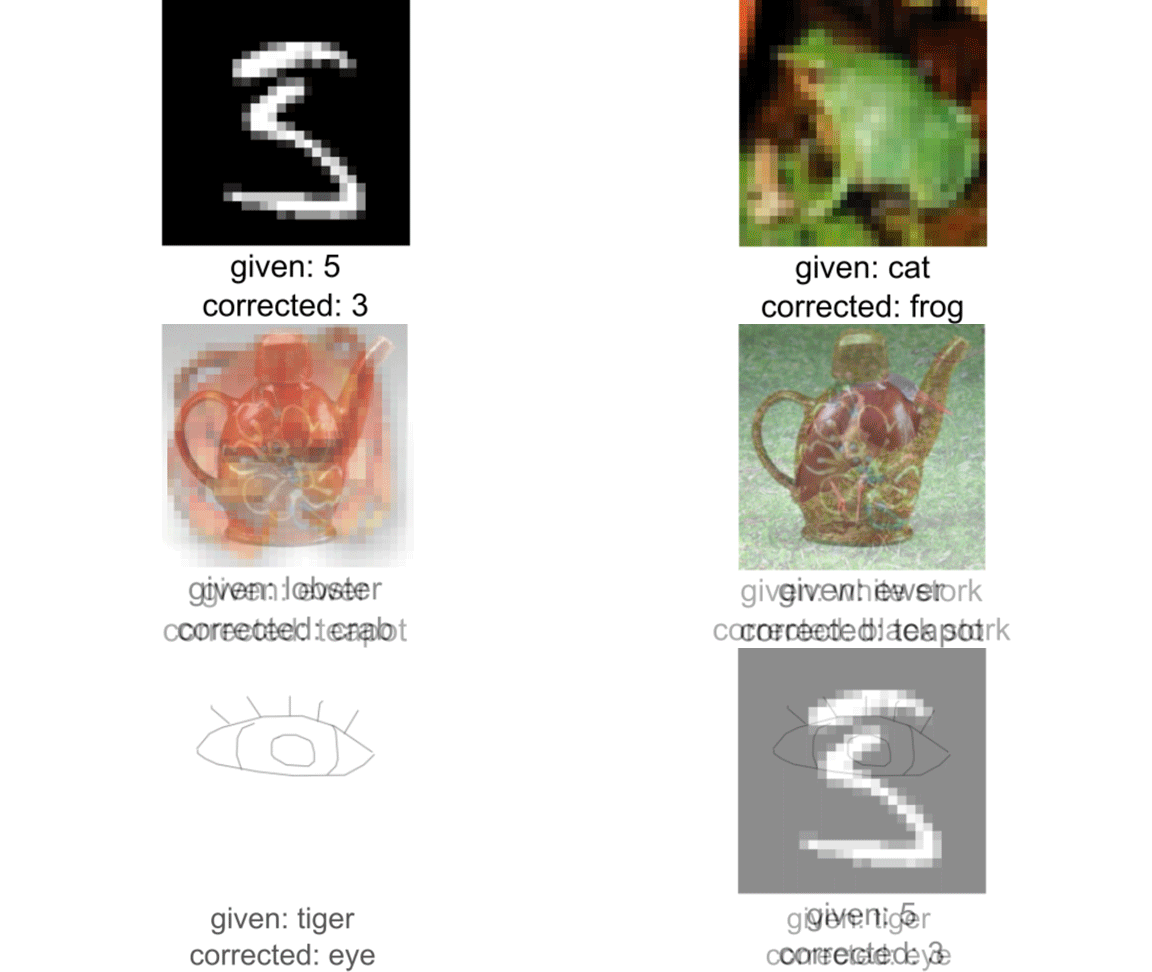
Labeling Errors Everywhere: Many deep learning datasets contain mislabeled data.
Classification

Labeling Errors Everywhere: Many deep learning datasets contain mislabeled data.

Key machine learning datasets are riddled with mistakes. Several benchmark datasets are shot through with incorrect labels. On average, 3.4 percent of examples in 10 commonly used datasets are mislabeled and the detrimental impact of such errors rises with model size.

April 14, 20212 min read
Large Language Models for Chinese: A brief overview of the WuDao family
Classification

Large Language Models for Chinese: A brief overview of the WuDao family

Researchers unveiled competition for the reigning large language model GPT-3. Four models collectively called Wu Dao were described by Beijing Academy of Artificial Intelligence, a research collective funded by the Chinese government, according to Synced Review.

April 14, 20212 min read
Would Your Doctor Take AI’s Advice?: Some doctors are skeptical of AI diagnoses.
Classification

Would Your Doctor Take AI’s Advice?: Some doctors are skeptical of AI diagnoses.

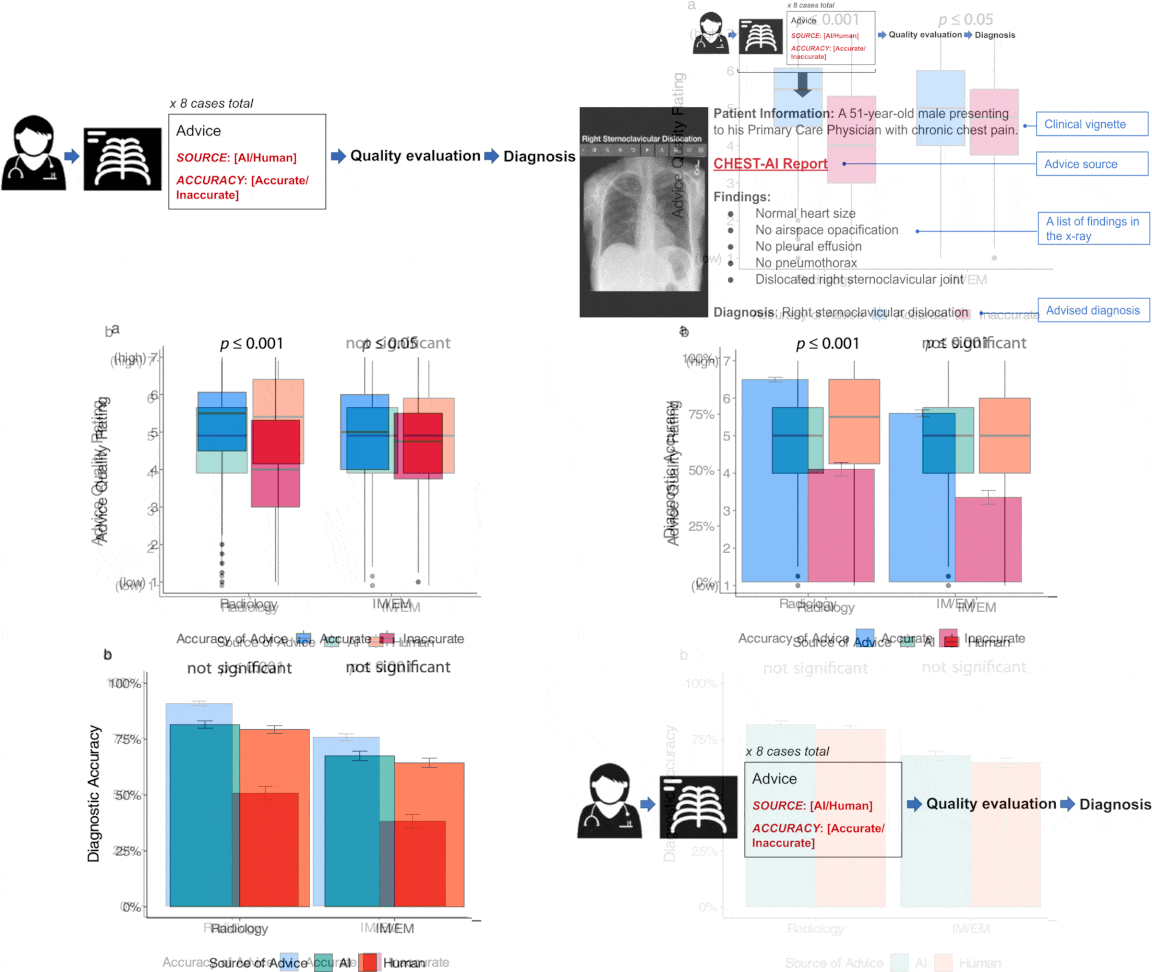
Some doctors don’t trust a second opinion when it comes from an AI system. A team at MIT and Regensburg University investigated how physicians responded to diagnostic advice they received from a machine learning model versus a human expert.

April 7, 20211 min read
Pretraining on Uncurated Data: How unlabeled data improved computer vision accuracy.
Classification

Pretraining on Uncurated Data: How unlabeled data improved computer vision accuracy.

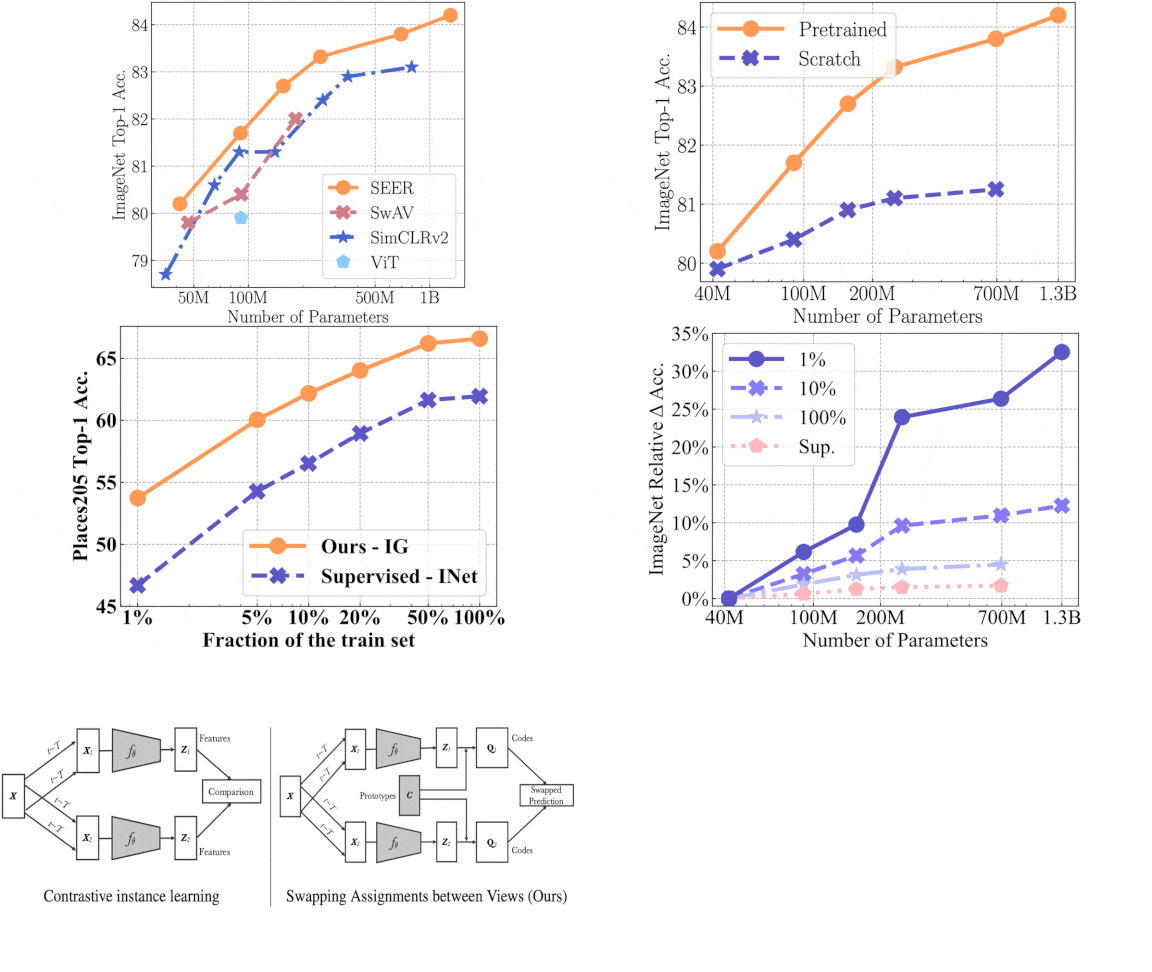
It’s well established that pretraining a model on a large dataset improves performance on fine-tuned tasks. In sufficient quantity and paired with a big model, even data scraped from the internet at random can contribute to the performance boost.

April 7, 20212 min read
Pretraining on Uncurated Data: How unlabeled data improved computer vision accuracy.
Classification

Pretraining on Uncurated Data: How unlabeled data improved computer vision accuracy.

It’s well established that pretraining a model on a large dataset improves performance on fine-tuned tasks. In sufficient quantity and paired with a big model, even data scraped from the internet at random can contribute to the performance boost.

April 7, 20212 min read
Would Your Doctor Take AI’s Advice?: Some doctors are skeptical of AI diagnoses.
Classification

Would Your Doctor Take AI’s Advice?: Some doctors are skeptical of AI diagnoses.

Some doctors don’t trust a second opinion when it comes from an AI system. A team at MIT and Regensburg University investigated how physicians responded to diagnostic advice they received from a machine learning model versus a human expert.

April 7, 20211 min read
De-Facing ImageNet: Researchers blur all faces in ImageNet.
Classification

De-Facing ImageNet: Researchers blur all faces in ImageNet.

ImageNet now comes with privacy protection.What’s new: The team that manages the machine learning community’s go-to image dataset blurred all the human faces pictured in it and tested how models trained on the modified images on a variety of image recognition tasks.

April 7, 20212 min read
De-Facing ImageNet: Researchers blur all faces in ImageNet.
Classification

De-Facing ImageNet: Researchers blur all faces in ImageNet.

ImageNet now comes with privacy protection.What’s new: The team that manages the machine learning community’s go-to image dataset blurred all the human faces pictured in it and tested how models trained on the modified images on a variety of image recognition tasks.

April 7, 20212 min read
Pictures From Words and Gestures: AI model generates captions as users mouse over images.
Classification

Pictures From Words and Gestures: AI model generates captions as users mouse over images.

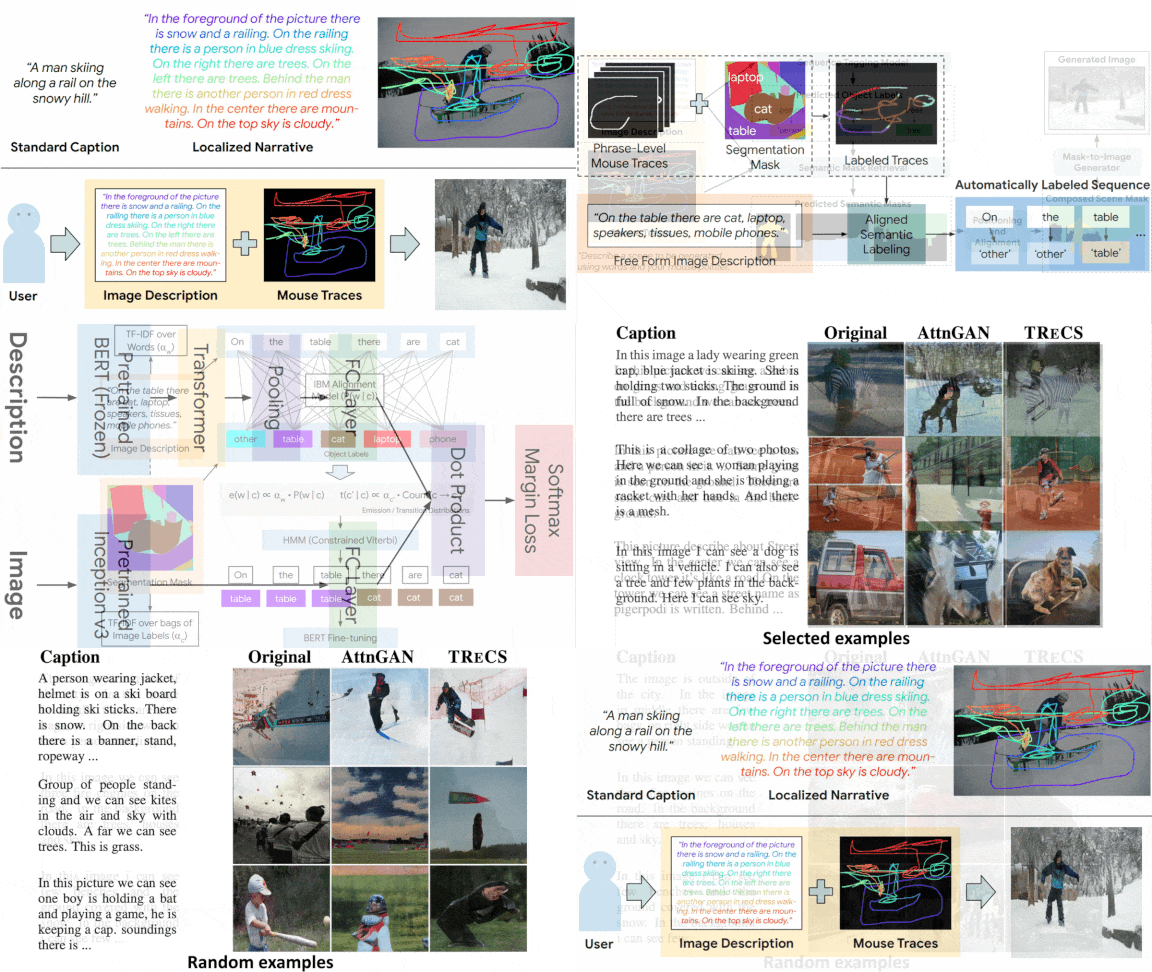
A new system combines verbal descriptions and crude lines to visualize complex scenes. Google researchers led by Jing Yu Koh proposed Tag-Retrieve-Compose-Synthesize (TReCS), a system that generates photorealistic images by describing what they want to see while mousing around on a blank screen.

March 31, 20212 min read
Pictures From Words and Gestures: AI model generates captions as users mouse over images.
Classification

Pictures From Words and Gestures: AI model generates captions as users mouse over images.

A new system combines verbal descriptions and crude lines to visualize complex scenes. Google researchers led by Jing Yu Koh proposed Tag-Retrieve-Compose-Synthesize (TReCS), a system that generates photorealistic images by describing what they want to see while mousing around on a blank screen.

March 31, 20212 min read
Same Patient, Different Views: Contrastive pretraining improves medical imaging AI.
Classification

Same Patient, Different Views: Contrastive pretraining improves medical imaging AI.

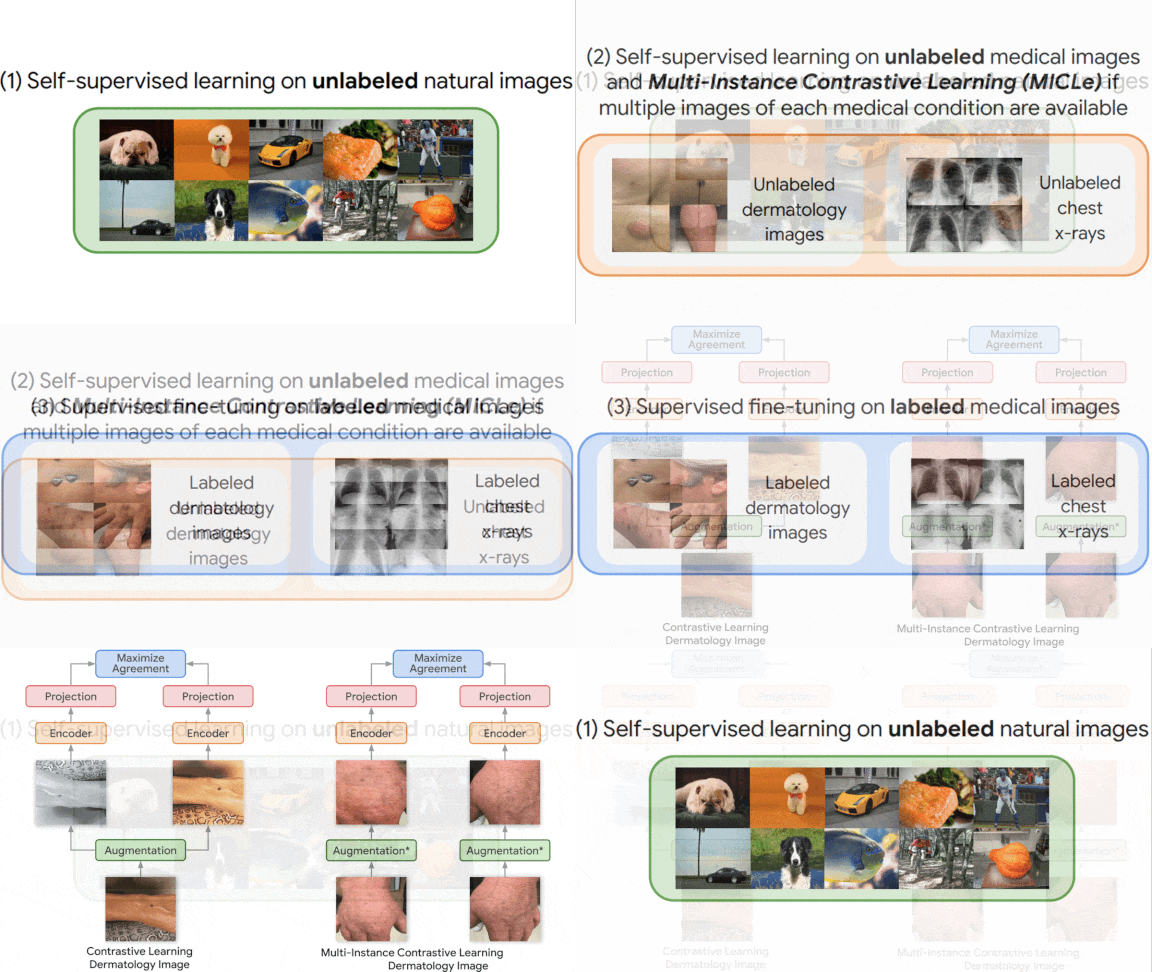
When you lack labeled training data, pretraining a model on unlabeled data can compensate. New research pretrained a model three times to boost performance on a medical imaging task.

March 31, 20212 min read
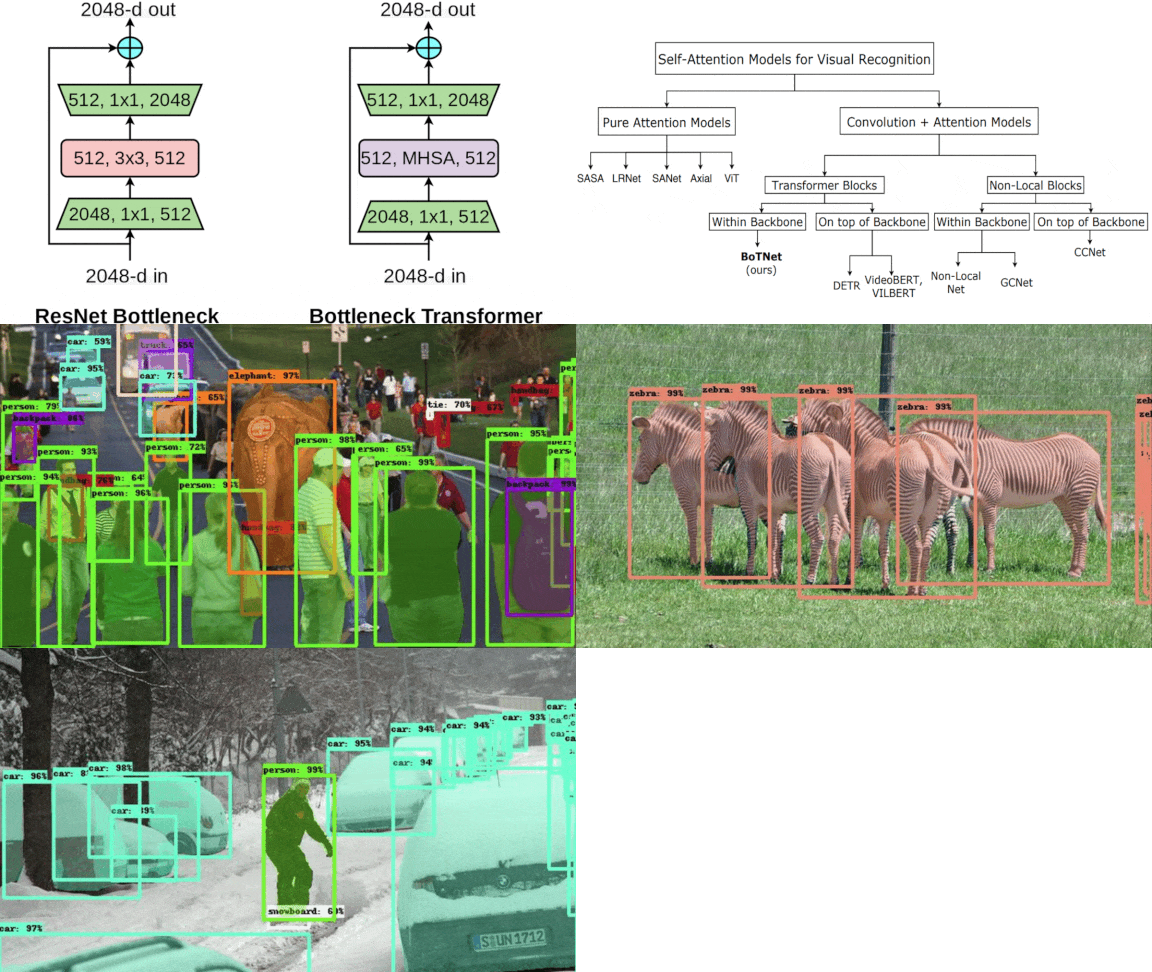
Vision Models Get Some Attention: Researchers add self-attention to convolutional neural nets.
Classification

Vision Models Get Some Attention: Researchers add self-attention to convolutional neural nets.

Self-attention is a key element in state-of-the-art language models, but it struggles to process images because its memory requirement rises rapidly with the size of the input. New research addresses the issue with a simple twist on a convolutional neural network.

March 31, 20212 min read
Same Patient, Different Views: Contrastive pretraining improves medical imaging AI.
Classification

Same Patient, Different Views: Contrastive pretraining improves medical imaging AI.

When you lack labeled training data, pretraining a model on unlabeled data can compensate. New research pretrained a model three times to boost performance on a medical imaging task.

March 31, 20212 min read
Vision Models Get Some Attention: Researchers add self-attention to convolutional neural nets.
Classification

Vision Models Get Some Attention: Researchers add self-attention to convolutional neural nets.

Self-attention is a key element in state-of-the-art language models, but it struggles to process images because its memory requirement rises rapidly with the size of the input. New research addresses the issue with a simple twist on a convolutional neural network.

March 31, 20212 min read
Partners in Surveillance: How police use public cameras to track license plates.
Classification

Partners in Surveillance: How police use public cameras to track license plates.

Police are increasingly able to track motor vehicles throughout the U.S. using a network of AI-powered cameras — many owned by civilians. Flock, which sells automatic license plate readers is encouraging enforcers to use its network to monitor cars and trucks outside their jurisdiction.

March 24, 20212 min read

Subscribe to The Batch

Stay updated with weekly AI News and Insights delivered to your inbox