More Data for Medical AI: AI recognizes medical scans without iodine dye.
Classification

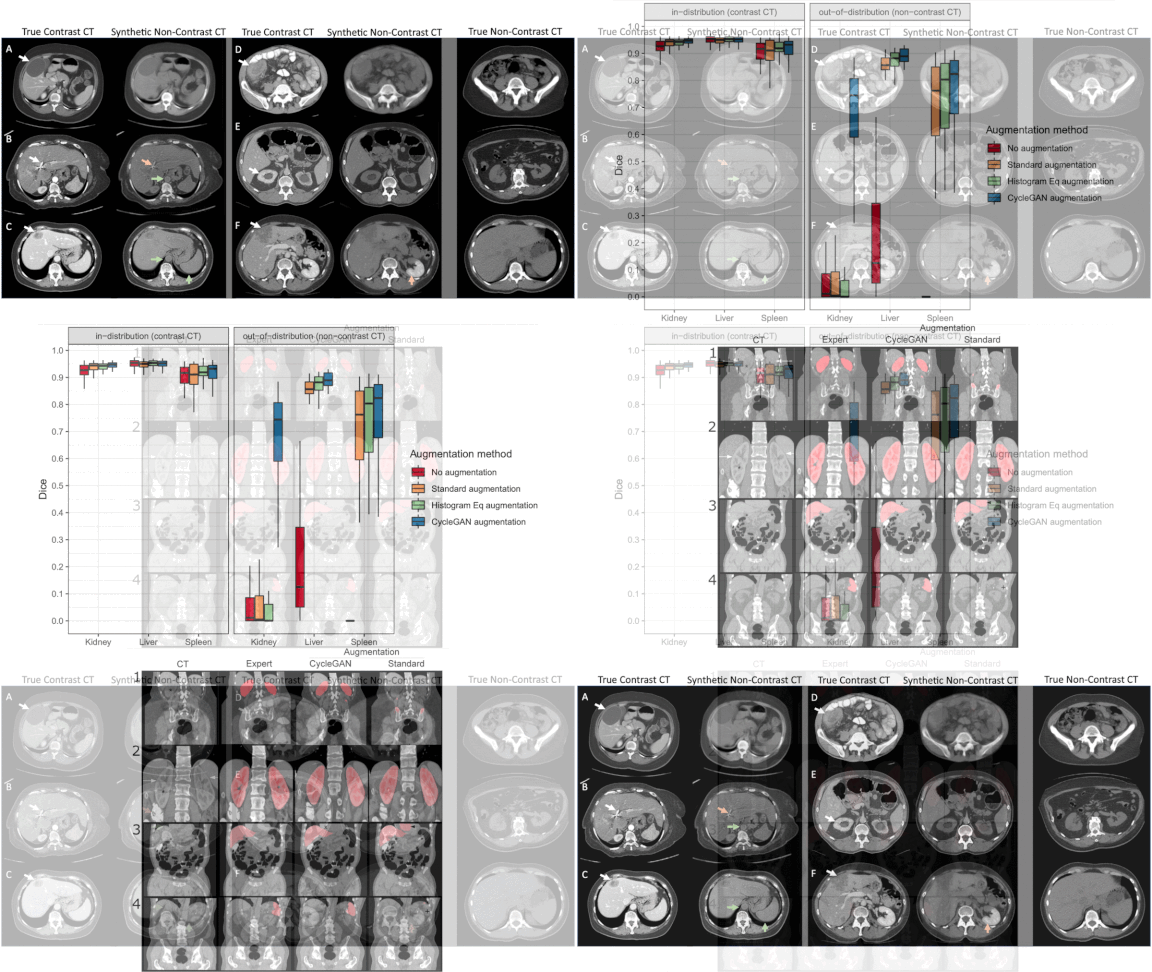
More Data for Medical AI: AI recognizes medical scans without iodine dye.

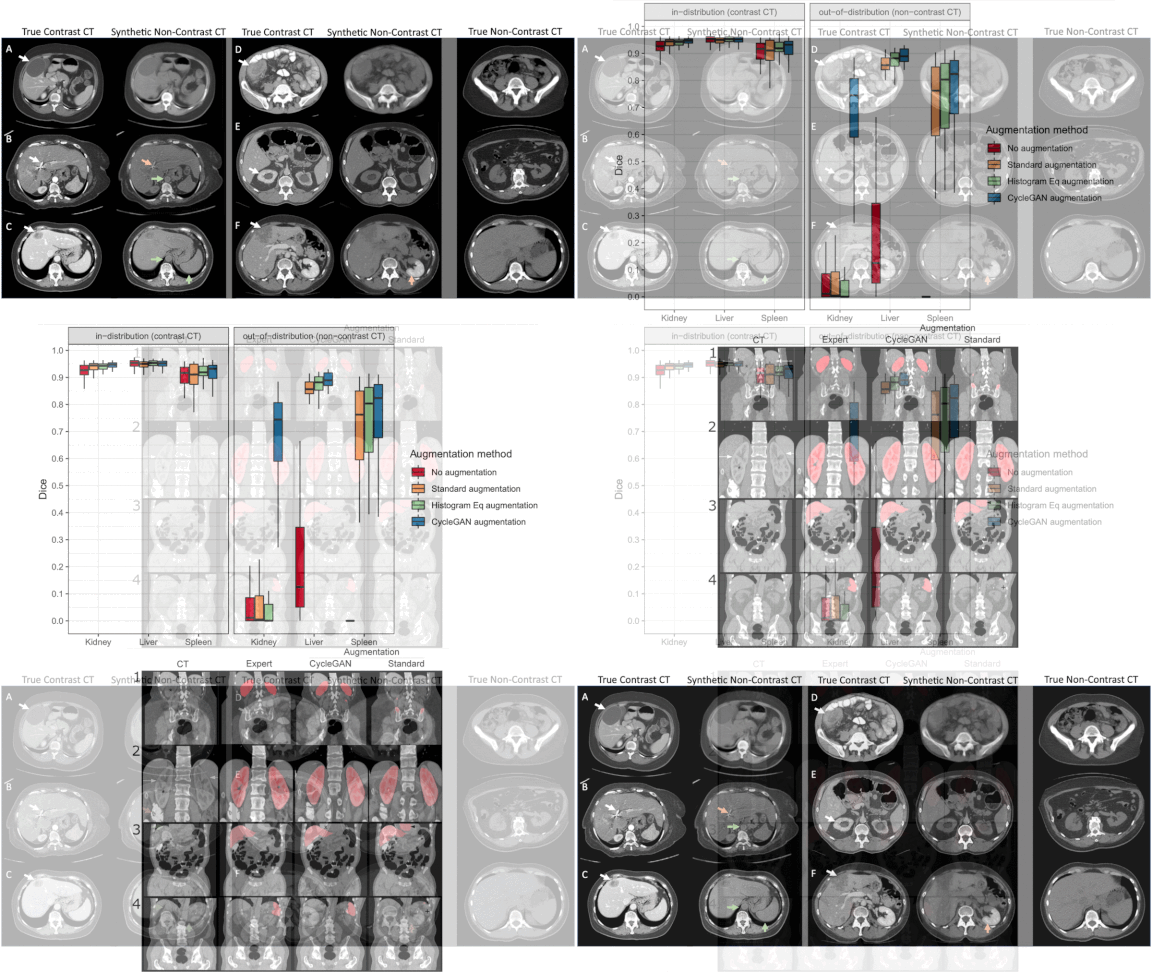
Convolutional neural networks are good at recognizing disease symptoms in medical scans of patients who were injected with iodine-based dye, that makes their organs more visible. But some patients can’t take the dye. Now synthetic scans from a GAN are helping CNNs learn to analyze undyed images.
September 30, 20202 min read
The Telltale Artifact: A technique for detecting GAN-generated deepfakes
Classification

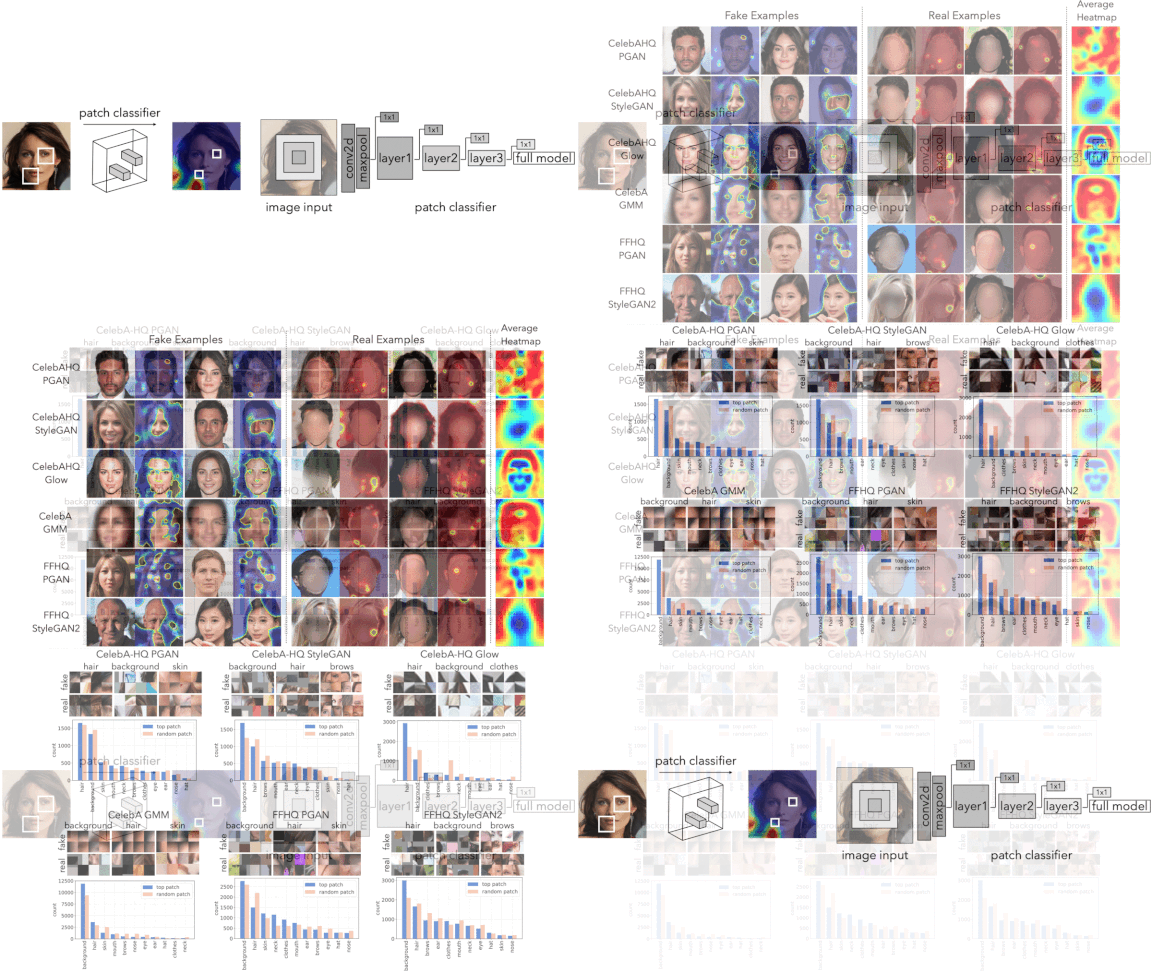
The Telltale Artifact: A technique for detecting GAN-generated deepfakes

Deepfakes have gone mainstream, allowing celebrities to star in commercials without setting foot in a film studio. A new method helps determine whether such endorsements — and other images produced by generative adversarial networks — are authentic.

September 30, 20202 min read
More Data for Medical AI: AI recognizes medical scans without iodine dye.
Classification

More Data for Medical AI: AI recognizes medical scans without iodine dye.

Convolutional neural networks are good at recognizing disease symptoms in medical scans of patients who were injected with iodine-based dye, that makes their organs more visible. But some patients can’t take the dye. Now synthetic scans from a GAN are helping CNNs learn to analyze undyed images.

September 30, 20202 min read
The Telltale Artifact: A technique for detecting GAN-generated deepfakes
Classification

The Telltale Artifact: A technique for detecting GAN-generated deepfakes

Deepfakes have gone mainstream, allowing celebrities to star in commercials without setting foot in a film studio. A new method helps determine whether such endorsements — and other images produced by generative adversarial networks — are authentic.

September 30, 20202 min read
Planet Hunter: AI identifies planets from Kepler telescope data.
Classification

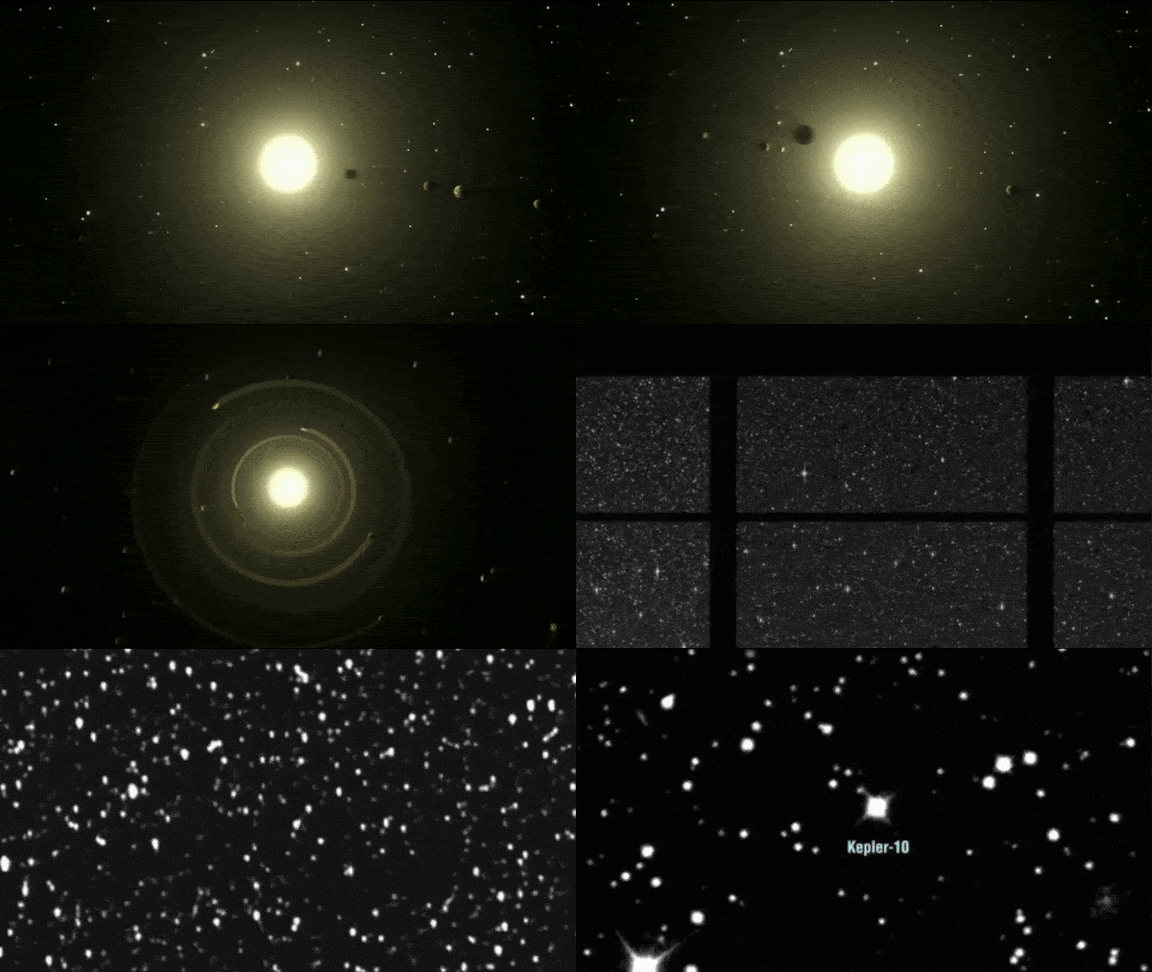
Planet Hunter: AI identifies planets from Kepler telescope data.

A machine learning model is scouring the cosmos for undiscovered planets. Astronomers from the University of Warwick developed a system that learned to identify faraway worlds in a dataset of thousands of candidates.

September 9, 20202 min read
Planet Hunter: AI identifies planets from Kepler telescope data.
Classification

Planet Hunter: AI identifies planets from Kepler telescope data.

A machine learning model is scouring the cosmos for undiscovered planets. Astronomers from the University of Warwick developed a system that learned to identify faraway worlds in a dataset of thousands of candidates.

September 9, 20202 min read
Fewer Labels, More Learning: How SimCLRv2 improves image recognition with fewer labels
Classification

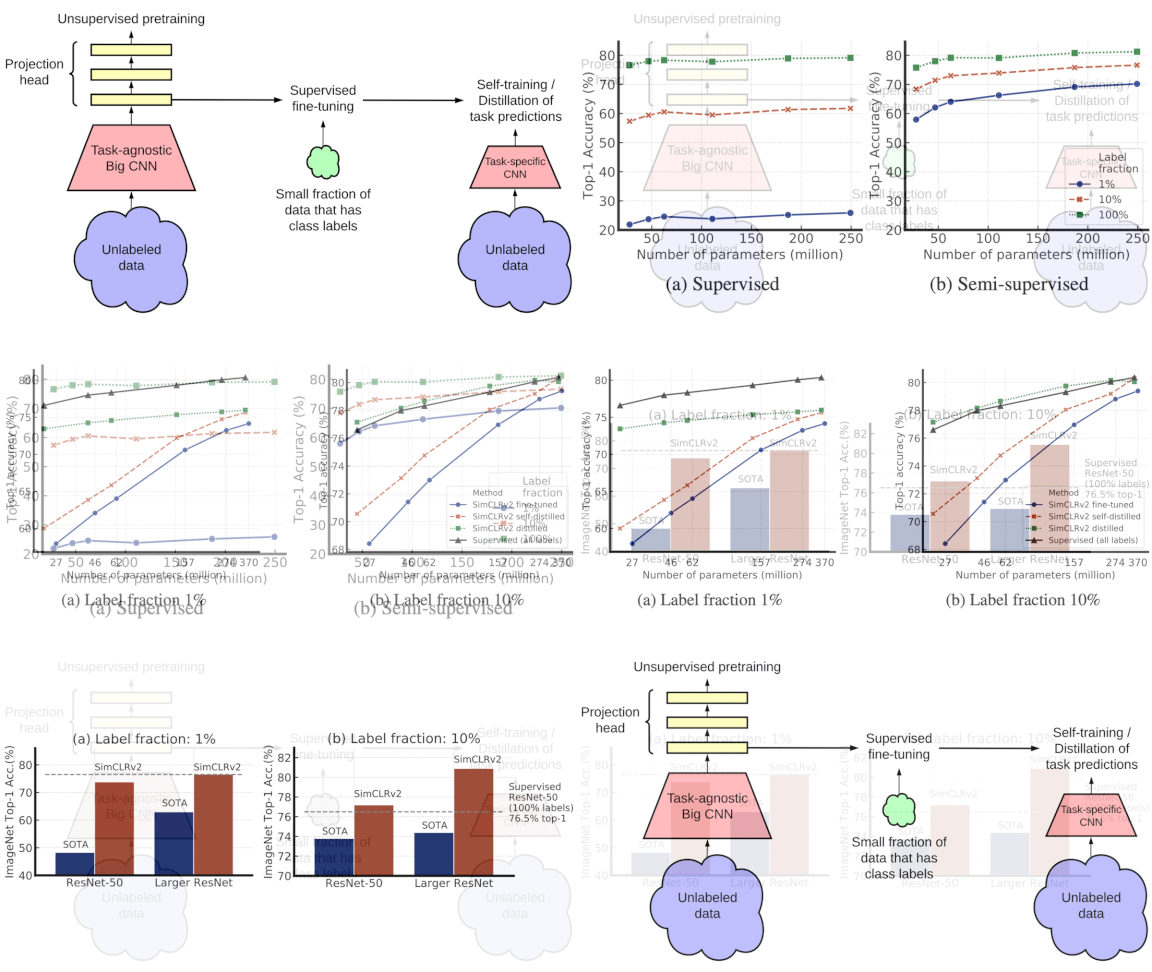
Fewer Labels, More Learning: How SimCLRv2 improves image recognition with fewer labels

Large models pretrained in an unsupervised fashion and then fine-tuned on a smaller corpus of labeled data have achieved spectacular results in natural language processing. New research pushes forward with a similar approach to computer vision.

September 9, 20202 min read
Fewer Labels, More Learning: How SimCLRv2 improves image recognition with fewer labels
Classification

Fewer Labels, More Learning: How SimCLRv2 improves image recognition with fewer labels

Large models pretrained in an unsupervised fashion and then fine-tuned on a smaller corpus of labeled data have achieved spectacular results in natural language processing. New research pushes forward with a similar approach to computer vision.

September 9, 20202 min read
Race Recognition: Face recognition companies identify people by race.
Classification

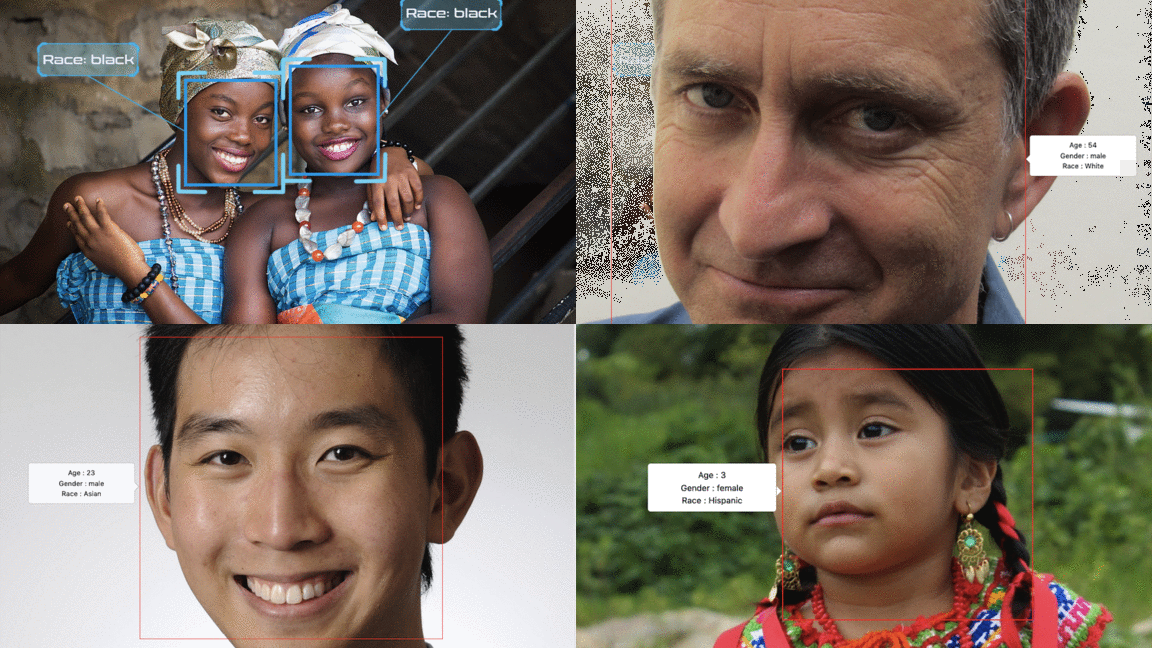
Race Recognition: Face recognition companies identify people by race.

Marketers are using computer vision to parse customers by skin color and other perceived racial characteristics. A number of companies are pitching race classification as a way for businesses to understand the buying habits of different groups.

August 26, 20201 min read
Race Recognition: Face recognition companies identify people by race.
Classification

Race Recognition: Face recognition companies identify people by race.

Marketers are using computer vision to parse customers by skin color and other perceived racial characteristics. A number of companies are pitching race classification as a way for businesses to understand the buying habits of different groups.

August 26, 20201 min read
All Examples Are Not Equal: An algorithm for improved semi-supervised learning
Classification

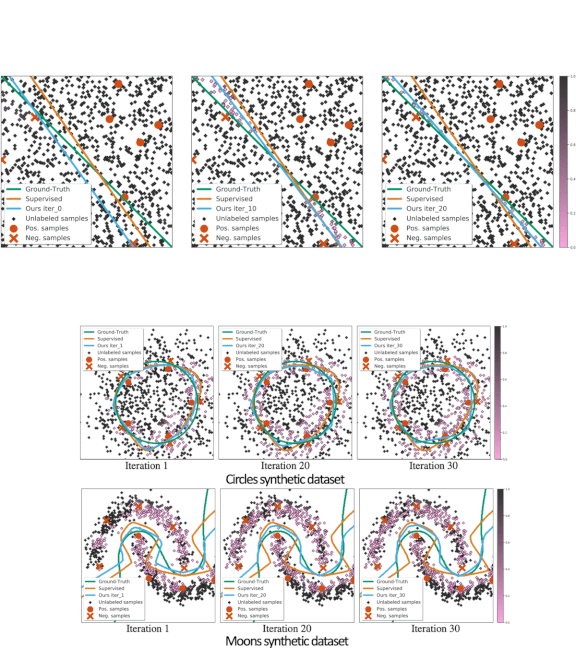
All Examples Are Not Equal: An algorithm for improved semi-supervised learning

Semi-supervised learning — a set of training techniques that use a small number of labeled examples and a large number of unlabeled examples — typically treats all unlabeled examples the same way. But some examples are more useful for learning than others.

August 19, 20202 min read
Near-Miss Detection: Traffic monitoring AI predicts odds of collisions.
Classification

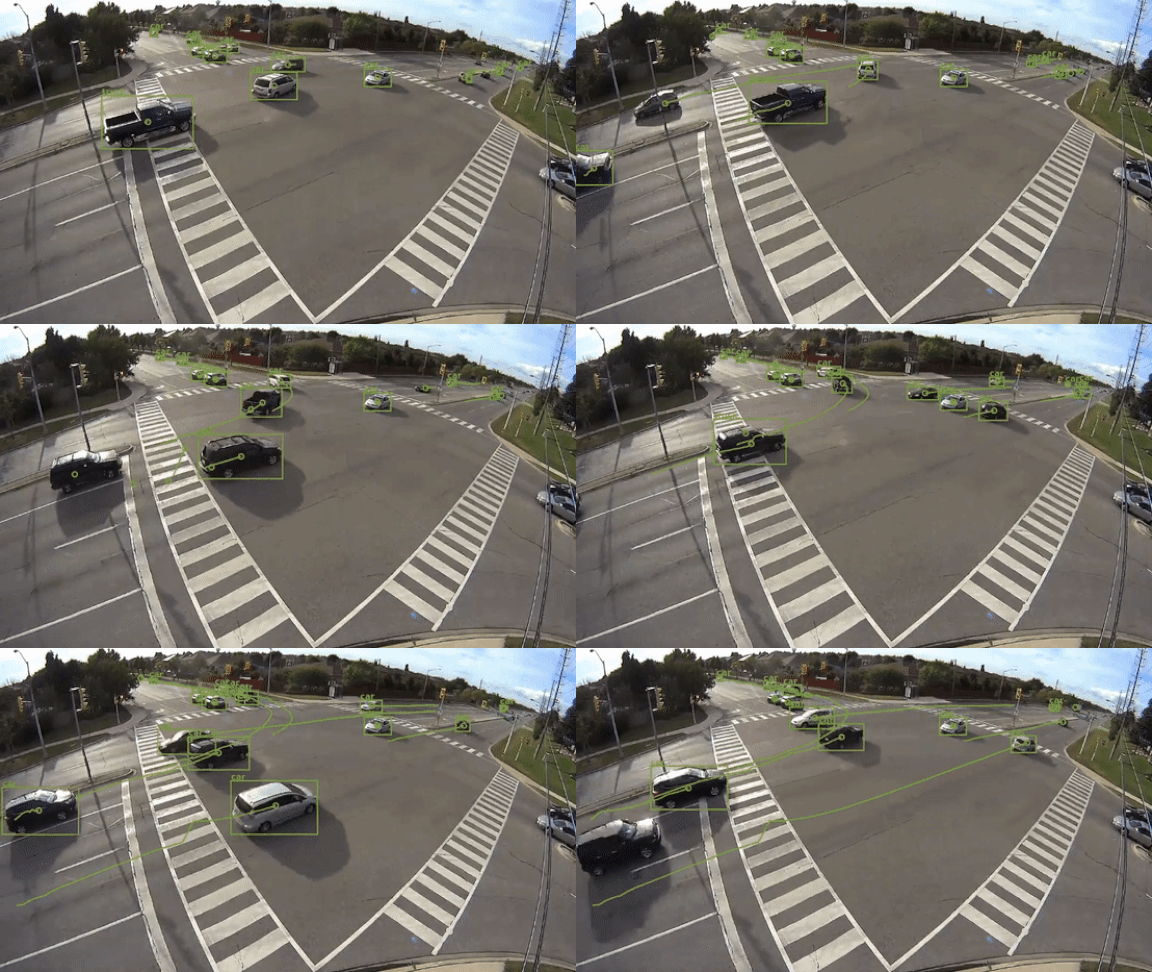
Near-Miss Detection: Traffic monitoring AI predicts odds of collisions.

AI is helping avert traffic accidents by assessing the risk of car crashes at specific intersections. MicroTraffic, a Canadian video analytics company, predicts the odds that accidents will occur at intersections that traditional methods overlook.

August 19, 20201 min read
Near-Miss Detection: Traffic monitoring AI predicts odds of collisions.
Classification

Near-Miss Detection: Traffic monitoring AI predicts odds of collisions.

AI is helping avert traffic accidents by assessing the risk of car crashes at specific intersections. MicroTraffic, a Canadian video analytics company, predicts the odds that accidents will occur at intersections that traditional methods overlook.

August 19, 20201 min read
All Examples Are Not Equal: An algorithm for improved semi-supervised learning
Classification

All Examples Are Not Equal: An algorithm for improved semi-supervised learning

Semi-supervised learning — a set of training techniques that use a small number of labeled examples and a large number of unlabeled examples — typically treats all unlabeled examples the same way. But some examples are more useful for learning than others.

August 19, 20202 min read
Birdwatching With AI: A computer vision system recognizes individual birds.
Classification

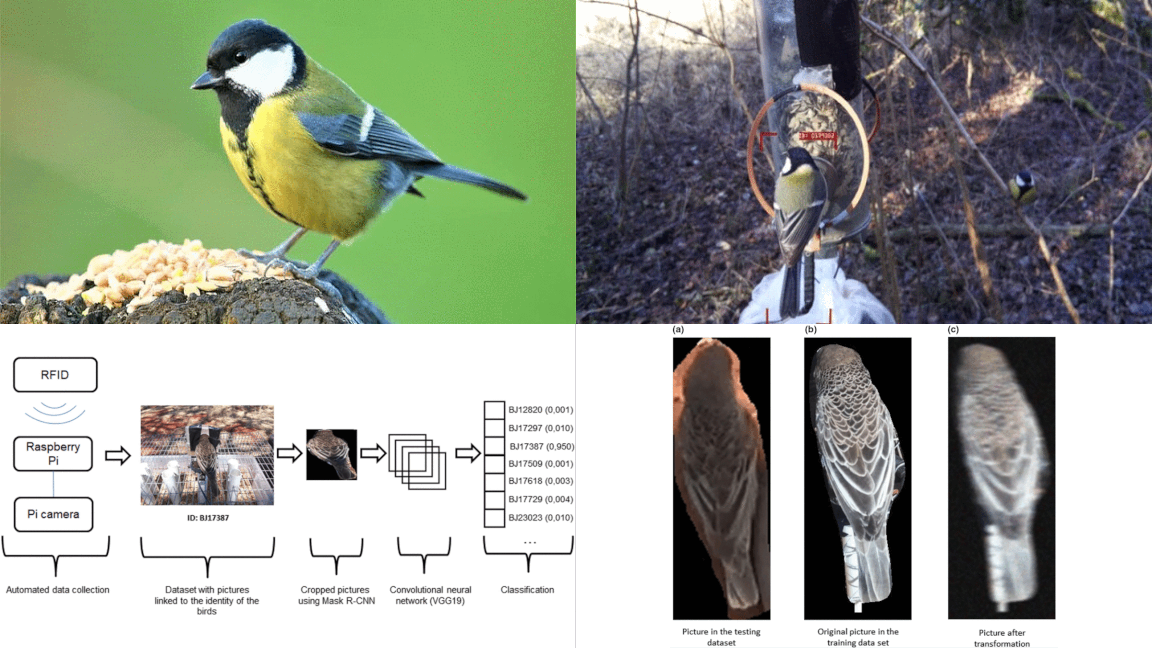
Birdwatching With AI: A computer vision system recognizes individual birds.

Neural networks learned to tell one bird from another, enabling scientists to study their behavior in greater detail. Researchers from universities in Europe and Africa trained eural networks to recognize individual birds with up to 90 percent accuracy.

August 12, 20201 min read

Subscribe to The Batch

Stay updated with weekly AI News and Insights delivered to your inbox