Unfair Outcomes Destroy Trust: What could cause widespread backlash against AI?
Bias

Unfair Outcomes Destroy Trust: What could cause widespread backlash against AI?

Will AI that discriminates based on race, gender, or economic status undermine the public’s confidence in the technology? Seduced by the promise of cost savings and data-driven decision making, organizations will deploy biased systems that end up doing real-world damage.
October 28, 20201 min read
Battling Bias in Synthetic Data: How synthetic data startups are working to avoid bias
Bias

Battling Bias in Synthetic Data: How synthetic data startups are working to avoid bias

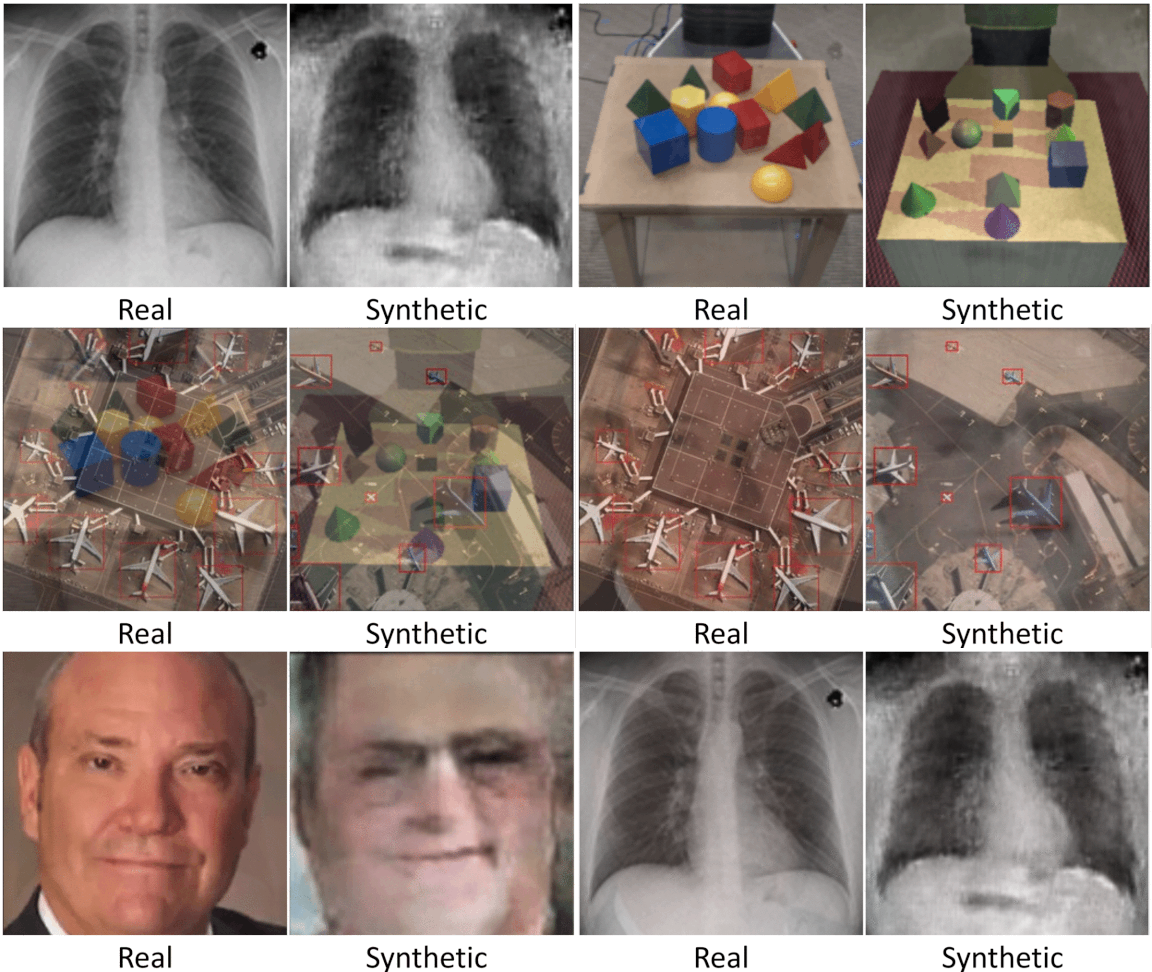
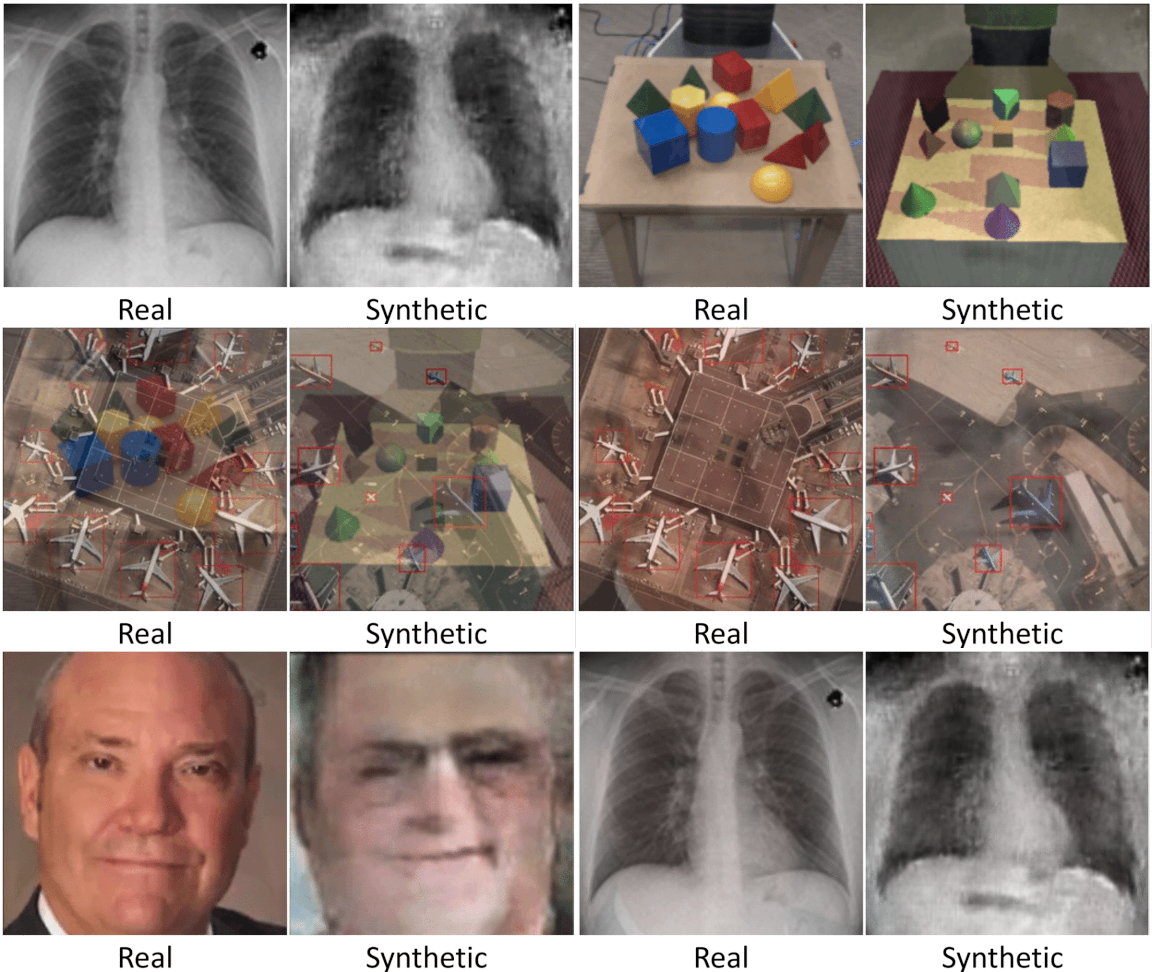
Synthetic datasets can inherit flaws in the real-world data they’re based on. Startups are working on solutions. Generating synthetic datasets for training machine learning systems is a booming business.

October 21, 20202 min read
Battling Bias in Synthetic Data: How synthetic data startups are working to avoid bias
Bias

Battling Bias in Synthetic Data: How synthetic data startups are working to avoid bias

Synthetic datasets can inherit flaws in the real-world data they’re based on. Startups are working on solutions. Generating synthetic datasets for training machine learning systems is a booming business.

October 21, 20202 min read
Making GANs More Inclusive: A technique to help GANs represent their datasets fairly
Bias

Making GANs More Inclusive: A technique to help GANs represent their datasets fairly

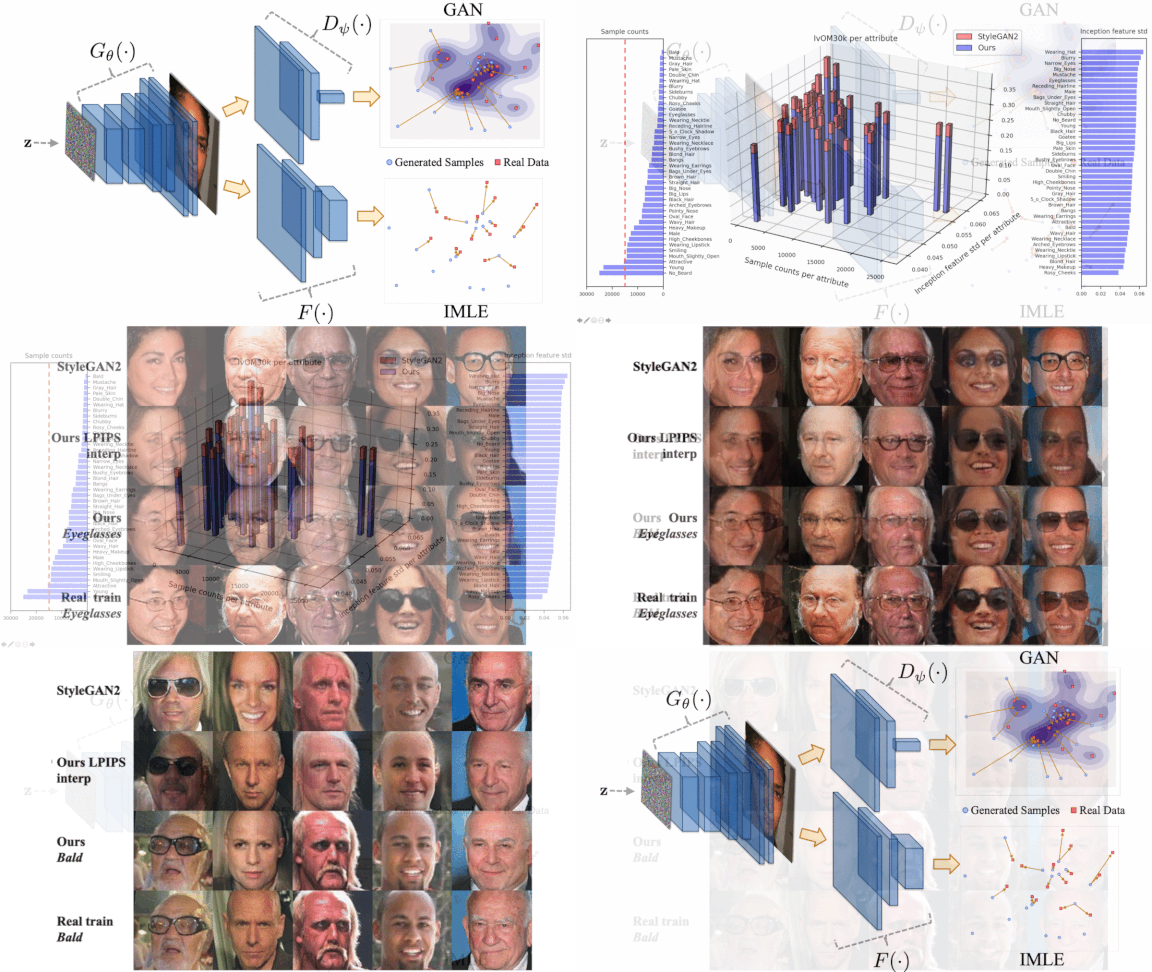
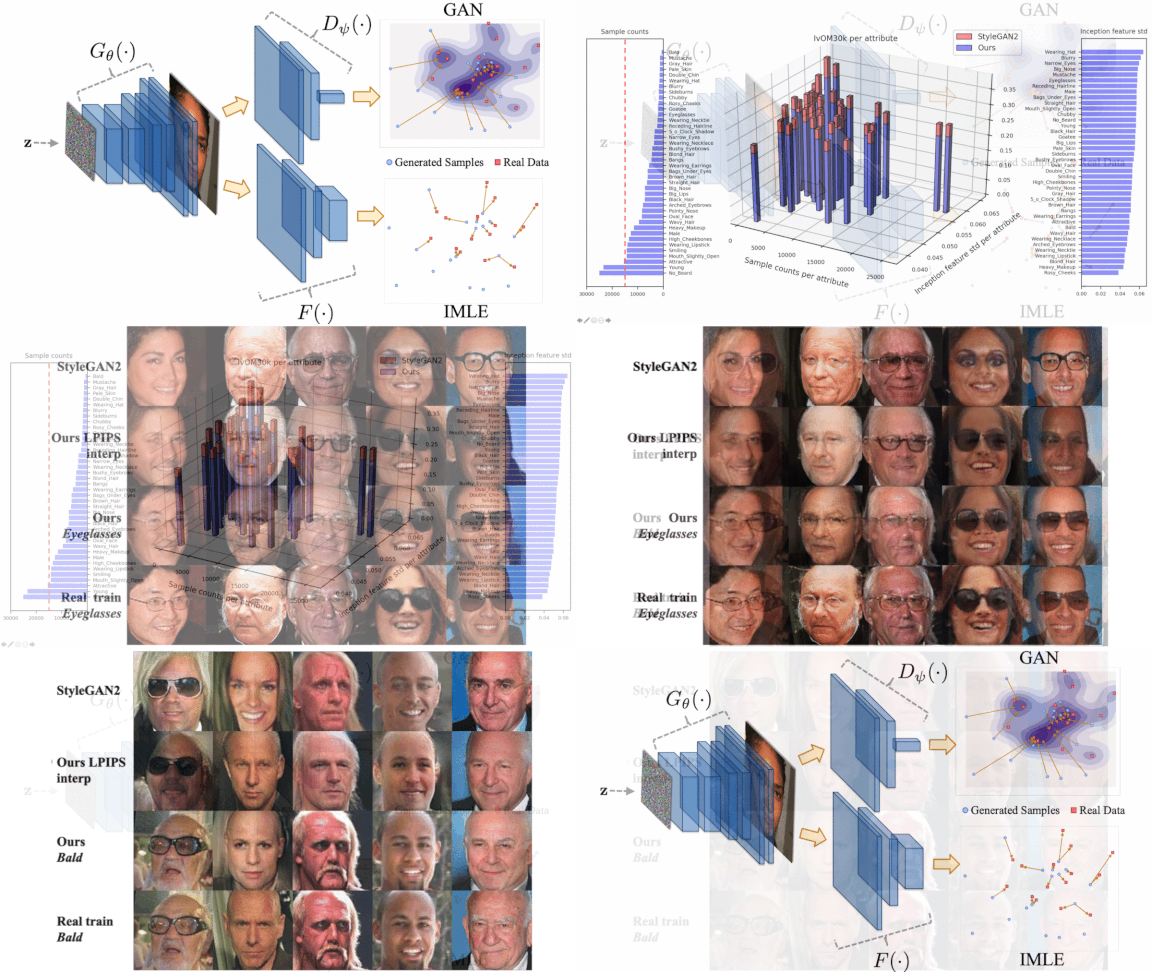
A typical GAN’s output doesn’t necessarily reflect the data distribution of its training set. Instead, GANs are prone to modeling the majority of the training distribution, sometimes ignoring rare attributes — say, faces that represent minority populations.

September 30, 20202 min read
Making GANs More Inclusive: A technique to help GANs represent their datasets fairly
Bias

Making GANs More Inclusive: A technique to help GANs represent their datasets fairly

A typical GAN’s output doesn’t necessarily reflect the data distribution of its training set. Instead, GANs are prone to modeling the majority of the training distribution, sometimes ignoring rare attributes — say, faces that represent minority populations.

September 30, 20202 min read
Credit Where It’s Due: How Visa powers real-time credit card approval with AI
Bias

Credit Where It’s Due: How Visa powers real-time credit card approval with AI

A neural network is helping credit card users continue to shop even when the lender’s credit-approval network goes down. Visa developed a deep learning system that analyzes individual cardholders’ behavior in real time to predict whether credit card transactions should be approved or denied.

September 9, 20202 min read
Credit Where It’s Due: How Visa powers real-time credit card approval with AI
Bias

Credit Where It’s Due: How Visa powers real-time credit card approval with AI

A neural network is helping credit card users continue to shop even when the lender’s credit-approval network goes down. Visa developed a deep learning system that analyzes individual cardholders’ behavior in real time to predict whether credit card transactions should be approved or denied.

September 9, 20202 min read
Race Recognition: Face recognition companies identify people by race.
Bias

Race Recognition: Face recognition companies identify people by race.

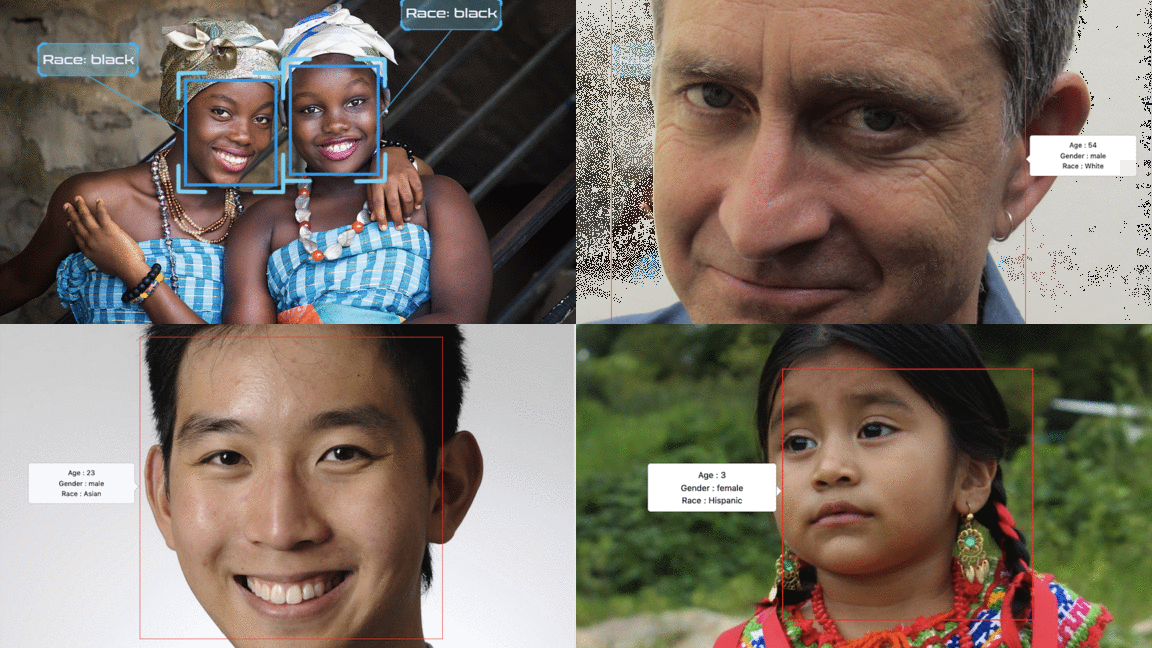
Marketers are using computer vision to parse customers by skin color and other perceived racial characteristics. A number of companies are pitching race classification as a way for businesses to understand the buying habits of different groups.

August 26, 20201 min read
AI Grading Doesn’t Make the Grade: The UK canceled its plan for AI-generated grading.
Bias

AI Grading Doesn’t Make the Grade: The UK canceled its plan for AI-generated grading.

The UK government abandoned a plan to use machine learning to assess students for higher education. The UK Department of Education discarded grades generated by an algorithm designed to predict performance on the annual Advanced Level qualifications, which had been canceled due to the pandemic.

August 26, 20202 min read
AI Grading Doesn’t Make the Grade: The UK canceled its plan for AI-generated grading.
Bias

AI Grading Doesn’t Make the Grade: The UK canceled its plan for AI-generated grading.

The UK government abandoned a plan to use machine learning to assess students for higher education. The UK Department of Education discarded grades generated by an algorithm designed to predict performance on the annual Advanced Level qualifications, which had been canceled due to the pandemic.

August 26, 20202 min read
Race Recognition: Face recognition companies identify people by race.
Bias

Race Recognition: Face recognition companies identify people by race.

Marketers are using computer vision to parse customers by skin color and other perceived racial characteristics. A number of companies are pitching race classification as a way for businesses to understand the buying habits of different groups.

August 26, 20201 min read
When Optimization is Suboptimal: How gradient descent can sometimes lead to model bias
Bias

When Optimization is Suboptimal: How gradient descent can sometimes lead to model bias

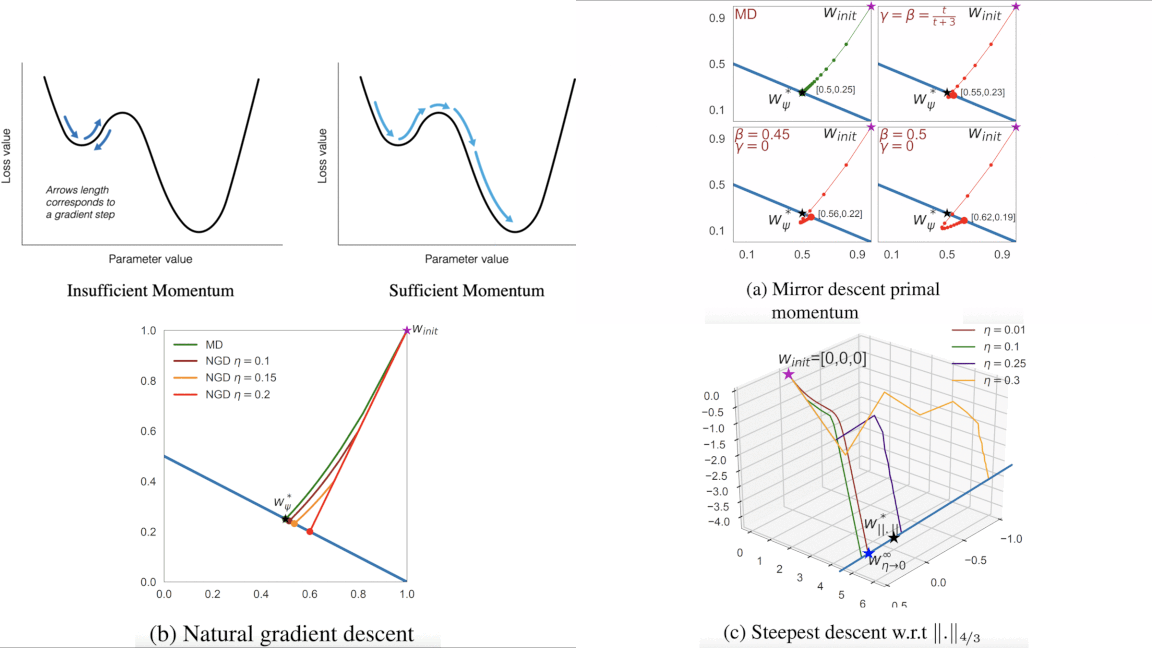
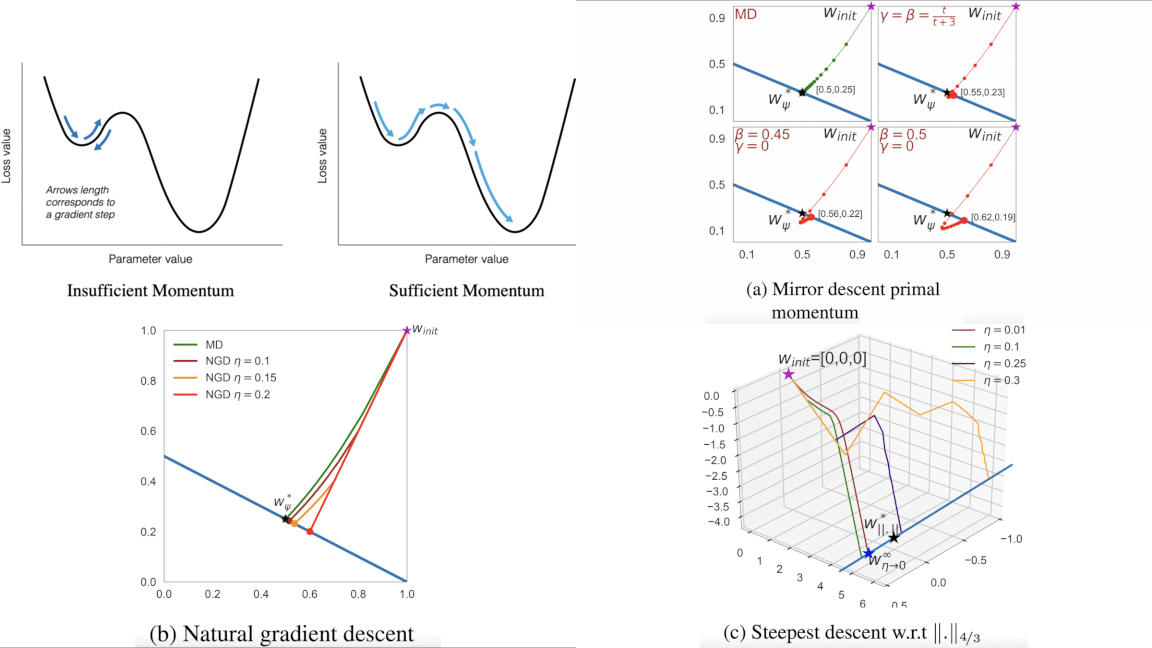
Bias arises in machine learning when we fit an overly simple function to a more complex problem. A theoretical study shows that gradient descent itself may introduce such bias and render algorithms unable to fit data properly.

August 12, 20202 min read
Retail Surveillance Revealed: How Rite-Aid used face recognition for security
Bias

Retail Surveillance Revealed: How Rite-Aid used face recognition for security

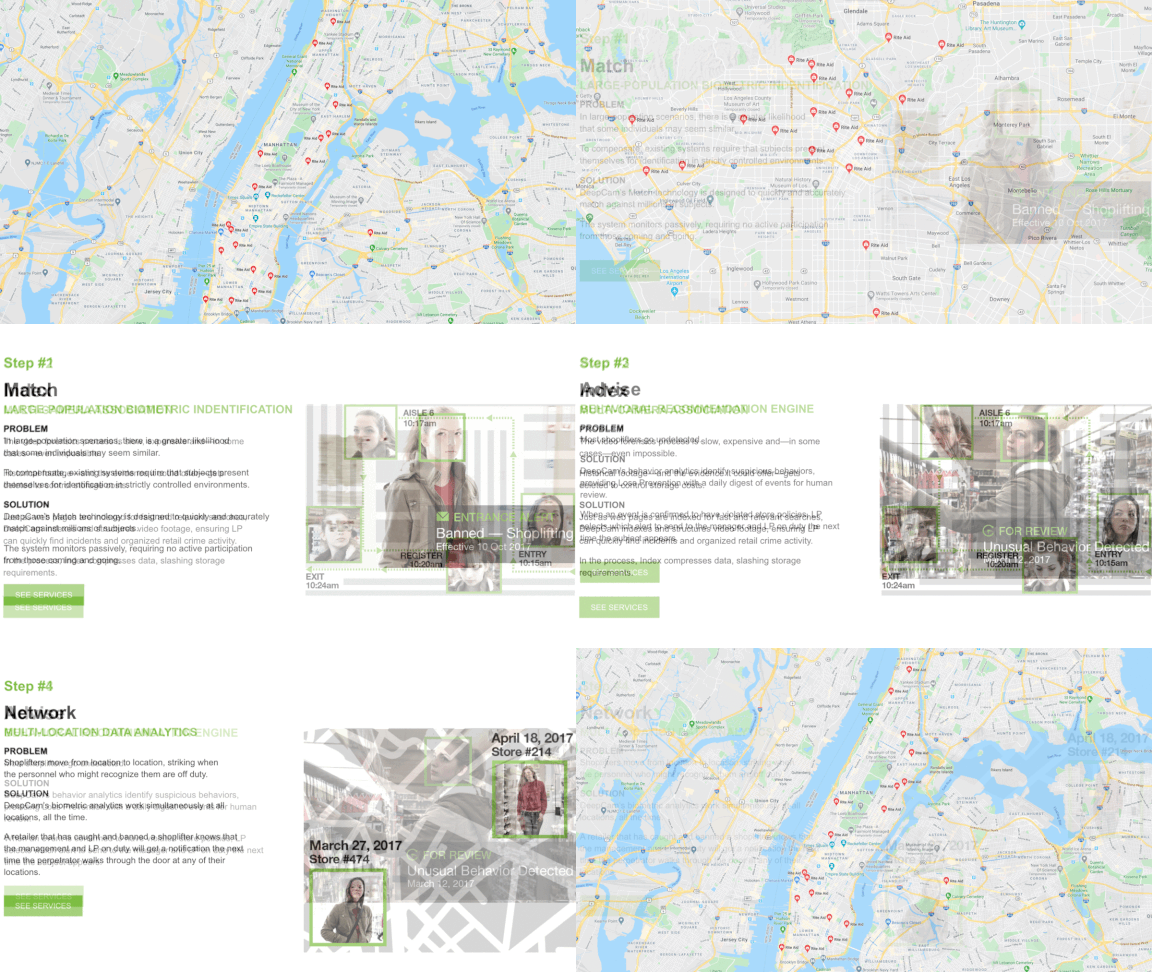
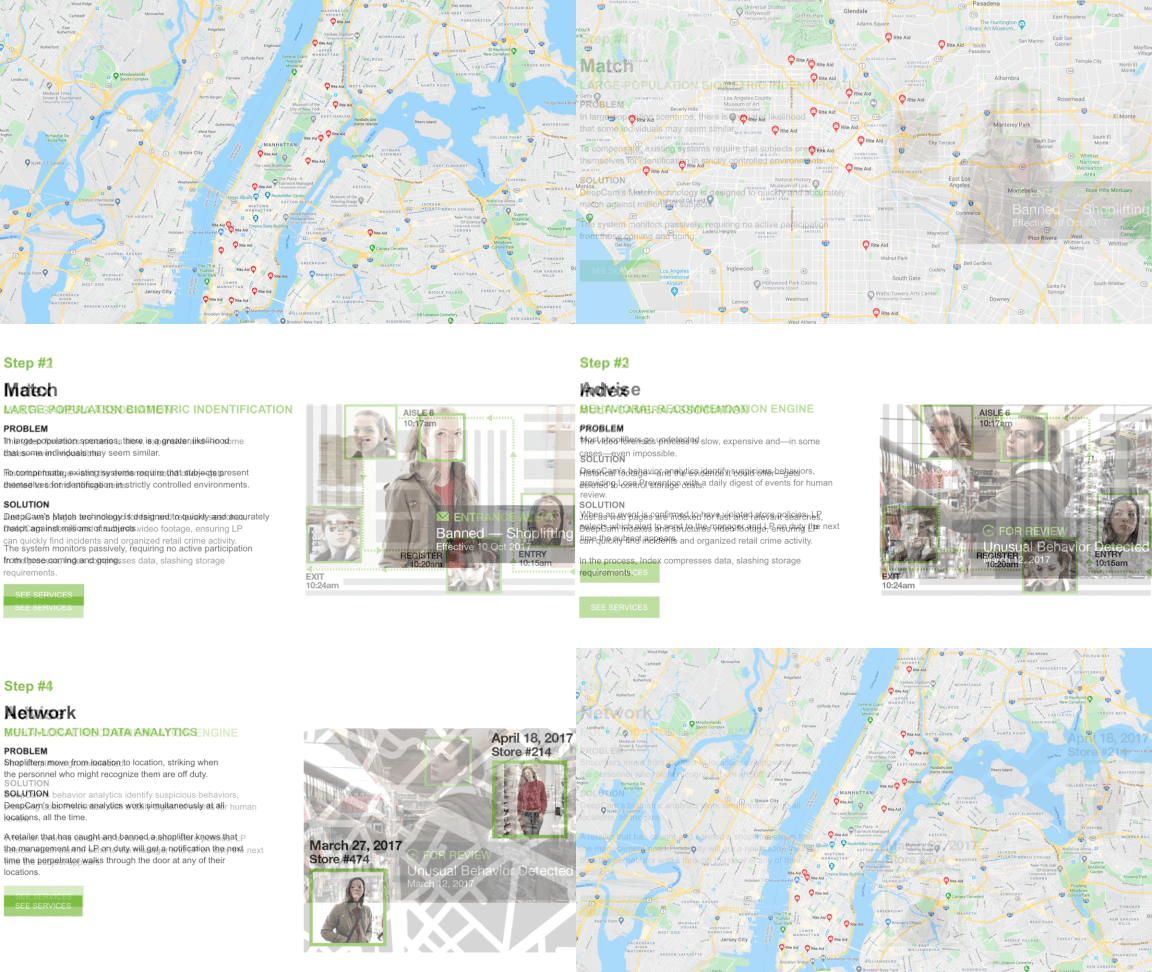
A major retailer’s AI-powered surveillance program apparently targeted poor people and minorities. Rite-Aid, a U.S.-based pharmacy chain, installed face recognition systems in many of its New York and Los Angeles stores.

August 12, 20201 min read
Retail Surveillance Revealed: How Rite-Aid used face recognition for security
Bias

Retail Surveillance Revealed: How Rite-Aid used face recognition for security

A major retailer’s AI-powered surveillance program apparently targeted poor people and minorities. Rite-Aid, a U.S.-based pharmacy chain, installed face recognition systems in many of its New York and Los Angeles stores.

August 12, 20201 min read
When Optimization is Suboptimal: How gradient descent can sometimes lead to model bias
Bias

When Optimization is Suboptimal: How gradient descent can sometimes lead to model bias

Bias arises in machine learning when we fit an overly simple function to a more complex problem. A theoretical study shows that gradient descent itself may introduce such bias and render algorithms unable to fit data properly.

August 12, 20202 min read

Subscribe to The Batch

Stay updated with weekly AI News and Insights delivered to your inbox