
Learn Microsoft’s open source orchestrator, the Semantic Kernel

Beginner1h26m
Developing Business Applications using LLMs via Semantic Kernel
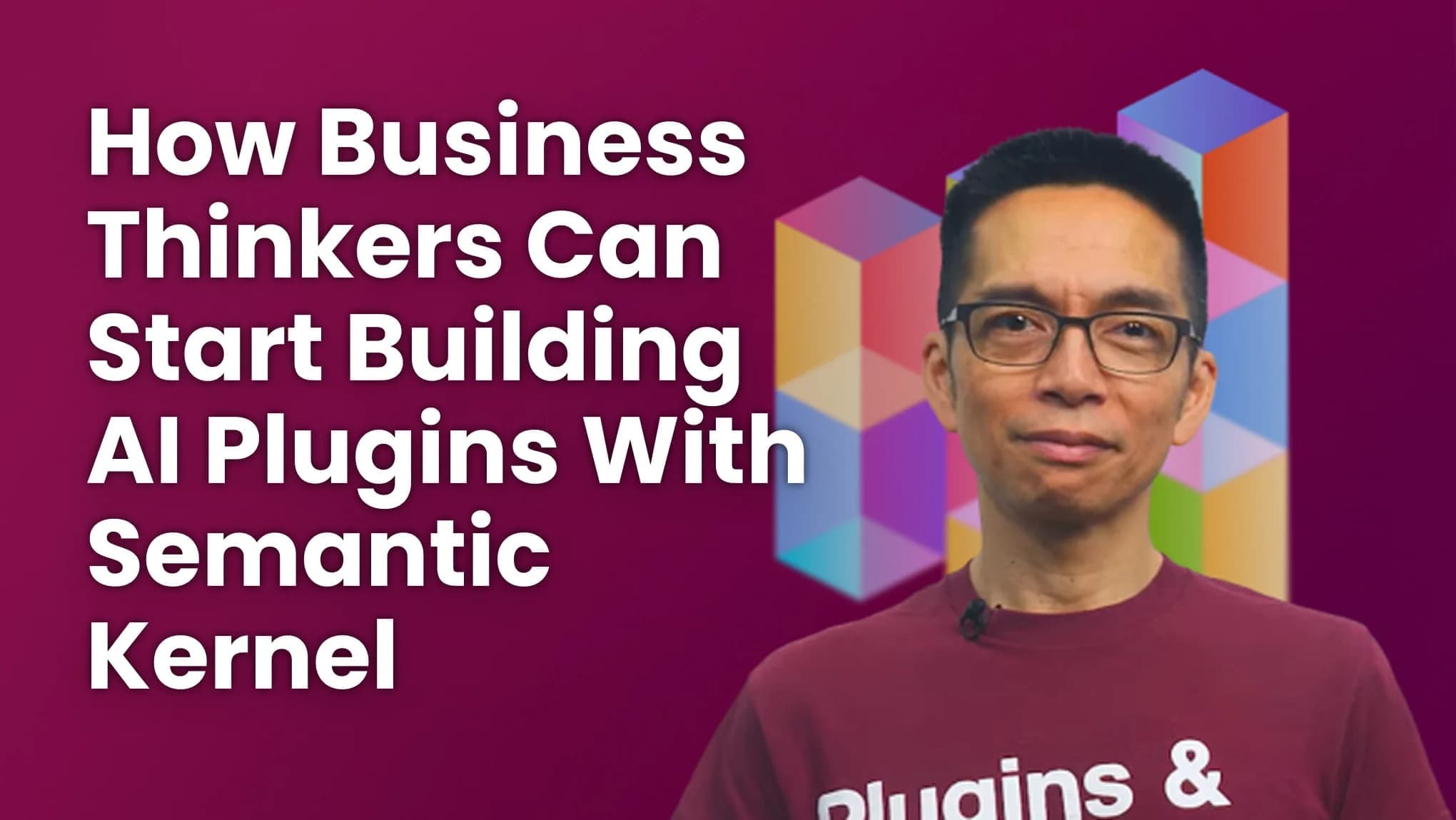
Instructor: John Maeda

Earn an accomplishment with PRO · Updated Oct 7, 2025
- Beginner
- 1h26m
- 9 Video Lessons
- 7 Code Examples
- 1 Graded Assignment PRO
- Earn an accomplishment with PRO
- Updated Oct 7, 2025
- Instructor: John Maeda
 Microsoft
- Learn more aboutMembership PRO Plan
What you'll learn
Develop your business planning and analysis skills while leveraging AI tools
Advance your skills in LLMs by using memories, connectors, chains, and more
Course recap
PROThis course introduces Microsoft's Semantic Kernel, an open-source SDK for integrating LLMs into applications. Taught by John Maeda (VP Design and AI at Microsoft), it frames LLMs through two fundamental capabilities: the "completion engine" (generating text) and the "similarity engine" (comparing meaning). Using a pizza shop business scenario, it demonstrates semantic functions, AI plugins for design thinking and business analysis, vector memory, and the planner module.
Concept map
Key concepts
- EmbeddingsThe "similarity engine" that enables comparing meaning between text, powering RAG and semantic search within Semantic Kernel
- Prompt EngineeringSemantic functions that encapsulate reusable prompts as first-class components in the Kernel
- AI AgentsThe Planner module that automatically chains functions together to achieve complex goals
- Retrieval-Augmented GenerationCombining vector memory (similarity) with completion to ground LLM responses in relevant context
Lesson highlights
- 1.Introduction — Overview of Semantic Kernel and the completion/similarity engine framing
- 2.Semantic Functions — Building reusable prompt-based functions for text processing
- 3.Chaining Functions — Composing multiple semantic functions into pipelines
- 4.Design Thinking Plugin — Applying design thinking methodology to customer feedback using AI
- 5.Business Thinking Plugin — SWOT analysis and business strategy generation with AI
- 6.Vector Memory — Using embeddings for semantic memory and retrieval
- 7.Planner — Automatic function composition to achieve complex goals
- 8.Advanced Patterns — Combining plugins, memory, and planning for complete applications
- 9.Conclusion — Summary and future of AI-powered business applications
About this course
Large Language Models (LLMs) are enabling coders and non-coders to build new kinds of applications that harness the power of AI. In this course, you’ll learn how to use and create with Microsoft’s open source orchestrator, Semantic Kernel. Along the way you’ll gain skills in getting the most out of LLMs developing prompts, semantic functions, vector databases and using an LLM for planning.
After completing this course you will be able to:
- Develop sophisticated business applications using LLMs
- Leverage common LLM building blocks such as memories, connectors, chains and planners
- Utilize the open source orchestrator, the Semantic Kernel, in your applications
Using an orchestration SDK such as Semantic Kernel means you can avoid having to learn APIs for each individual AI service, and build integrations that can always stay up to date with the latest advances in AI research rather than solutions that quickly get outdated. Through this course, you’ll have all you need to take full advantage of this powerful open source tool.
Who should join?
Everyone who wants to learn Semantic Kernel. Recommended skills are basic Python, and an understanding of an Application Programming Interface (API). Familiarity with what a Software Design Kit (SDK) is will be helpful, but not required.
Course Outline
9 Lessons・7 Code Examples- IntroductionVideo・6m
- Semantic Kernel is Like Your AI Cooking KitchenVideo with Code Example・6m
- Cooking Up Flavorful SWOTs with the KernelVideo with Code Example・11m
- Organizing The Tools You Make for Later ReuseVideo with Code Example・10m
- Frozen Dinner The Design Thinking MealVideo with Code Example・13m
- Dont Forget to Save the Generated Dripping or The GravyVideo with Code Example・9m
- A Kitchen That Responds to Your I'm Hungry is More Than FeasibleVideo with Code Example・13m
- There's a Fully-Outfitted Professional-Grade Kitchen Ready For YouVideo with Code Example・5m
- ConclusionVideo・1m
- Quiz
Graded・Quiz
・10m

Elevate your learning experience with Pro
Upgrade to Pro and gain unlimited accomplishments on your resume
Instructor


Course access is free for a limited time during the DeepLearning.AI learning platform beta!
Want to learn more about generative AI?
Keep learning with updates on curated AI news, courses, events, as well as Andrew’s thoughts from DeepLearning.AI!